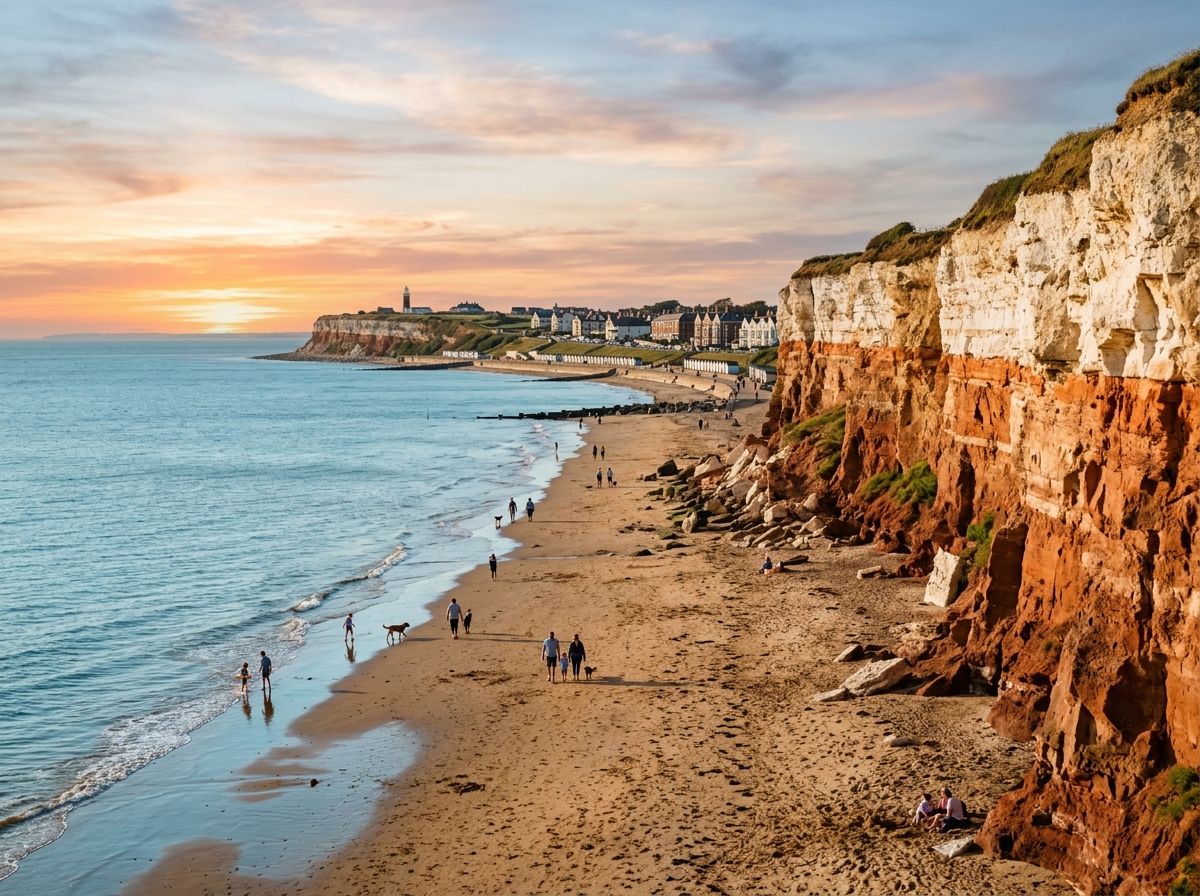
If you’re wondering what Hunstanton is and whether it’s worth a visit, here’s the short answer: it’s a Victorian seaside town on the Norfolk coast, famous for its red and white striped cliffs, a sandy beach, and being the only resort on England’s east coast that faces west. That last point matters more than you’d think, because it means you get sunsets over the sea rather than sunrises, which is rare on this side of the country.
Locals often call it “Sunny Hunny” or “Hunston”. It sits in the King’s Lynn and West Norfolk district, about 102 miles north-north-east of London and 40 miles from Norwich, according to the current Wikipedia entry for the town. Whether you’re after a family day out, a fossil-hunting walk, or just fish and chips on a bench watching the tide come in, this guide covers what you need to know before you go.
What is Hunstanton known for?
Hunstanton was purpose-built as a resort in 1846 by Henry Le Strange, and it kept much of its Victorian character. The three things people mention most are the striped cliffs (layers of white chalk over orange carrstone), the west-facing sunsets, and the long sandy beach at Old Hunstanton next door.
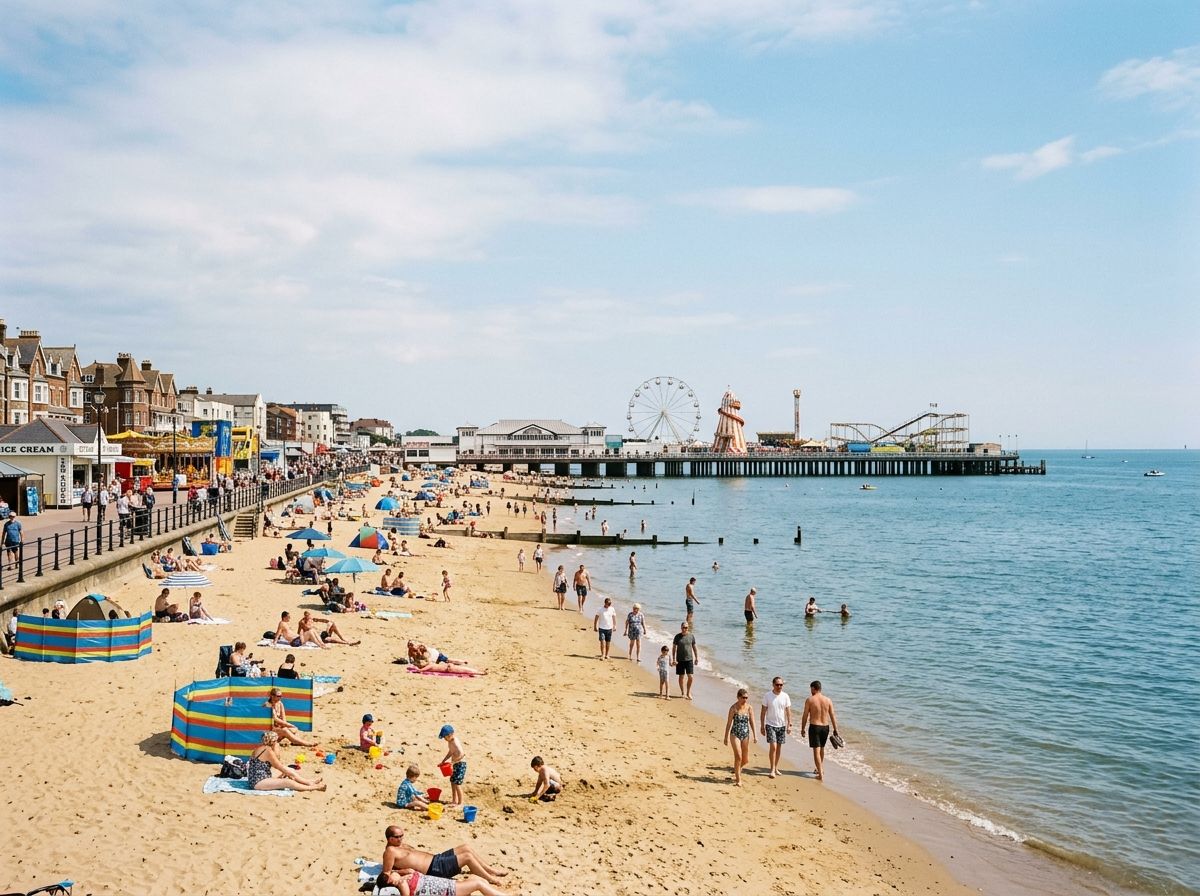
The town itself has a population of around 4,370, based on the 2021 census figures reported on Wikipedia. It’s small enough to walk across in twenty minutes but busy enough in summer to have proper seafront amusements, a pier green, and a working aquarium.
Getting to Hunstanton
Hunstanton hasn’t had its own railway station since 1969, so there’s no direct train. The nearest station is King’s Lynn, which has regular services from London King’s Cross, and from there you connect by bus.
Here’s how the main routes break down:
- By car: Hunstanton sits on the A149 coast road, roughly 40 minutes’ drive from King’s Lynn and around 2 hours 25 minutes from London, according to route data from Rome2Rio.
- By train and bus: Take the train to King’s Lynn, then pick up a connecting bus (routes such as the Coasthopper or the Norfolk Green services run into Hunstanton). Total journey time from London is typically around 2 hours 45 minutes.
- By coach: National Express runs services from London Victoria, though these involve a change and can take over five hours, so the train is usually quicker.
If you’re staying in the area without a car, the Coasthopper bus is worth knowing about. It links Hunstanton to nearby villages, Wells-next-the-Sea, and other coastal spots, so you’re not stuck in one place.
Best time to visit Hunstanton
Peak season runs from late May to early September, when the funfair, land train, and most attractions are open daily. School summer holidays (late July to early September) are the busiest and priciest stretch, so book accommodation well ahead if you’re coming then.
For a quieter trip, try May, June, or September. The weather is often still decent, car parks are easier to find a space in, and you’ll avoid the worst of the crowds on the beach. Winter has its own appeal too: the cliffs look dramatic under grey skies, and it’s a good time for fossil hunting, since fresh material tends to fall from the cliff face over the colder months.
Because Hunstanton faces west, it’s also one of the better spots on the east coast for a proper sunset. Aim to be on the front an hour or so before sunset if that’s on your list.
Things to do in Hunstanton
The beach
Hunstanton’s beach splits roughly into two parts. The main resort beach near the town centre is mostly shingle and boulders. Head north towards Old Hunstanton and you’ll find a much wider stretch of golden sand, backed by dunes, which is better for a proper beach day.
Rock pooling is popular along the base of the cliffs, and the beach won a Seaside Award for cleanliness in 2015, a mark of the site’s management standards at the time.
SEA LIFE Hunstanton
The aquarium on the promenade is one of the town’s biggest draws, especially for families with young children. It has a seal rescue centre, Humboldt penguins, otters, and a shark tunnel, along with hands-on rock pool touch tanks.
Prices vary depending on when you book, but online tickets currently start from around £16.62 per person when booked in advance, and there are sometimes early-booking offers dropping the price lower. Under-2s go free. Booking online ahead of your visit is nearly always cheaper than turning up on the day, so check the official SEA LIFE Hunstanton website before you travel, since prices change often.
Old Hunstanton
Old Hunstanton is the original village the resort grew out of, and it has a completely different pace. Expect carrstone cottages, traditional pubs, a lighthouse, and the ruins of St Edmund’s Chapel on the cliff top. You can walk between the two Hunstantons along the seafront in well under an hour.
Fossil hunting on the cliffs
The cliffs are a genuine draw for amateur geologists. The layered chalk and Hunstanton Red Rock (also called Red Chalk) are rich in fossils, including shells, echinoids, and the occasional shark’s tooth, particularly after a cliff fall exposes fresh material. Stick to loose material on the beach itself rather than the cliff face, for reasons covered below.
Other attractions
Beyond the beach and the aquarium, the town has crazy golf and pitch-and-putt, the Oasis Leisure Centre, Esplanade Gardens (best in spring and summer), a seasonal land train running between Searles Leisure Resort and the lighthouse, and the Norfolk Coast Path, which starts at the north end of the promenade for anyone after a longer walk.
Beach and cliff safety
This is worth taking seriously, and it’s something several older guides to the town gloss over. Two separate hazards apply here.
Tides. Hunstanton RNLI has repeatedly warned that people get cut off by fast-moving tides, particularly during high spring tides when the sea retreats a long way and returns quickly. RNLI water safety lead Kate Craven has pointed out that around 250 people drown around the UK coastline every year, and many never intended to get wet in the first place. Always check tide times before walking out onto exposed sand, and leave enough time to get back.
Cliff falls. The striped cliffs are actively eroding, and chunks can come down without warning, especially after wet weather or during nesting season when birds disturb loose rock. HM Coastguard advises staying well clear of the cliff base and never climbing them. Don’t picnic or sit directly under the cliffs, and keep children away from the base even when the tide is out.
Parking in Hunstanton
Hunstanton has several council-run car parks along the seafront, including Central, South Prom, Seagate East and West, Southend, and Cliff. Charges apply from March to October, generally between 8am and 5pm, according to Borough Council of King’s Lynn and West Norfolk fees documents.
As a rough guide, the Cliff car park has charged around £2.50 for a short stay, rising to roughly £10.00 for an all-day ticket in peak season, dropping to about £8.90 in the winter months. These figures move year to year, so check the council’s website for the current rates before you travel.
Where to eat and stay
Hunstanton leans into classic seaside food: fish and chips on the front, ice cream stalls, and a scattering of cosy pubs and seafood restaurants. For something with a village feel, Old Hunstanton’s pubs are a good bet.
Accommodation ranges from budget guesthouses to 4 and 5-star hotels, with average nightly rates for 3-star hotels sitting around the low hundreds of pounds depending on booking site and season, based on current listings from major booking platforms. Book early for summer weekends, since the town fills up fast.
FAQs
Is Hunstanton worth visiting?
Yes, particularly if you want a traditional seaside day out with striped cliffs, a sandy beach at Old Hunstanton, and an aquarium. It suits families and anyone who enjoys coastal walking, though it’s a quieter, more old-fashioned resort than somewhere like Great Yarmouth.
How do you get to Hunstanton without a car?
Take a train to King’s Lynn, then a connecting bus such as the Coasthopper or a Norfolk Green service into Hunstanton. There’s no direct railway into the town itself, as the line closed in 1969.
Why does Hunstanton face west?
It sits on the eastern edge of The Wash, a large bay that curves the coastline round, so Hunstanton’s seafront looks out west across the water. That makes it the only resort on England’s east coast where you can watch the sun set over the sea.
Are the cliffs at Hunstanton safe to walk under?
Not right at the base. The chalk and carrstone cliffs are actively eroding and can shed rock without warning, so HM Coastguard and local fossil-hunting guides both recommend staying back from the cliff face and never climbing it.
What are the striped cliffs made of?
The stripes come from layers of white chalk sitting over a band of orange-red carrstone, known locally as Hunstanton Red Rock. The layering is a genuine geological feature, not paint or staining.
How much does SEA LIFE Hunstanton cost?
Online tickets currently start from around £16.62 per person when booked in advance, with under-2s going free. Prices shift with demand and season, so it’s worth checking the official site and booking ahead rather than paying on the door.
Is Hunstanton beach dog friendly?
Old Hunstanton beach allows dogs all year round. The main Hunstanton beach has seasonal restrictions, with dogs not permitted on certain stretches between 10 April and 31 October, so check current signage if you’re bringing a dog in summer.
How far is Hunstanton from London?
It’s around 102 miles by road, roughly a 2 hour 25 minute drive, or about 2 hours 45 minutes by train and connecting bus via King’s Lynn.