
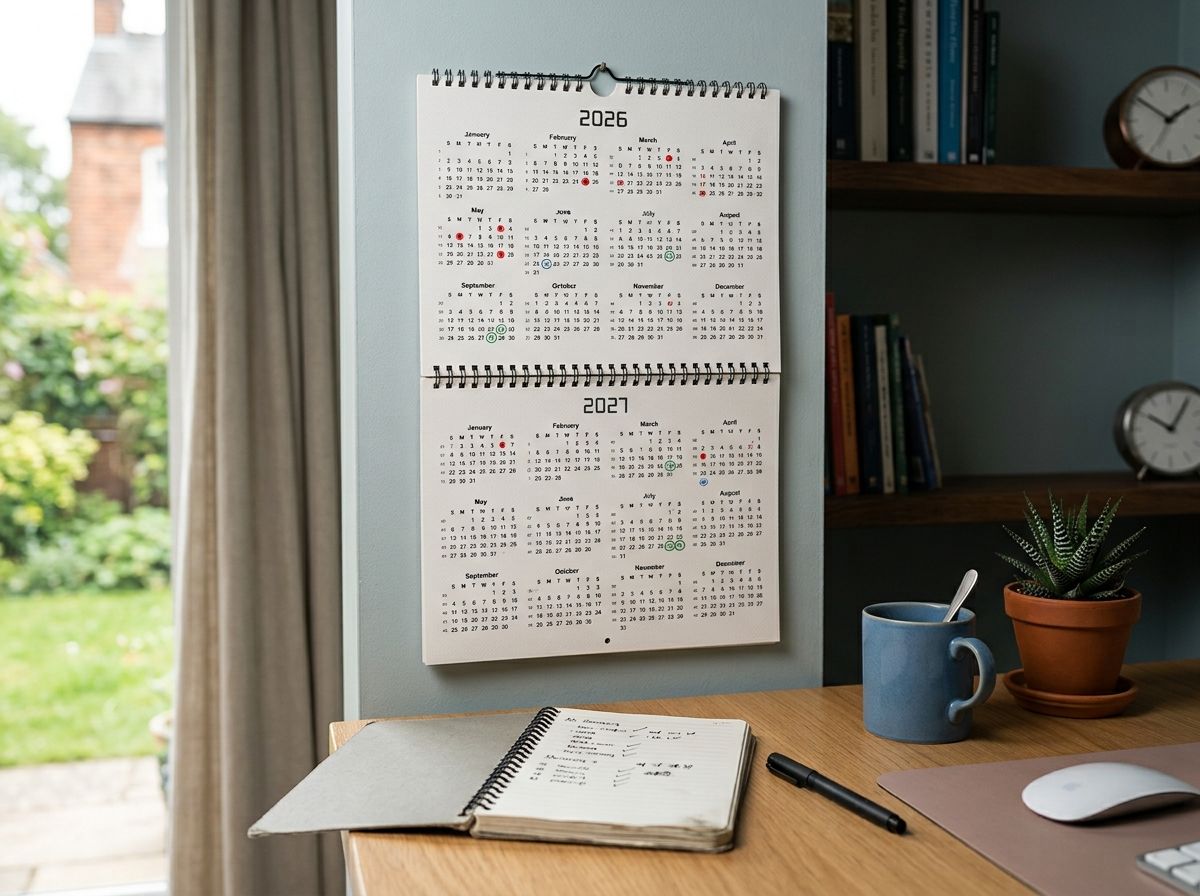
If you’re trying to work out when the next UK bank holiday falls, here’s the short answer: the next one is the Summer Bank Holiday, which lands on Monday 3 August 2026 in Scotland and Monday 31 August 2026 in England, Wales and Northern Ireland. There are eight bank holidays a year in England and Wales, nine in Scotland and ten in Northern Ireland, according to GOV.UK. This guide lists every UK bank holiday for 2026 and 2027, explains both May bank holidays in detail, and covers your actual legal rights around time off.
What Counts as a UK Bank Holiday?
A bank holiday is a day set out in law when banks and many workplaces traditionally close. The current system comes from the Banking and Financial Dealings Act 1971, which replaced the original Bank Holidays Act 1871.
Some bank holidays fall on a fixed date, like New Year’s Day. Others move each year because they’re tied to Easter or a specific weekday, like the Spring Bank Holiday, which always falls on the last Monday in May.
Not every UK nation gets the same days off. England and Wales share one list, Scotland has its own pattern with different Easter and summer arrangements, and Northern Ireland adds two extra dates tied to St Patrick’s Day and the Battle of the Boyne.
UK Bank Holidays 2026: Full List
Here’s the complete 2026 list for England and Wales, confirmed by the GOV.UK bank holidays calendar.
- New Year’s Day: Thursday 1 January 2026
- Good Friday: Friday 3 April 2026
- Easter Monday: Monday 6 April 2026
- Early May bank holiday: Monday 4 May 2026
- Spring bank holiday: Monday 25 May 2026
- Summer bank holiday: Monday 31 August 2026
- Christmas Day: Friday 25 December 2026
- Boxing Day: Monday 28 December 2026 (substitute day, as 26 December falls on a Saturday)
Scotland’s 2026 list swaps Easter Monday for 2 January, moves the Summer bank holiday to early August, and adds St Andrew’s Day plus a one-off World Cup bank holiday on Monday 15 June 2026, announced for the tournament being co-hosted in the UK and Ireland. Northern Ireland keeps the England and Wales dates but adds St Patrick’s Day (17 March) and the Battle of the Boyne, observed on Monday 13 July 2026 as a substitute day.
UK Bank Holidays 2027: Full List
Planning further ahead helps with annual leave and travel bookings, so here’s the confirmed 2027 list for England and Wales, again taken from the official GOV.UK data file.
- New Year’s Day: Friday 1 January 2027
- Good Friday: Friday 26 March 2027
- Easter Monday: Monday 29 March 2027
- Early May bank holiday: Monday 3 May 2027
- Spring bank holiday: Monday 31 May 2027
- Summer bank holiday: Monday 30 August 2027
- Christmas Day: Monday 27 December 2027 (substitute day, as 25 December falls on a Saturday)
- Boxing Day: Tuesday 28 December 2027 (substitute day, as 26 December falls on a Sunday)
Because Christmas Day 2027 lands on a Saturday, both Christmas and Boxing Day shift to substitute weekdays. That gives most of the country a run from Christmas Eve through to 28 December, worth remembering if you’re booking leave early.
May Bank Holidays UK: Early May and Spring Explained
The UK actually has two separate May bank holidays, and people often mix them up.
Early May bank holiday falls on the first Monday of May every year. It’s the youngest of the eight, introduced in 1978 under Michael Foot as Lord President of the Council, and it’s loosely tied to the traditional May Day celebrations you’ll still see in some English villages. In 2026 it falls on Monday 4 May; in 2027 it’s Monday 3 May.
Spring bank holiday (sometimes called the “late May” bank holiday) falls on the last Monday of May, which means the date shifts between 25 and 31 May depending on the year. It replaced the older Whit Monday holiday in 1971 and usually lines up with school half-term in England and Wales. In 2026 it’s Monday 25 May; in 2027 it moves to Monday 31 May.
Scotland observes the Early May bank holiday on the same date as England and Wales, but its Spring bank holiday date can differ locally in some years, so always check your specific council or employer calendar if you’re north of the border.
How Bank Holidays Differ Across England, Wales, Scotland and Northern Ireland
England and Wales are identical, with eight bank holidays a year and no regional additions.
Scotland has nine or ten depending on the year. It skips Easter Monday, takes its Summer bank holiday in early August rather than late August, and adds 2 January and St Andrew’s Day (30 November), which aren’t observed elsewhere.
Northern Ireland has ten. On top of the England and Wales list, it adds St Patrick’s Day and the Battle of the Boyne (Orangemen’s Day), both linked to its own history and calendar.
If you run a UK-wide business or team, it’s worth building a shared calendar rather than assuming one list covers everyone. A member of staff in Glasgow and one in Cardiff won’t necessarily have the same days off.
What Happens When a Bank Holiday Falls on a Weekend?
When a fixed-date bank holiday like Boxing Day or New Year’s Day lands on a Saturday or Sunday, it moves to the next available weekday. This is called a substitute day, and it’s built into the 1971 Act rather than being a special one-off decision each time.
You can see this in the 2026 and 2027 lists above: Boxing Day 2026 moves to Monday 28 December because 26 December falls on a Saturday, and both Christmas Day and Boxing Day shift in 2027 for the same reason. Moveable holidays like Good Friday and Easter Monday never need a substitute, since they’re always calculated to fall on a weekday.
Do You Have a Legal Right to Bank Holidays Off?
No, and this catches a lot of people out. There’s no automatic legal right in the UK to take bank holidays as paid leave.
What you do have, under the Working Time Regulations 1998, is a statutory minimum of 5.6 weeks’ paid annual leave a year, which works out to 28 days for a full-time employee working a standard five-day week. Whether your employer counts bank holidays as part of that 28 days, or gives them on top, comes down to your contract.
Part-time staff get a pro-rata share of both annual leave and bank holidays, based on the days and hours they normally work. If you’re not sure how your bank holiday entitlement works, check your contract or ask HR directly, since practice varies a lot between employers.
How Bank Holidays Affect Pay, Shops and Services
Working on a bank holiday doesn’t automatically mean extra pay. Enhanced or premium rates for bank holiday shifts are down to your employer’s policy or contract, not a legal requirement.
Most banks, council offices and Royal Mail deliveries pause on bank holidays. Large supermarkets often reduce their hours, especially on Christmas Day and Easter Sunday, when big shops in England and Wales are required by law to stay closed. Smaller, independent shops can usually open as normal, and public transport often runs a reduced or Sunday-style timetable.
If you’re planning deliveries, deadlines or appointments around a bank holiday, build in an extra day either side. Council and government services in particular tend to slow down for the whole week, not just the day itself.
FAQs
How many bank holidays are there in the UK each year?
England and Wales have eight, Scotland has nine (or ten in years with an extra one-off holiday), and Northern Ireland has ten. The totals can shift slightly year to year if the government or monarch announces a special additional holiday, such as for a coronation.
What are the bank holidays in the UK in 2026?
The eight England and Wales dates are 1 January, 3 April, 6 April, 4 May, 25 May, 31 August, 25 December and 28 December (substitute Boxing Day). Scotland and Northern Ireland have some different dates, listed in full above.
Do I have a legal right to bank holidays off work?
No. There’s no statutory right to take bank holidays as paid leave in the UK. Your entitlement depends on your employment contract, though everyone is still entitled to the statutory minimum of 5.6 weeks’ annual leave overall.
What happens when a bank holiday falls on a weekend?
It moves to the next weekday, known as a substitute day. Boxing Day 2026, for example, shifts from Saturday 26 December to Monday 28 December.
Are bank holidays the same across England, Scotland, Wales and Northern Ireland?
No. England and Wales share the same eight dates. Scotland and Northern Ireland each have their own additional or substitute holidays reflecting local history and tradition.
When is the next UK bank holiday?
As of 31 July 2026, the next one is the Summer Bank Holiday: Monday 3 August in Scotland, and Monday 31 August in England, Wales and Northern Ireland.
Are shops open on bank holidays in the UK?
Most are, though hours often shrink. Large shops in England and Wales must close on Easter Sunday and Christmas Day by law, but can open on other bank holidays.
Do part-time workers get bank holiday pay or leave?
Yes, on a pro-rata basis. Part-time staff get a proportional share of both annual leave and bank holiday entitlement, worked out from their normal hours and days.
What is the May bank holiday in the UK?
There are two: the Early May bank holiday (first Monday of May) and the Spring bank holiday (last Monday of May). They’re separate holidays, not the same date under different names.
Is Good Friday a bank holiday in the UK?
Yes, it’s a bank holiday across all of the UK, including Scotland, which is unusual since Scotland skips Easter Monday.


