If you’re hunting for the best reading lamps, the honest answer is there’s no single winner. It depends on where you read, how your eyes handle glare, and what you’re willing to spend. A £20 clip-on light solves a different problem than a £300 floor lamp built for ageing eyes. This guide breaks down the real options by type, price and feature, so you can pick the one that actually fixes the squinting, headaches or dim corners you’re dealing with right now.
What people actually mean when they search for reading lamps
Most searches for reading lamps fall into three groups. Bedside readers want something that won’t wake a partner and doesn’t glare off a phone screen. Living room readers want a floor or table lamp bright enough for an armchair without turning the whole room into an operating theatre. And a smaller group, often people with ageing eyes or conditions like macular degeneration, are looking for genuinely high-output lights that make small print legible again.
Knowing which one you are matters more than any brand name, because the features that matter (brightness, beam control, colour temperature) shift depending on the job.
The four main types, and who each one suits
Clip-on and neck book lights. These run from about £10 to £25 on Amazon UK and Argos, and they’re built for reading in bed without disturbing anyone next to you. Most now offer 3 to 9 brightness levels and a warm amber mode aimed at not disrupting sleep. They’re the cheapest fix, but the light is small and close to the page, so they’re less comfortable for long sessions.
Bedside table lamps with reading modes. Dunelm, John Lewis and Argos all stock dimmable LED bedside lamps in the £15 to £45 range, often with touch controls and USB charging ports built in. These suit anyone who wants a normal-looking lamp that also does a decent reading job, rather than a dedicated task light.
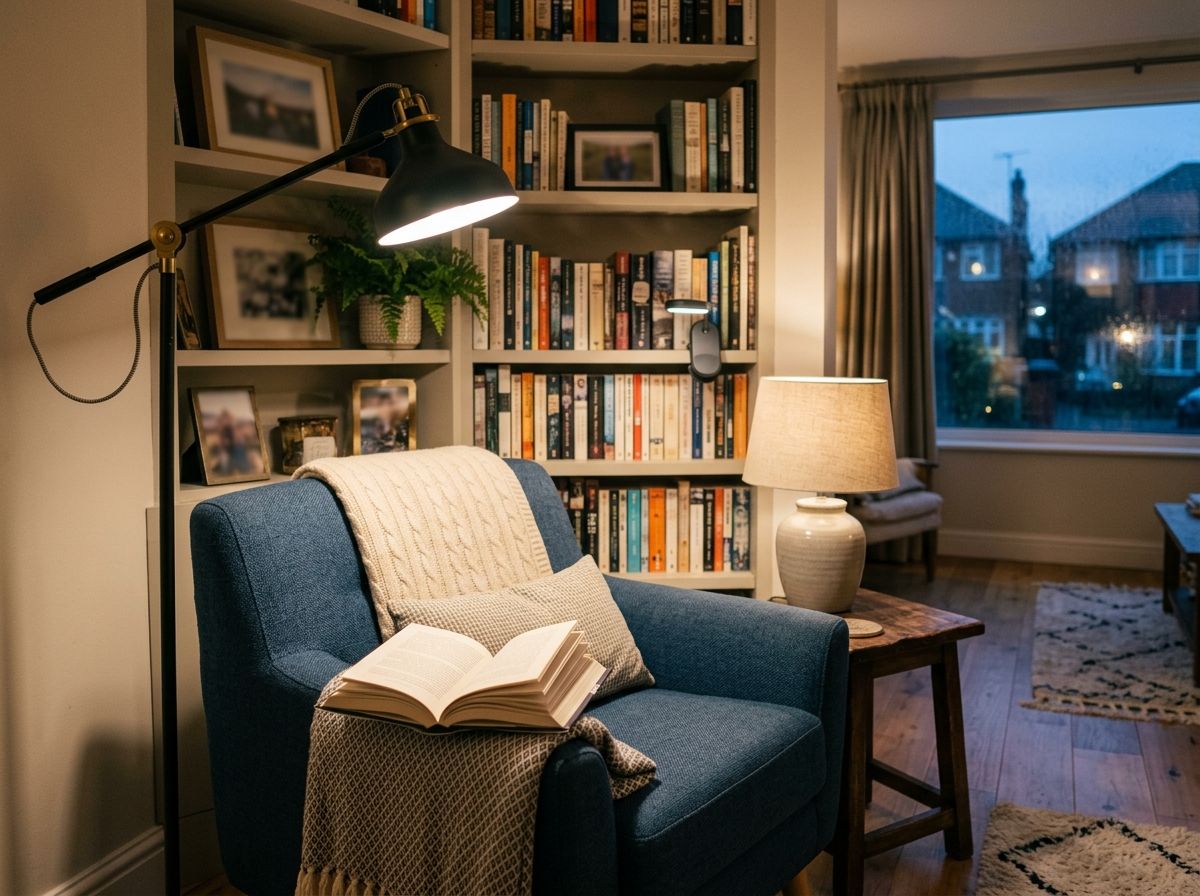
Adjustable floor and desk lamps. This is the mid-range, typically £30 to £100, and covers gooseneck or articulated-arm lamps that let you position the light exactly over the page. Look for a swing arm and a rotating head, since fixed lamps rarely land the beam where you actually need it.
High-output daylight lamps. Brands like Serious Readers, a UK manufacturer based in Aylesbury, sit at the top of the market. Their entry-level HD Essential starts at £99.99, the Alex Floor Light runs £299.99, and the flagship HD Floor Light is £399.99, according to the Serious Readers website. These use daylight-spectrum LEDs designed to restore contrast that ordinary bulbs strip out, and they’re aimed squarely at people who find normal lamps genuinely aren’t enough anymore.
What actually makes a reading lamp good
Four things separate a lamp that helps from one that just sits there looking nice.
- Brightness and lumens. For close reading, aim for at least 400 to 600 lumens from the bulb itself, not the lamp’s total output rating, which can be misleading on cheaper listings.
- Colour temperature. Warm white (2700K to 3000K) feels cosier and suits evening reading, while cooler daylight tones (5000K and above) sharpen contrast on the page but can feel clinical in a bedroom.
- Adjustability matters more than most buyers expect. A lamp you can angle, dim and swing towards the page beats a brighter fixed one almost every time.
- Glare control, meaning a shade or diffuser that stops the bulb shining straight into your eyes, since this is usually what causes the eye strain people blame on “not enough light.”
Typical costs, and where the money actually goes
Budget clip-on lights and basic bedside lamps sit under £30 and do a reasonable job for most casual readers. Stepping up to £30 to £80 buys you proper adjustability: a swing arm, multiple brightness steps, and usually a longer warranty. Above that, you’re paying for engineering rather than extra brightness alone. Serious Readers lamps carry a 5-year guarantee and a claimed daylight-spectrum output that ordinary LED bulbs don’t replicate, which is what justifies the jump from £40 to £300-plus.
Running costs are worth a mention too. A modern LED reading lamp typically draws 5 to 12 watts, so even hours of daily use adds only a few pounds a year to your electricity bill, according to typical UK LED consumption figures. Older halogen desk lamps draw considerably more and run hot enough to be a minor burn risk on long sessions, which is one reason most retailers have quietly phased them out.
Common mistakes people make when buying a reading lamp
Buyers repeat a handful of errors, and most are easy to avoid once you know what to check.
- Buying on brightness alone. A lamp rated at 1,300 lumens with no shade or diffuser can be harsher on the eyes than a well-designed 500-lumen lamp with proper glare control.
- Choosing a fixed-position lamp for bedside use, then discovering it can’t be angled away from a sleeping partner.
- Ignoring colour temperature, then wondering why a “bright enough” lamp still feels wrong for late-evening reading.
- Assuming all premium lamps are the same. Prices across the Serious Readers range span from under £100 to £400 depending on beam power and features, so it’s worth comparing models rather than assuming the flagship is the only sensible option.
- Forgetting to check the plug and safety marking. Any lamp sold in the UK should carry a UKCA or CE mark and a BS-compliant plug, which matters more with cheaper imported listings on marketplace sites.
How to actually choose one
Start by identifying where you’ll use it, since bedside, armchair and desk each favour a different shape of lamp. From there, set a rough budget band using the price tiers above, and within that band, prioritise adjustability and glare control over raw brightness numbers on the box.
If you’re buying for ageing eyes or a diagnosed vision condition, it’s worth trying a high-output daylight lamp before dismissing the cost, since several UK brands including Serious Readers offer risk-free home trials of 30 to 90 days. For everyone else, a mid-range adjustable lamp in the £30 to £80 range from Dunelm, John Lewis or Argos will comfortably cover most reading needs.
FAQs
What is the best type of lamp for reading in bed?
A dimmable bedside lamp or clip-on book light with a warm colour temperature (2700K to 3000K) works best, since it gives enough light to read comfortably without disturbing a partner or overstimulating your eyes before sleep.
How many lumens do I need for a reading lamp?
Aim for 400 to 600 lumens directed at the page for comfortable reading. More isn’t automatically better if the lamp lacks a shade or diffuser, since raw brightness without glare control can cause more strain, not less.
Are expensive reading lamps like Serious Readers actually worth it?
For people with ageing eyes or conditions affecting contrast sensitivity, many owners report a genuine difference, and the 5-year guarantee and trial periods reduce the risk of buying one. For casual readers, a £30 to £50 adjustable lamp usually does the job just as well.
What colour temperature is best for reading?
Warm white (2700K to 3000K) suits evening and bedtime reading, while cooler daylight tones (around 5000K) sharpen text contrast for daytime or task-focused reading. Neither is universally “correct,” it comes down to personal comfort.
Do LED reading lamps cost much to run?
No. A typical 5 to 12 watt LED reading lamp adds only a small amount to your annual electricity bill even with daily use, which is one reason LED has largely replaced halogen in this category.
Can a reading lamp actually reduce eye strain?
Yes, provided it has proper glare control and enough brightness for the task. Eye strain while reading is often caused by insufficient contrast or a bulb shining directly at the eyes rather than the page, both of which a well-designed lamp addresses.
Where can I buy reading lamps in the UK?
Argos, Dunelm, John Lewis and Amazon UK stock budget-to-mid-range options, while Serious Readers sells directly through its own website for the premium daylight-spectrum category. Prices change often, so check current listings before buying.