If you’re researching the Pugalier breed, here’s the core answer: a Pugalier is a crossbreed between a Pug and a Cavalier King Charles Spaniel, bred with the aim of keeping both breeds’ famously affectionate temperaments while softening some of the health problems each parent breed is known for on its own. It isn’t a recognised breed with the Royal Kennel Club, since crossbreeds aren’t eligible for pedigree registration, and UK prices for puppies typically run from around £800 to £1,500 depending on the breeder and litter.
This guide covers what a Pugalier actually looks and behaves like, the specific health conditions worth understanding in both parent breeds, current UK price and running costs, and the questions worth asking before you commit to bringing one home.
What Is a Pugalier?
A Pugalier is a first-generation or multi-generation cross between a Pug and a Cavalier King Charles Spaniel, two of the UK’s most popular small companion breeds. The idea behind the cross is straightforward: give the dog a slightly longer muzzle than a purebred Pug, which in theory reduces the breathing difficulties associated with an extremely flat face, while keeping the friendly, people-focused nature both parent breeds are known for.
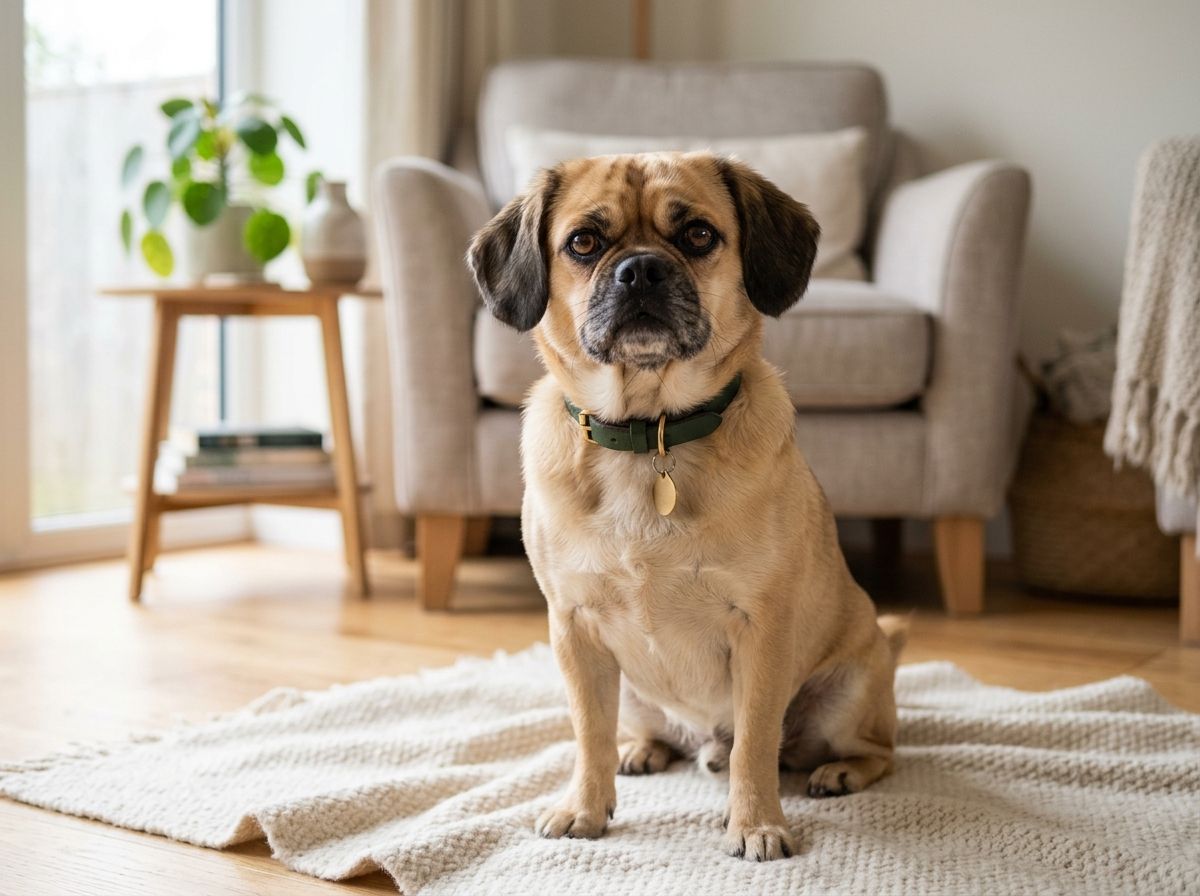
Because it’s a crossbreed rather than an established, standardised breed, a Pugalier’s exact appearance varies a lot from litter to litter and even within the same litter. Some puppies take strongly after the Pug parent with a shorter muzzle and stockier build, others favour the Cavalier with longer ears and a slightly leaner frame, and there’s no way to guarantee which traits any individual puppy will end up with.
Pugalier Temperament and Personality
Both parent breeds are known for being genuinely affectionate, sociable dogs that bond closely with their families, and Pugaliers generally inherit this. Expect a dog that wants to be near people, gets on well with children and other pets when properly socialised, and doesn’t cope brilliantly with being left alone for long stretches.
Cavaliers tend to be slightly calmer and more biddable than Pugs, who can be a touch more stubborn and food-motivated, so the balance you get depends partly on which traits come through strongest in your individual dog. Either way, this is a companion breed through and through, not a working or highly independent type of dog.
Size, Coat and Exercise Needs
A fully grown Pugalier typically weighs somewhere between 4.5kg and 9kg, putting it firmly in the small dog category, with a similarly modest height. Coat type varies depending on which parent it takes after more strongly, ranging from the Pug’s short, smooth coat to something closer to the Cavalier’s silkier, slightly longer fur, and grooming needs shift accordingly, from a quick weekly brush for a Pug-type coat to more regular brushing for a Cavalier-type one.
Exercise needs are moderate rather than high. A couple of short walks a day plus some indoor play generally covers it, which makes the Pugalier a realistic option for owners in flats or without access to a large garden, provided you’re not expecting a dog that wants long hikes.
Pugalier Health: What Both Parent Breeds Bring to the Cross
Pug health issues
Pugs are a brachycephalic breed, meaning they have a short, flat skull shape that can lead to Brachycephalic Obstructive Airway Syndrome (BOAS), a progressive condition affecting breathing, exercise tolerance, sleep and even eating. The Royal Kennel Club runs a Respiratory Function Grading Scheme with the University of Cambridge specifically for Pugs, alongside Bulldogs and French Bulldogs, to screen breeding dogs for this condition.
Cavalier King Charles Spaniel health issues
Cavaliers are particularly known for mitral valve disease, a progressive heart condition, and syringomyelia, a painful neurological condition affecting the spinal cord that’s linked to the breed’s skull shape. The Royal Kennel Club Heart Scheme screens breeding Cavaliers for heart disease, and in a significant update on 18 February 2026, the Royal Kennel Club expanded its Respiratory Function Grading Scheme to cover the Cavalier King Charles Spaniel and 13 other breeds, alongside its existing work with Pugs, Bulldogs and French Bulldogs.
What this means for a Pugalier specifically
Crossing two breeds doesn’t automatically remove either parent’s health risks, even though the intention behind creating the Pugalier was to reduce them. A Pugalier can still inherit BOAS-related breathing problems from its Pug side, heart or spinal issues from its Cavalier side, or a combination of both, and there’s genuinely no way to predict which risks any individual puppy carries without proper health testing of both parents.
If you’re considering a Pugalier specifically because you’re worried about the health problems of a purebred Pug or Cavalier, it’s worth being honest with yourself that a cross reduces the certainty of extreme traits rather than eliminating the underlying risk. Asking to see health test results for both parents, particularly heart screening for the Cavalier parent and respiratory grading for the Pug parent, is the single most useful thing you can do before buying.
How Much Does a Pugalier Cost in the UK?
Puppy prices for Pugaliers from UK breeders typically range from around £800 to £1,500, though this varies depending on the breeder’s reputation, location and whether health testing has been carried out on the parents. Be wary of prices that seem unusually low, since this can be a sign that the breeder hasn’t invested in proper health screening or aftercare.
Ongoing costs matter just as much as the purchase price. UK pet insurance for a small crossbreed typically runs from around £15 to £35 a month depending on the provider and level of cover, and given the potential heart, joint and respiratory issues both parent breeds carry, comprehensive lifetime cover is worth serious consideration rather than a basic accident-only policy.
Finding a Responsible Pugalier Breeder in the UK
Since 2020, Lucy’s Law has banned the commercial third-party sale of puppies in England, meaning you should always buy directly from the breeder or an approved rehoming centre rather than through a pet shop or dealer, and similar rules apply across the rest of the UK. Ask to see the puppy interacting with its mother in the place it was born, request evidence of health testing for both parent dogs, and be suspicious of any breeder unwilling to answer detailed questions or show you the whole litter.
A responsible breeder will usually ask you just as many questions as you ask them, covering your home setup, experience with dogs, and plans for exercise and socialisation. If a breeder seems entirely focused on payment and pickup logistics with little interest in where the puppy is going, that’s a signal to look elsewhere.
Common Mistakes to Avoid
Assuming crossbreeding automatically means better health. A Pugalier can still inherit either parent breed’s specific health conditions, so health testing of the parents matters more than the fact that it’s a cross at all.
Skipping insurance because it’s “just a small dog”. Both parent breeds carry a meaningful risk of costly conditions like heart disease and BOAS-related breathing problems, so adequate insurance is arguably more important here than for many other crossbreeds.
Not asking about the specific parent breed traits in your puppy’s litter. Since appearance and temperament vary a great deal between individual Pugalier puppies, ask the breeder what each parent is like and, where possible, meet them both rather than assuming your puppy will land in the middle.
Buying based on price alone. An unusually cheap Pugalier puppy is more likely to come from a breeder who hasn’t invested in health testing, proper socialisation, or veterinary checks, which can cost you considerably more in vet bills later.
FAQs
Is a Pugalier a recognised breed?
No, the Pugalier isn’t recognised by the Royal Kennel Club, since it’s a crossbreed rather than an established pedigree breed with a fixed standard. This means there’s no official breed standard and puppies can vary noticeably in appearance and temperament.
How much does a Pugalier cost in the UK?
UK Pugalier puppies typically cost between roughly £800 and £1,500, depending on the breeder, location and whether the parents have been health tested. Unusually low prices can be a sign the breeder hasn’t invested in proper health screening.
Are Pugaliers healthy dogs?
Pugaliers can still inherit health conditions from either parent breed, including breathing problems linked to the Pug’s flat face and heart or spinal conditions linked to the Cavalier, so crossing the breeds doesn’t guarantee better health on its own. Asking for health test results on both parents is the best way to reduce this risk.
How big does a Pugalier get?
Most adult Pugaliers weigh somewhere between 4.5kg and 9kg, making them a small companion dog, though exact size varies depending on which parent breed’s traits come through more strongly. There’s no fixed standard, so litter mates can vary in size.
Do Pugaliers need a lot of exercise?
No, Pugaliers generally need only moderate exercise, typically a couple of short walks a day plus some indoor play, making them suitable for owner without access to a large garden. This lower exercise requirement reflects both parent breeds, which are companion dogs rather than working types.
Do Pugaliers shed a lot?
Shedding depends on which parent’s coat type comes through more strongly, with Pug-type coats shedding moderately and Cavalier-type coats needing more regular brushing but not necessarily more shedding. Neither parent breed is considered hypoallergenic, so a Pugalier isn’t a good choice if you specifically need a low-shedding dog.
Can I get pet insurance for a Pugalier?
Yes, UK pet insurers cover crossbreeds including Pugaliers, typically costing around £15 to £35 a month depending on the provider and level of cover chosen. Given the potential health risks inherited from both parent breeds, comprehensive lifetime cover is generally worth the extra cost over a basic accident-only policy.
What’s the difference between a Pugalier and a Cavapug?
Nothing, these are simply two different names used for the same cross between a Pug and a Cavalier King Charles Spaniel, and you’ll see breeders and owners use either term interchangeably. There’s no official distinction between them since neither is a Royal Kennel Club recognised breed.