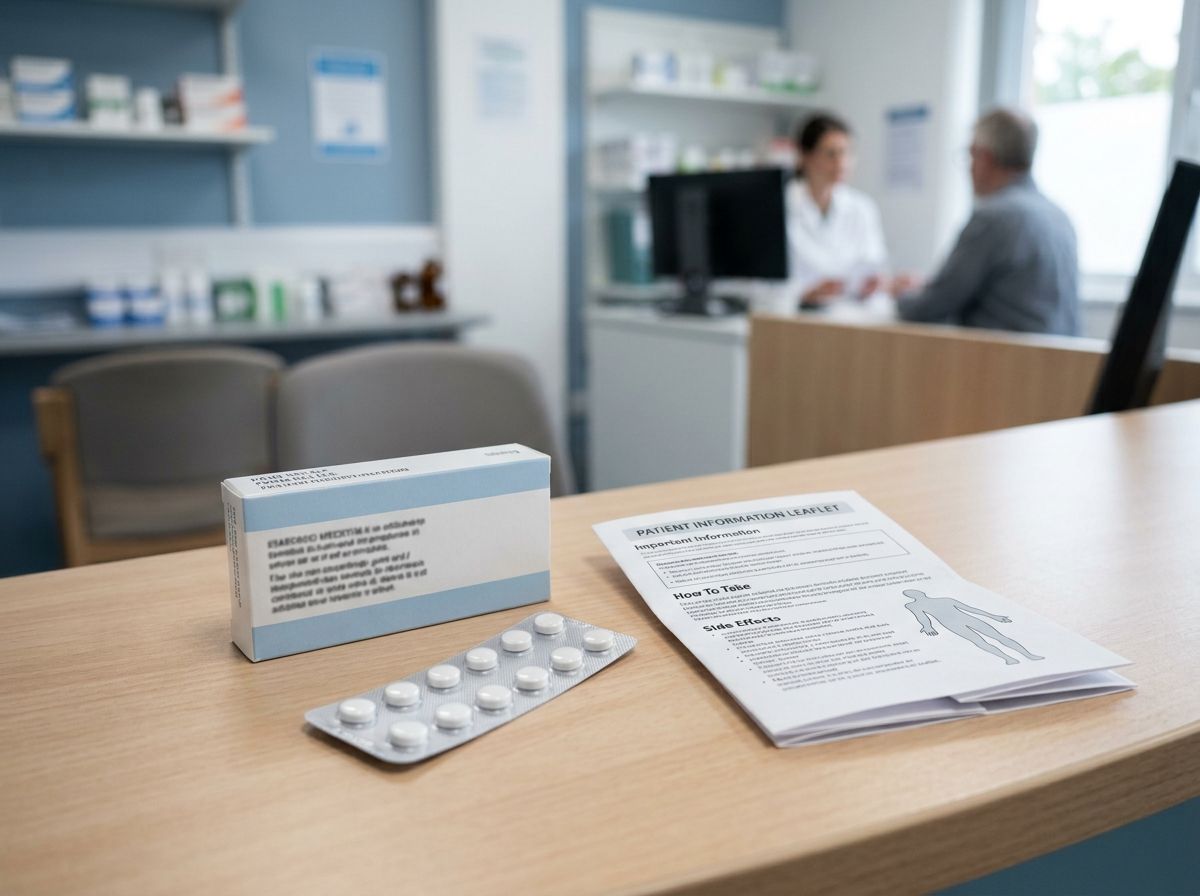
If your GP or hospital doctor has just prescribed nefopam, you’re probably wondering what it actually is and why it’s different from the paracetamol or codeine you’ve taken before. Nefopam is a prescription-only painkiller, also sold under the brand name Acupan, used for moderate pain that hasn’t responded well to more common medicines. Unlike codeine or morphine, it isn’t an opioid, so it works on pain signals in a different way and carries a different set of side effects. This guide walks through what nefopam treats, how it’s usually dosed, what to watch for, and when to get help.
Everything here reflects current NHS.UK and NHS Specialist Pharmacy Service guidance. Nothing in this article replaces advice from your own doctor or pharmacist, since only they know your full medical history.
What Is Nefopam?
Nefopam is a non-opioid, centrally acting painkiller. According to NHS.UK, it’s used to treat moderate pain, including pain after an operation or serious injury, dental pain, joint or muscle pain, and pain caused by cancer. It’s also sometimes used for longer-standing pain once weaker painkillers stop working well enough on their own.
It belongs to a chemical family called benzoxazocines and is chemically unrelated to opioids, paracetamol or anti-inflammatory drugs like ibuprofen. Its exact mechanism isn’t fully understood, but it’s thought to work by blocking the reuptake of certain brain chemicals (serotonin, dopamine and noradrenaline) involved in how pain signals travel to the brain, which reduces how intensely you feel pain. One genuine advantage over opioids is that nefopam doesn’t suppress breathing, which is why it’s sometimes chosen after surgery when doctors want to avoid opioid side effects.
In the UK, nefopam is only available on prescription and comes as 30mg tablets. It’s not something you can buy over the counter at a pharmacy, and you should be wary of any website offering it without a proper prescription, since genuine UK pharmacies will always require one.
What Does Nefopam Treat?
Doctors typically prescribe nefopam when milder painkillers such as paracetamol or naproxen haven’t controlled the pain well enough. Patient.info lists its main uses as moderate pain not managed by standard analgesics, which in practice covers a fairly wide range of situations.
Common reasons for a nefopam prescription include:
- Pain following surgery, where it’s often used alongside other painkillers as part of a wider pain management plan
- Musculoskeletal pain, such as joint or muscle pain
- Dental pain
- Renal colic (the severe pain caused by kidney stones)
- Cancer-related pain, particularly when other options are unsuitable
- Chronic pain that hasn’t responded to first-line treatments, though NHS guidance is honest that the evidence here is weaker
It’s worth flagging that nefopam isn’t included in NICE’s chronic pain guidelines, and the Scottish Intercollegiate Guidelines Network (SIGN) has said the evidence for its use in long-term pain is too limited to make firm recommendations. The NHS Specialist Pharmacy Service notes it’s sometimes used as an add-on when other options are contraindicated or not working, rather than as a first choice.
Nefopam Dosage: What the NHS Says
Only your doctor should decide your dose, based on your pain, weight, other conditions and other medicines. That said, knowing the typical range helps you check that what you’ve been prescribed looks reasonable and lets you ask sensible questions.
According to NHS.UK, the usual dose is one or two 30mg tablets taken three times a day. NHS Specialist Pharmacy Service guidance gives a slightly wider range for licensed use: a starting dose of 30mg to 60mg three times daily, which can be increased under medical supervision up to a maximum of 90mg three times a day in some cases.
A few practical points:
- Take it exactly as your doctor or the label instructs, and don’t increase the dose yourself even if the pain feels the same.
- Pain relief usually begins within roughly 30 to 60 minutes, though this varies from person to person.
- Nefopam isn’t licensed for children under 12.
- If you miss a dose, take it when you remember unless it’s nearly time for the next one, in which case skip the missed one rather than doubling up.
Side Effects of Nefopam
Like most painkillers strong enough to help with moderate pain, nefopam comes with a fairly noticeable side effect profile. According to NHS.UK, the most common side effects include:
- Feeling sick (nausea)
- Dizziness or light-headedness
- Feeling nervous, confused or shaky
- A dry mouth
- Difficulty passing urine
- Numbness or tingling in the hands and feet
- Seeing or sensing things that aren’t there (hallucinations), though this is less common
One harmless but alarming side effect worth knowing about in advance: nefopam can turn your urine pink. NHS.UK confirms this is completely harmless and nothing to worry about, but it catches people off guard if nobody mentions it beforehand.
Less commonly, nefopam has been linked to low sodium levels in the blood (hyponatraemia) and, in overdose, can cause convulsions, agitation, a fast heartbeat and hallucinations, according to an NHS Tayside prescribing bulletin. This is why doctors are generally cautious about prescribing large quantities at once.
Who Shouldn’t Take Nefopam
Nefopam isn’t suitable for everyone, and your doctor needs the full picture before prescribing it. Patient.info highlights that your doctor should know if:
- You’re pregnant, trying to conceive, or breastfeeding
- You have liver or kidney problems
- You’ve had difficulty passing urine in the past
- You have a history of seizures or convulsions
- You have glaucoma or other conditions affecting eye pressure
- You have heart problems, particularly a rapid or irregular heartbeat
Nefopam must not be combined with monoamine oxidase inhibitors (MAOIs), a type of antidepressant that includes phenelzine, isocarboxazid and tranylcypromine. The NHS Specialist Pharmacy Service is explicit that this combination is contraindicated because it raises the risk of severe high blood pressure. Always tell your doctor about every medicine, supplement and herbal remedy you’re taking before starting nefopam.
Alcohol, Driving and Nefopam
Alcohol can make nefopam’s drowsiness and dizziness worse, so it’s sensible to avoid drinking while you’re taking it, particularly in the first few days as you find out how it affects you.
Because nefopam can cause dizziness, drowsiness or blurred vision in some people, don’t drive or operate machinery until you know how it affects you. If you feel any of these effects, wait until they’ve passed completely before getting behind the wheel.
Can You Become Dependent on Nefopam?
Nefopam isn’t an opioid and doesn’t carry the same well-documented dependency risk as drugs like codeine or morphine. That said, it’s still standard medical practice to use the lowest effective dose for the shortest time needed to control your pain, and to review long-term use regularly with your doctor. If you’ve been taking it for a while and want to stop, talk to your GP first rather than stopping suddenly, particularly if you’ve been on a higher dose.
What to Do If You Suspect an Overdose
Nefopam can be dangerous in overdose, with possible effects including convulsions, hallucinations, agitation and a rapid heartbeat, according to NHS Tayside’s prescribing guidance. If you or someone else has taken more than the prescribed amount, or is showing any of these symptoms, call 999 or go to A&E immediately. Take the packet or leaflet with you if you can, so staff know exactly what’s been taken.
FAQS
What is nefopam used for?
Nefopam is a prescription painkiller used for moderate pain, including pain after surgery or injury, dental pain, joint and muscle pain, kidney stone pain, and cancer pain, when weaker painkillers like paracetamol haven’t been enough on their own.
Is nefopam an opioid?
No. Nefopam is a non-opioid, centrally acting analgesic, chemically unrelated to opioids such as codeine or morphine, which is why it doesn’t carry the same risk of breathing problems that opioids can cause.
What is the usual dose of nefopam?
The usual NHS-recommended dose is one or two 30mg tablets taken three times a day, though your doctor may adjust this depending on your pain and health, within a licensed range of 30mg to 90mg three times daily.
Why does nefopam turn urine pink?
This is a known, harmless side effect of the medicine and doesn’t indicate any problem with your kidneys or bladder. It’s mentioned specifically by NHS.UK so people aren’t alarmed if it happens.
Can I drink alcohol while taking nefopam?
It’s best avoided, since alcohol can increase nefopam’s side effects such as drowsiness and dizziness, making you feel considerably worse than either would alone.
Is nefopam addictive?
It doesn’t carry the same dependency profile as opioid painkillers, but doctors still recommend using the lowest dose for the shortest time needed and reviewing use regularly, rather than staying on it indefinitely without check-ins.
Can children take nefopam?
No. Nefopam isn’t licensed for children under 12 years old, according to NHS.UK.
What should I do if I miss a dose?
Take it as soon as you remember, unless it’s almost time for your next scheduled dose, in which case skip the missed one and continue as normal rather than taking two doses together.
Is nefopam safe in pregnancy?
This needs a direct conversation with your doctor before starting or continuing treatment, since nefopam isn’t automatically considered safe in pregnancy and your prescriber needs to weigh the risks and benefits for your specific situation.