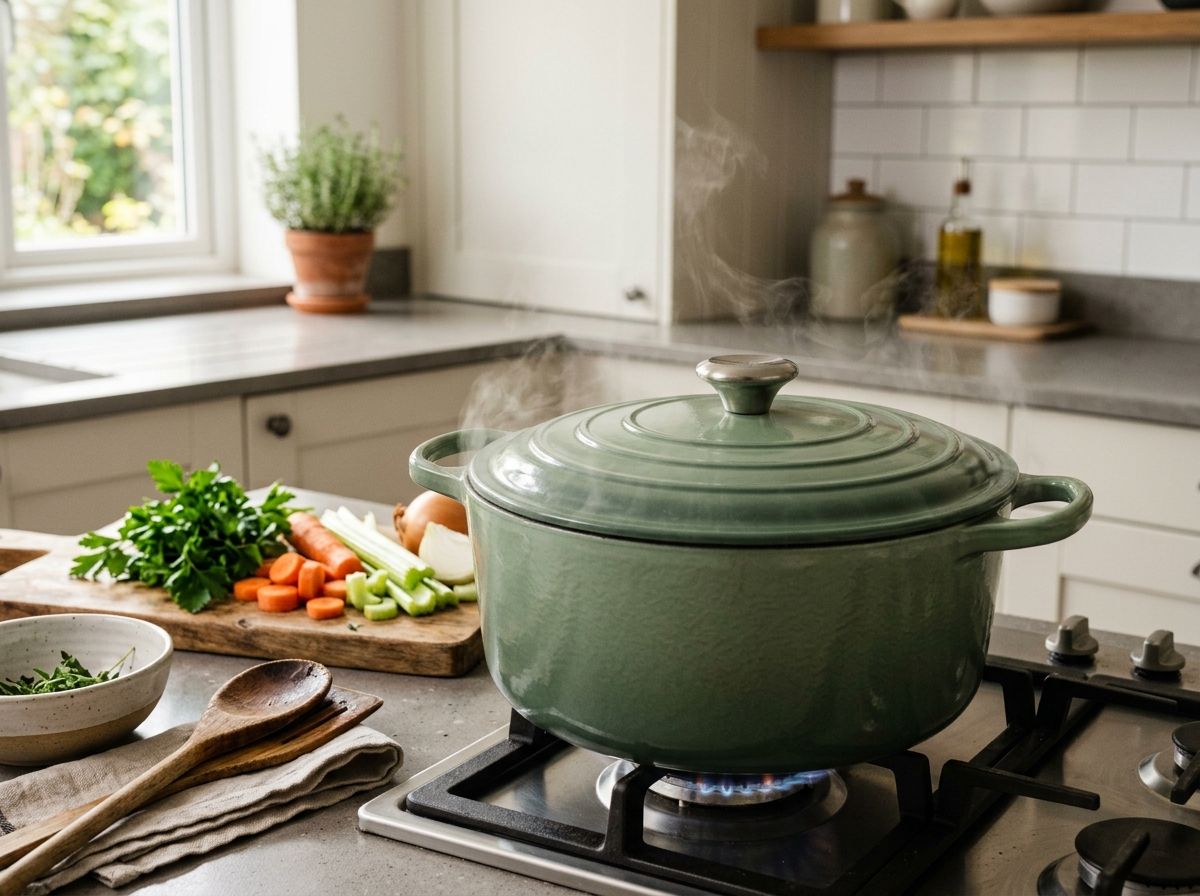
If you’ve spotted a heavy, lidded pot in a friend’s kitchen or on a cookery show and wondered what it’s called, the answer is a Dutch oven: a thick-walled cooking pot, usually cast iron, with a tight-fitting lid that works on the hob and in the oven. It’s built for slow, even cooking, so it’s the pot behind most stews, braises and no-knead loaves you’ll ever make. Below, we’ll walk through exactly how a Dutch oven works, what it costs in the UK right now, and how to look after one so it lasts decades.
This guide pulls together everything scattered across product pages, forums and old blog posts, updated with current UK prices and stock availability, so you shouldn’t need to open another tab.
What Is a Dutch Oven, Exactly?
A Dutch oven is a heavy cooking pot with thick walls and a snug-fitting lid, designed to hold and release heat slowly and evenly. Most are made from cast iron, either bare or coated in enamel, though you’ll also find ceramic and cast aluminium versions.
The name has nothing to do with actual ovens in the modern sense. According to the Merriam-Webster Dictionary, the term originally described several different devices: a metal shield for roasting in front of an open fire, a brick oven heated by its own walls, and later the cast-iron kettle we’d recognise today. The design was refined in America during the colonial period, with legs added to hold it above coals and a flanged lid to keep embers on top, changes often credited to Paul Revere.
In France, the same pot is called a cocotte. In Australia, campers call it a camp oven. And in the UK, you’ll hear it called a casserole dish just as often as a Dutch oven, and the two terms are largely interchangeable for the enamelled, stovetop-and-oven versions sold here.
Dutch Oven vs Casserole Dish: Is There a Difference?
In UK shops, “casserole dish” and “Dutch oven” usually describe the same object: a round or oval, lidded, cast iron pot. Le Creuset, for instance, markets its cookware as casserole dishes on its UK site, while American brands lean on “Dutch oven.”
There’s a small technical distinction worth knowing. A traditional camping Dutch oven has three short legs and a flat, rimmed lid so you can pile hot coals on top, since it’s designed to sit directly in a fire. The modern kitchen version has a flat base and rounded lid, made for a hob and a conventional or fan oven, not embers. If you’re buying for home cooking rather than camping, you want the second type, whatever the label says.
What’s It Made From?
Enamelled cast iron is the most common choice in UK kitchens. The cast iron core holds heat brilliantly, while the enamel coating means you never need to season it and it won’t react with acidic ingredients like tomatoes or wine. Le Creuset, ProCook and Lakeland all sell this style.
Bare cast iron is heavier duty again and needs seasoning (a thin layer of baked-on oil) to stop it rusting and sticking. It’s the traditional choice for campfire cooking and bread baking, and it’s usually cheaper than enamelled versions.
Ceramic Dutch ovens are lighter and often prettier, but they’re more prone to chipping and cracking under sudden temperature changes.
Cast aluminium is the lightest option, useful if you struggle to lift a full cast iron pot, though it won’t hold heat quite as long.
What Size Dutch Oven Do You Need?
Dutch ovens are usually sold by diameter (in centimetres) or by capacity (in litres or quarts). As a rough guide for UK households:
- 20 to 22cm (roughly 2.5 to 3.5 litres): good for a couple, or side dishes and small batches of soup.
- 24 to 26cm (around 4 to 5 litres): the most popular size, comfortable for a family of four and standard bread loaves.
- 28 to 30cm and above (6 litres plus): batch cooking, big joints of meat, or catering for a crowd.
If you only ever buy one, 24cm is the size most UK cookery writers recommend as a starting point.
How Much Does a Dutch Oven Cost in the UK?
Prices vary hugely by brand and size, so treat these as a snapshot rather than gospel, since retailers run sales constantly and figures move.
- Le Creuset: a 26cm Signature round casserole carries an RRP of around £285, according to Ideal Home’s comparison of the two brands, though John Lewis regularly discounts Le Creuset stock by up to 40%.
- ProCook: a comparable 24cm cast iron casserole has an RRP nearer £159, but Ideal Home found it selling for as little as £79 direct from ProCook, and Woman & Home’s review notes prices starting around £75 for smaller pieces.
- Budget and own-brand options: enamelled cast iron pots from smaller brands can be found from roughly £20 to £40 on marketplaces such as eBay, though quality and heat distribution vary.
Always check the current price on the retailer’s own site before you buy, since sales and stock change week to week.
How to Use a Dutch Oven
Getting good results is mostly about heat control, not fancy technique.
- Preheat gently. Cast iron takes longer to heat than a thin pan, so start on medium rather than high to avoid scorching the enamel.
- Brown your ingredients first. Searing meat or softening onions in the pot before adding liquid builds flavour into the base of whatever you’re cooking.
- Add liquid and bring to a simmer on the hob, then put the lid on.
- Move it into the oven for long, slow cooking. Because the walls are so thick, heat spreads evenly around the food rather than concentrating at the bottom, which is why stews and braises rarely catch in a Dutch oven the way they can in a thin saucepan.
- Rest before serving. The pot stays hot for a long time after you take it out, so dishes keep warming through even off the heat.
Oven-Safe Temperatures Explained
Most enamelled cast iron Dutch ovens sold in the UK are oven safe up to 260°C, which covers virtually every home oven setting, including the high heat needed for crusty bread. Bare cast iron typically tolerates even higher temperatures, since there’s no enamel coating to worry about. Always check the manufacturer’s guidance for your specific lid and handles, since some plastic or wooden knobs have a lower heat limit than the pot itself and may need replacing with a metal one for high-temperature baking.
Baking Bread in a Dutch Oven
One of the biggest reasons Dutch ovens have surged in popularity is no-knead bread. The tight lid traps steam released by the dough as it bakes, which is exactly the environment a professional steam-injected oven creates and a normal home oven can’t manage on its own. That trapped steam gives you the crisp, blistered crust associated with artisan bakery loaves.
King Arthur Baking’s guidance for home bakers notes that the trick is simply the pot’s ability to hold in that steam, whether you’re using a dedicated bread oven pot or a standard round casserole. Preheat the empty pot, lower the dough in carefully (a paper sling makes this much easier and safer), bake covered for the first 20 minutes or so, then remove the lid to let the crust brown for the final stretch.
Cleaning and Looking After Your Dutch Oven
Enamelled cast iron is the easiest type to maintain. Most manufacturers say it’s dishwasher safe, though hand washing with warm soapy water protects the enamel’s shine over the years. Avoid metal scourers, which can scratch the coating, and let the pot cool fully before plunging it into cold water, since a sudden temperature shock can crack enamel.
Bare cast iron needs a different routine: dry it thoroughly straight after washing, rub in a thin layer of neutral oil while it’s still warm, and never leave it soaking. Skipping this step is the main reason bare cast iron rusts.
Is a Dutch Oven Worth the Money?
For most UK cooks, yes, and you don’t need to spend Le Creuset money to get real value. A mid-range enamelled cast iron pot from a brand like ProCook will braise, roast, bake and simmer for many years, and cast iron doesn’t wear out the way non-stick coatings do. The main argument for paying more is the extended warranty (Le Creuset offers a lifetime guarantee) and a wider colour range, rather than any dramatic difference in day-to-day cooking performance.
FAQs
What is a Dutch oven used for?
A Dutch oven is used for slow-cooked dishes that benefit from steady, even heat: stews, braises, casseroles, pot roasts, soups and no-knead bread. Its thick walls and tight lid trap moisture and heat, so food cooks gently without drying out, which makes it well suited to tougher cuts of meat that need long cooking times.
Can you put a Dutch oven in the oven?
Yes, that’s exactly what it’s designed for. Enamelled cast iron versions are typically safe up to around 260°C, so they can move straight from the hob into a hot oven. Check the handle and lid knob material first, since some plastic fittings have a lower temperature limit than the pot itself.
Is a Dutch oven the same as a casserole dish?
In UK shops, yes, largely. Both describe a heavy, lidded, oven-and-hob-safe pot, and brands like Le Creuset use “casserole dish” as their UK product name for what’s marketed as a Dutch oven elsewhere. The only real distinction is the traditional three-legged camping version, which is a different design entirely.
What size Dutch oven should I buy first?
A 24cm to 26cm pot suits most households and covers everything from a family stew to a standard loaf of bread. Go smaller if you’re cooking for one or two, or larger if you batch cook or entertain regularly.
Do I need to season an enamelled Dutch oven?
No. Enamel coating means the cast iron underneath never touches food, so there’s nothing to season. Seasoning only applies to bare, uncoated cast iron.
Why is it called a Dutch oven?
The exact origin isn’t settled. Merriam-Webster’s dictionary entry traces the name to several older devices, including an open-fire roasting shield and a brick hearth oven, with the modern lidded pot developing later in America during the colonial period.
How do you clean a Dutch oven?
Wash enamelled cast iron with warm water and a soft sponge, avoiding metal scourers that can scratch the coating. Bare cast iron should be dried immediately and rubbed with a little oil to stop it rusting, and neither type should be left to soak for long periods.
Can you use a Dutch oven on an induction hob?
Most cast iron Dutch ovens, enamelled or bare, work on induction hobs, since cast iron is naturally magnetic. Check the base of the specific product listing to confirm, as some ceramic or aluminium versions aren’t induction compatible.
Is Le Creuset or ProCook better for a Dutch oven?
Both perform well for everyday cooking, but Le Creuset costs considerably more (around £285 RRP for a 26cm round casserole) and comes with a lifetime guarantee, while ProCook offers a similar size for roughly half the price with a shorter warranty. For most home cooks, ProCook delivers comparable results at a lower cost.