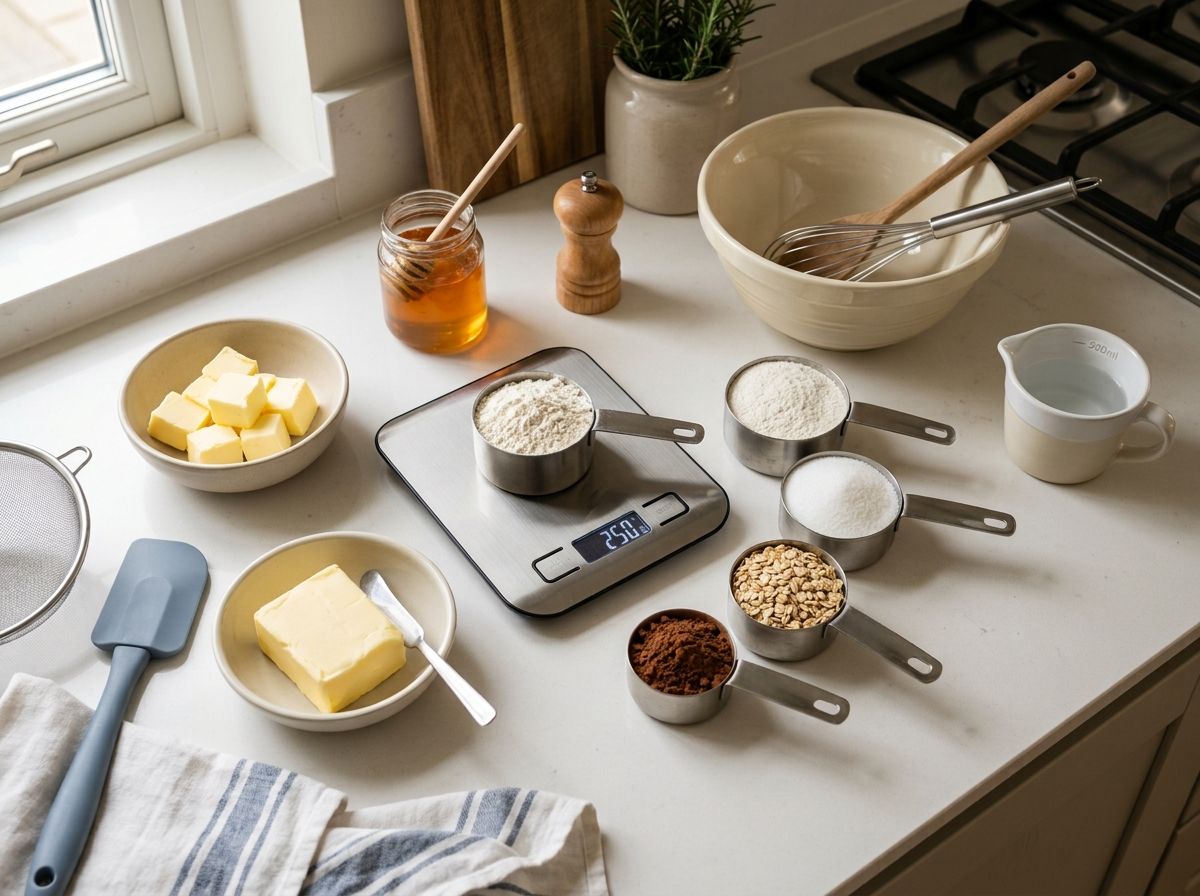
There’s no single answer to 1 cup in grams, because a cup measures volume and grams measure weight, so the figure changes depending on what you’re measuring. As a quick reference: 1 cup of plain flour is around 125g, 1 cup of granulated sugar is around 200g, and 1 cup of butter is around 227g. Denser ingredients weigh more per cup, lighter or airier ones weigh less, even though they’d fill exactly the same cup.
This guide gives you exact gram figures for the ingredients people search for most, explains why “UK cup” isn’t really a standard measurement, and covers millilitre conversions for half cups and other common fractions too, so you shouldn’t need to check anywhere else.
Is there a UK cup measurement?
Not officially, and this is worth clearing up first, since it trips a lot of people up. UK recipes have rarely used cup measurements since the 1960s, favouring grams and millilitres instead, according to conversion data published by The Calculator Site. When you see “1 cup” in a recipe today, it’s almost always either an American recipe using the US cup (236.59ml, rounded to 240ml on nutrition labels), or an Australian, New Zealand or newer UK recipe using the metric cup (250ml), which has become the informal standard across the Commonwealth.
There’s also an older imperial cup of 284.13ml, which you might come across in very old British or Commonwealth cookbooks, though it’s rarely used today. For the conversions in this guide, we’re using the US cup (240ml), since that’s what the vast majority of recipes you’ll find online actually mean when they say “1 cup,” unless the recipe specifically states otherwise.
1 cup in grams: full ingredient chart
Here’s the core reference table, using standard spoon-and-level measuring, the most accurate way to fill a measuring cup with dry ingredients (more on that below).
| Ingredient | 1 cup in grams |
| Plain flour | 125g |
| Self-raising flour | 125g |
| Bread flour | 130g |
| Granulated sugar | 200g |
| Caster sugar | 200g |
| Light or dark brown sugar (packed) | 220g |
| Icing sugar | 120g |
| Butter | 227g |
| Rolled oats | 90g |
| Uncooked rice | 185g to 200g |
| Cocoa powder | 85g |
| Honey | 340g |
| Milk | 240g |
| Water | 240g |
These figures are widely used estimates, and actual weight can vary by 5 to 10% depending on brand, freshness, and how the ingredient settles, so treat them as reliable working figures rather than laboratory-precise measurements.
Grams of 1 cup: why the number changes by ingredient
The reason 1 cup doesn’t equal a fixed number of grams comes down to density, how tightly the particles of an ingredient pack together in the same space. Flour is light and full of tiny air pockets, so a cup of it weighs relatively little. Honey is thick and dense with almost no trapped air, so a cup of it weighs nearly three times as much as the same cup of flour.
This is exactly why professional bakers weigh ingredients rather than relying on cup measurements. A recipe that says “1 cup” without specifying the ingredient is genuinely meaningless as a weight, since the answer could be anywhere from around 85g (cocoa powder) to 340g (honey) depending entirely on what’s being measured.
1 cup flour in grams
Flour is one of the most searched conversions, and it’s also one where measuring technique matters most. 1 cup of plain flour weighs 125g when spooned into the cup and levelled off with a knife, the method most baking guides recommend. If you scoop the cup directly into the flour bag instead, you can pack in anywhere from 140g to 150g, according to conversion guidance from UK Calculator, which is enough to noticeably dry out a cake or loaf.
Self-raising flour weighs almost the same as plain flour, around 125g per cup, since the added raising agent makes up a tiny fraction of the total weight. Bread flour is slightly heavier at around 130g per cup, and cake flour, which is more finely milled, is lighter at around 115g per cup.
1 cup sugar in grams
Sugar varies more by type than most people expect. Granulated and caster sugar both weigh around 200g per cup, since caster sugar’s finer grains pack similarly despite the smaller crystal size. Brown sugar, when firmly packed as most recipes intend, weighs around 220g per cup, denser because the molasses coating makes the grains stick together and compress. Icing sugar is much lighter, at around 120g per cup, since it’s finely powdered and holds a lot of air.
1 cup butter in grams
1 cup of butter weighs 227g, whether it’s softened, chilled, or melted, since the gram weight doesn’t change with temperature, only how easy it is to pack into the cup. UK butter is typically sold in 250g blocks, so 1 US cup of butter is just slightly under a full UK block, worth knowing if you’re converting a recipe and don’t want to dirty a set of scales for a small difference.
1/2 cup in millilitres and other common fractions
Since a US cup is 240ml, working out fractions is straightforward once you know the base figure. Here’s the full breakdown for the sizes people search for most:
- 1/2 cup in millilitres = 120ml
- 1/3 cup in millilitres = 80ml
- 1/4 cup in millilitres = 60ml
- 3/4 cup in millilitres = 180ml
- 2 cups in millilitres = 480ml
If you’re working from a metric cup (250ml) instead, the same fractions come out slightly higher: half a metric cup is 125ml, a quarter is 62.5ml, and three-quarters is 187.5ml. The difference is small at half-cup level but can add up across a full recipe with several liquid ingredients, so it’s worth checking which cup standard your specific recipe is using if precision matters.
1/2 cup in grams by ingredient
Since weight still depends on density even at half-cup quantities, here are the most searched half-cup conversions:
- Half a cup of plain flour = 60g to 65g
- Half a cup of granulated sugar = 100g
- Half a cup of butter = 113g to 114g
- Half a cup of rolled oats = 45g
- Half a cup of honey = 170g
How to measure a cup accurately if you don’t have scales
If you’re working from a recipe that uses cups and you don’t own a set of measuring cups, a standard UK mug typically holds around 250ml to 300ml, which is close enough to a metric cup for most non-precision baking, though it’s not accurate enough for anything delicate like macarons or bread that needs a precise flour-to-water ratio.
For dry ingredients, spoon the ingredient loosely into the cup or mug rather than scooping directly from the bag or packet, then level off the top with the flat edge of a knife. This single habit is the biggest factor in getting consistent results from cup measurements, since scooping can pack in noticeably more than the recipe intended.
Why weighing in grams beats measuring in cups
A basic digital kitchen scale currently costs around £10 to £15 from most UK supermarkets and kitchenware shops, and it removes the guesswork entirely. Cup measurements can vary by up to 20% depending on how firmly an ingredient is packed, how it’s scooped, and even how humid your kitchen is on the day, according to conversion guidance published by UK Calculator.
For everyday cooking, that variation rarely matters much. For baking specifically, where ratios between flour, fat, sugar and liquid genuinely affect texture and rise, that same 20% swing can be the difference between a cake that works and one that sinks in the middle. If you bake regularly and keep converting American recipes, a scale pays for itself within a few bakes just in ingredients saved from failed attempts.
FAQs
How many grams is 1 cup?
There’s no single answer, since it depends entirely on the ingredient. A cup of flour weighs around 125g, a cup of sugar around 200g, and a cup of butter around 227g, because different ingredients have different densities.
How many grams is 1 cup of flour?
1 cup of plain or self-raising flour weighs approximately 125g when spooned into the cup and levelled off. Scooping directly from the bag can pack in as much as 140g to 150g, which is why spooning and levelling gives a more consistent result.
How many grams is 1 cup of sugar?
Granulated and caster sugar both weigh approximately 200g per cup. Brown sugar, when packed as most recipes intend, weighs slightly more at around 220g per cup, while icing sugar is lighter at around 120g per cup.
How many millilitres is 1/2 cup?
Half a US cup is 120ml, based on the standard 240ml US cup. If you’re using a metric cup instead (250ml, common in UK, Australian and New Zealand recipes), half a cup is 125ml.
Is a UK cup the same as a US cup?
No, there’s no single official UK cup measurement, since UK recipes have mostly used grams and millilitres since the 1960s rather than cups. When UK sources do use cups, they typically mean the metric cup (250ml), which is slightly larger than the US cup (240ml).
How many grams is 1 cup of butter?
1 cup of butter weighs 227g, regardless of whether it’s softened, chilled, or melted, since gram weight doesn’t change with temperature. This is just under a standard UK 250g butter block.
Why does 1 cup of flour weigh less than 1 cup of sugar?
Flour is lighter and airier than sugar, with more space trapped between its particles, so the same volume weighs less. Sugar granules pack more tightly together, meaning more mass fits into the same 240ml cup.
What’s the most accurate way to measure a cup of a dry ingredient?
Spoon the ingredient loosely into the measuring cup, then level off the top with the flat edge of a knife, rather than scooping the cup directly into the bag or container. Scooping can pack in 10 to 20% more than the recipe intended, which is a common cause of dry, dense baking.