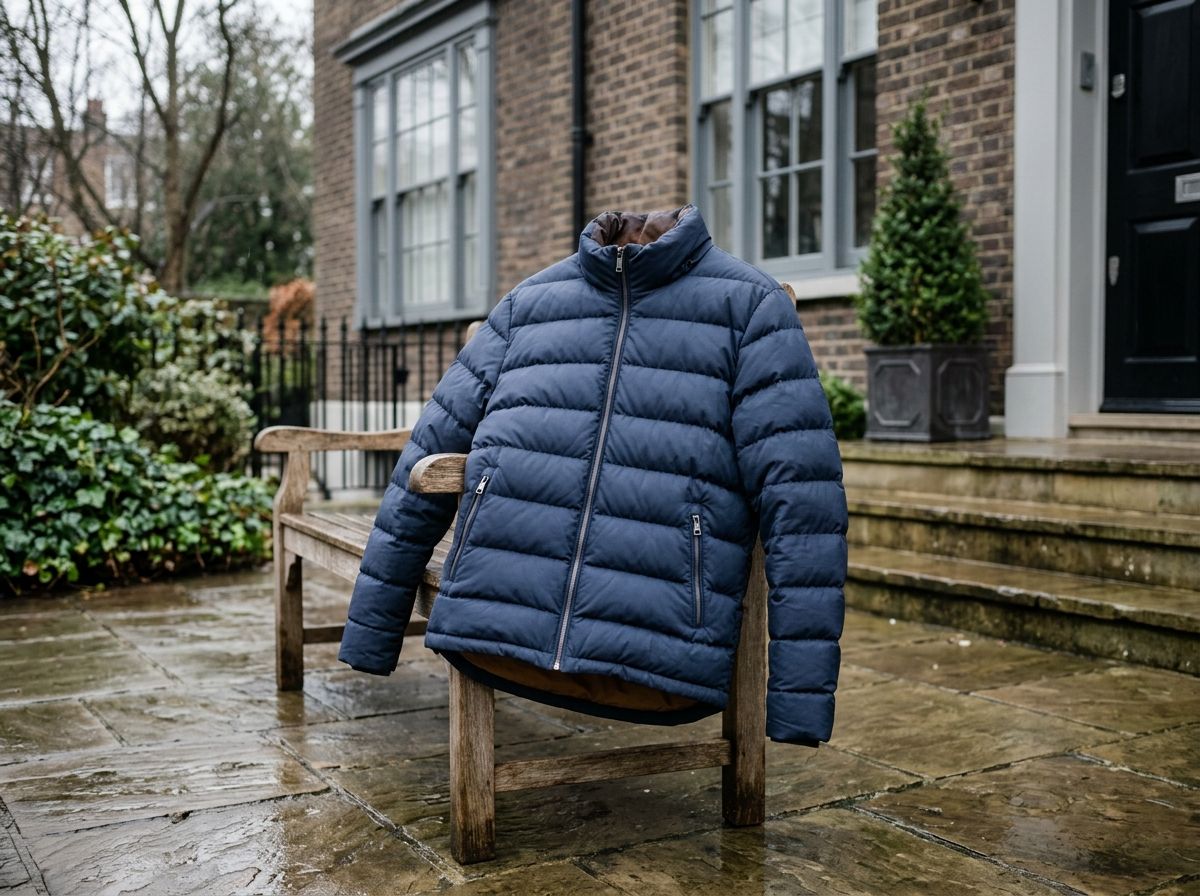
A puffer jacket is a quilted, padded coat filled with either down or synthetic insulation, designed to trap warm air in stitched channels across the fabric. If you’re trying to work out which one to buy for a UK winter, the short answer is this: down suits cold, dry conditions and packs down small, while synthetic fill copes better with the damp, drizzly weather most of the UK actually gets. This guide covers fill types, sizing, prices and how to keep a puffer jacket looking good for years rather than one soggy winter.
Puffer jackets have shifted a long way from their bulky, slightly awkward reputation of the early 2000s. Modern versions are slimmer, more tailored and genuinely wearable for work, weekends or hiking, which is why they’ve become a fixture in UK wardrobes rather than a passing trend.
Down vs Synthetic Fill: Which Suits UK Weather?
This is the single biggest decision when buying a puffer jacket, and it comes down to how and where you’ll wear it.
Down insulation comes from the soft under-feathers of ducks or geese, and it creates countless tiny air pockets that trap heat extremely efficiently. Its main strength is warmth-to-weight ratio: a down jacket keeps you warm without feeling heavy, and it compresses down small for travel or storage. Its weakness is moisture. Once down gets properly wet, it clumps together and loses its loft, and with it most of its insulating power.
Synthetic insulation, usually fine polyester fibres engineered to mimic down’s structure, keeps working even when damp. That makes it the more sensible choice for a lot of UK winters, particularly in coastal or northern areas where drizzle is more common than dry cold. It’s also cheaper and easier to clean than down.
Some jackets now use hydrophobic or treated down, which resists moisture for longer before it starts to clump. It’s a reasonable middle ground if you want down’s warmth-to-weight benefit but don’t want to give up all weather resistance.
What Fill Power Actually Means
Fill power measures how much space one ounce of down fills, essentially a measure of insulation quality rather than quantity. Higher fill power means more warmth for less weight, since the down is doing more work per gram. For most UK winters, a jacket rated at 500 fill power or above should handle typical cold snaps comfortably, and anything above 700 is genuinely built for serious cold rather than a walk to the station.
Fill weight is a separate figure, referring to the actual amount of down inside the jacket, and it matters just as much as fill power. A jacket with high fill power but very little fill weight won’t necessarily be warmer than a mid-range jacket with more fill packed in.
How a Puffer Jacket Should Fit
A puffer jacket should sit close enough to trap body heat without being so tight that it compresses the fill, since crushed insulation loses much of its warmth. There should be enough room to comfortably layer a jumper underneath in the depths of winter, but the sleeves shouldn’t hang so loose that cold air gets in at the cuffs.
Length is largely a style choice, but it’s worth thinking practically too. A cropped or hip-length puffer suits everyday wear and layers well with jumpers, while a longline puffer coat gives more coverage and works better over smarter outfits, since it reads as considered rather than purely casual.
Puffer Jacket vs Quilted Gilet vs Parka
These three get grouped together, but they’re built for different jobs. A puffer jacket is a full-sleeved, padded coat designed as your main outer layer in cold weather. A quilted gilet is the sleeveless version, worn over a jumper or shirt for warmth on the body without the bulk of full sleeves, useful for milder days or as a mid-layer. A parka is typically longer, often with a fur or faux-fur trimmed hood, and usually combines some padding with a more structured, weatherproof outer shell rather than the fully quilted construction of a classic puffer.
If you want maximum warmth with minimum bulk, go for the puffer. If you want flexibility across a wider range of temperatures, a gilet layered under a coat often works better than one heavy jacket.
How to Wash a Puffer Jacket Without Ruining It
Washing a puffer jacket properly matters more than it seems, since the wrong detergent or a hot wash can strip the natural oils from down feathers or break down synthetic fill, leaving patchy, thin areas that don’t insulate properly.
Machine Washing
- Close all zips and fasten any poppers or flaps before loading the jacket
- Use a front-loading washing machine on a gentle or delicate cycle, cold or no higher than 30°C
- Add a mild detergent designed for down or technical fabrics rather than a standard laundry powder, since ordinary detergents can strip protective coatings
- Run an extra rinse cycle to make sure no soap residue is left in the fill, which can cause clumping
- Add two or three clean tennis balls or dryer balls if the label allows tumble drying, to help redistribute the filling as it dries
Hand Washing
If the care label recommends hand washing, or you’d rather not risk the machine, fill a bath or large basin with cool to lukewarm water and a mild, down-safe detergent. Submerge the jacket, gently agitate the water with your hands, and let it soak for around 30 minutes. Avoid wringing or twisting the fabric, since this can break up down clusters and cause permanent clumping. Press gently against the side of the bath to remove excess water instead.
Air drying alone isn’t recommended for down jackets, since damp down that dries too slowly can clump or develop mildew inside the fill. Tumble drying on low heat with dryer balls, checked and fluffed periodically by hand, is the safer route if your label allows it.
How Much Do Puffer Jackets Cost in the UK?
Prices span a huge range depending on brand, fill type and construction. High street options from retailers like Uniqlo and Arket typically sit in the £70 to £150 bracket for a solid, everyday puffer, while premium outdoor brands and designer labels can run well into the hundreds of pounds for high fill-power down with technical shell fabrics.
Be cautious of unusually cheap “designer” puffer jackets sold outside official retailers, particularly listings claiming to be well-known outdoor or luxury brands at a fraction of the normal price. These are very often counterfeit goods, which typically use poor-quality fill, don’t perform as claimed, and offer none of the warranty or returns protection you’d get from an authorised UK retailer.
Prices change often across seasons and sales, so treat any figures here as a general guide and check current listings before you buy.
Caring for a Puffer Jacket Between Washes
Wash a puffer jacket only when it genuinely needs it, since frequent washing and detergent exposure wears down insulation and any water-repellent coating over time. Spot clean small marks with a little mild detergent worked in with your fingers, then rinse with cold water, rather than putting the whole jacket through a full wash for a small stain.
If water stops beading on the surface and instead soaks in, the durable water repellent (DWR) coating has worn off and it’s worth reproofing the shell with a spray or wash-in treatment made for technical outerwear.
FAQs
What’s the difference between down and synthetic fill in a puffer jacket?
Down comes from duck or goose feathers and offers the best warmth-to-weight ratio, but it loses insulating power when wet. Synthetic fill is made from polyester fibres, performs better in damp conditions, and is generally cheaper and easier to clean.
What does fill power mean on a puffer jacket?
Fill power measures the quality of the down insulation, specifically how much space it fills per ounce. Higher fill power means more warmth for less weight, with 500 fill power or above suitable for most UK winters.
Can you wash a puffer jacket in the washing machine?
Yes, most puffer jackets can be machine washed on a gentle, cold cycle using a mild detergent designed for down or technical fabrics. Avoid fabric softener and bleach, and add an extra rinse cycle to remove all detergent residue.
How should a puffer jacket fit?
It should sit close enough to trap warmth without compressing the fill, with enough room to layer a jumper underneath comfortably. Sleeves should reach the wrist without gaping, since loose cuffs let cold air in.
Is a puffer jacket or a parka warmer?
It depends on the fill and construction rather than the style alone, though a longer parka generally covers more of the body. A high fill-power down puffer can be just as warm, or warmer, than a parka with lower-quality insulation.
How do you dry a puffer jacket without ruining the filling?
Tumble dry on low heat with two or three clean tennis balls or dryer balls if the care label allows it, checking periodically to fluff the fill by hand. Air drying alone is not recommended, since slow drying can cause the down to clump or develop mildew.
What’s the difference between a puffer jacket and a gilet?
A puffer jacket has full sleeves and is designed as a complete outer layer, while a gilet is the sleeveless version, usually worn over a jumper for extra warmth without the bulk of sleeves. A gilet works well as a flexible mid-layer rather than a standalone winter coat.
Why has my puffer jacket stopped keeping me warm?
This is usually down to the fill losing loft, either from repeated washing with the wrong detergent, from getting properly soaked, or simply from years of compression in storage. Reproofing the shell and washing with a proper down-safe detergent can restore some performance, though very old or heavily worn fill may need replacing.