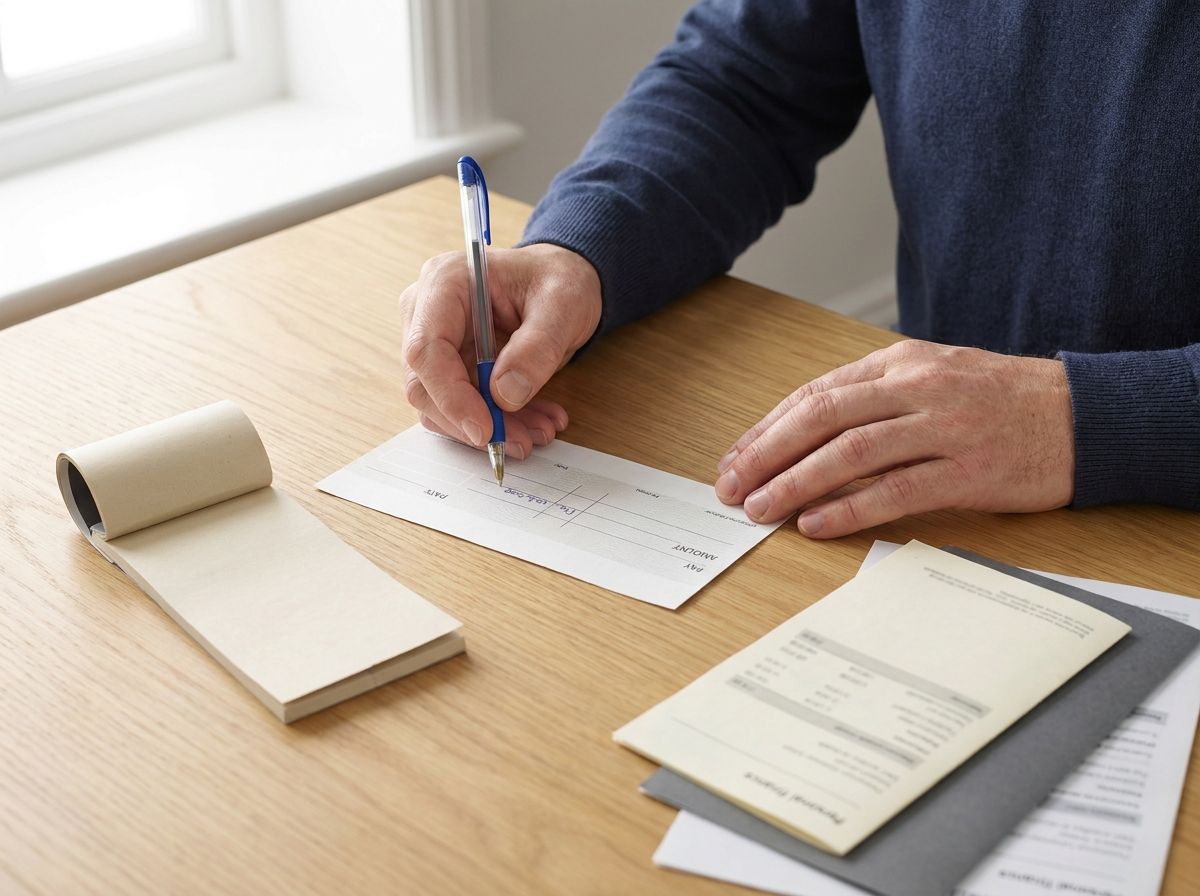
Writing a UK cheque comes down to six fields, filled in this order: the date, the payee’s name, the amount in figures, the amount in words, an optional crossing or “account payee only” note, and your signature. Get all six right and the cheque should clear within two working days under the UK’s Image Clearing System. Miss one, or let the figures disagree with the words, and it can bounce or come back marked for query.
Below is each field explained properly, plus what to do if you make a mistake, how long a cheque stays valid, and why fewer people bother with cheques at all these days.
How to Cheque Write: The Six Fields
1. Date
Write the date in the top right corner, in the standard UK order of day, month, year, for example 01/08/2026. You can use today’s date, or post-date it for a future date if you don’t want it cashed straight away.
Post-dating is common practice, but it doesn’t legally stop a bank from paying it early. Under UK law a cheque is a bill of exchange payable on demand, so if the recipient banks it before your chosen date, your bank can still honour it.
2. Payee Line
On the line starting “Pay” (or “Pay to the order of” on older cheque books), write the full name of the person or business you’re paying. For an individual, include their surname, so “Joe Bloggs” rather than just “Joe.” For a business, use the exact registered or trading name shown on their invoice.
Draw a line through any blank space after the name so nothing can be added later.
3. Amount in Figures
In the small box on the right, usually pre-printed with a £ sign, write the amount in numbers including pence, for example 42.70. Write the first digit as close to the £ symbol as you can, with no gap, to stop anyone squeezing extra digits in front.
4. Amount in Words (Words and Figures Agreement)
Below the payee line, spell out the same amount in words, then add “only” at the end, for example “Forty-two pounds and seventy pence only.” The word “only” and drawing a line through any leftover space both help stop fraudulent additions.
This is where cheque writing rules matter most. The written amount and the numeric amount must match exactly. If they don’t, most UK banks will reject the cheque and return it marked “words and figures differ,” rather than pay it out at all. Where a cheque is honoured despite a mismatch, banking convention treats the amount in words as the correct one, since figures are easier to alter unnoticed. Either way, it’s a genuine risk, so double-check both amounts before you sign.
5. Crossing and “Account Payee Only”
Most UK cheques already come pre-printed with two parallel lines across the top left corner, known as a crossing. A crossed cheque can only be paid into a bank account, not cashed over the counter, which protects you if it’s lost or stolen.
Many cheques also have “account payee” or “a/c payee only” printed between the lines. This restricts the cheque further so it can only go into an account belonging to the exact payee named, and can’t be passed on to someone else to bank. If your cheque book doesn’t have this pre-printed, you can write it yourself between the crossing lines.
6. Signature
Sign in the bottom right corner, using the same signature your bank has on file for the account. An unmatched or missing signature is one of the most common reasons a cheque bounces, so it’s worth checking this against a recent bank statement if it’s been a while since you signed anything for that account.
The Counterfoil (Stub)
Every cheque in a cheque book has a small counterfoil, or stub, attached to the left edge. Fill this in with the date, payee, and amount before you tear the cheque out, so you keep a running record of what’s gone out and can reconcile it against your bank statement later. It’s a small habit, but it’s the easiest way to avoid an overdraft from a cheque you’d forgotten about.
Cheque Clearing Times UK: The 2-Day Timeline
Since the rollout of the UK’s Image Clearing System (ICS), most cheques clear within two working days rather than the old six-day wait, according to Pay.UK, which now runs the system on behalf of UK banks. In practice: pay a cheque in before your bank’s cut-off time on day one, and the funds are typically usable by the end of day two.
Paying a cheque in at a Post Office adds at least one extra day, because it first has to be forwarded to your own bank before it enters the clearing system. If you’re relying on cleared funds for something time-sensitive, build in a buffer rather than assuming the fastest possible timeline.
How Long Is a UK Cheque Valid For?
The convention followed by UK banks is that a cheque is valid for six months from the date written on it. After that, banks will usually refuse to pay it, even though the underlying debt itself doesn’t disappear. If a cheque is close to that six-month mark, ask the issuer for a fresh one rather than risk it bouncing.
How to Write a British Cheque: Common Mistakes to Avoid
A handful of errors account for most bounced or delayed cheques:
- Leaving the amount in words blank while filling in the figures box
- Using a pencil or erasable ink rather than a proper ballpoint or fountain pen
- Signing with a signature that no longer matches the one your bank holds
- Correcting an error with correction fluid instead of crossing it out and re-signing beside the change
- Forgetting to fill in the counterfoil, which makes reconciling your account harder later
Why UK Cheque Use Is Falling, and What Businesses Use Instead
Cheque use in the UK has been in steady decline for years. According to UK Finance’s Payment Markets report, just 91 million cheques were used for payments in 2024, down 17% on the year before and a fraction of the 1,213 million written back in 2009.
The main driver is that Faster Payments now moves money between UK bank accounts within seconds, at no cost, for both personal and business transfers. Most businesses have shifted to bank transfer, direct debit, or card payments for anything routine, keeping cheques only for occasional one-off payees who can’t easily accept anything else, or where a paper trail is specifically wanted.
FAQs
How do you write a cheque?
Fill in the date, the payee’s name, the amount in figures, the amount in words followed by “only,” then sign it in the bottom right corner. Check the words and figures match exactly before signing, since a mismatch is the single most common reason a cheque gets rejected or queried.
How do you write a check UK style if you’re used to US cheques?
The layout is nearly identical, but UK cheques use day/month/year dates, write amounts in pounds and pence rather than dollars and cents, and almost always come pre-crossed with two lines restricting them to bank deposit only, which US checks don’t typically have.
What happens if the words and figures on a cheque disagree?
Most UK banks will return the cheque unpaid, marked “words and figures differ,” rather than guess which one you meant. If a bank does pay it, standard banking practice treats the amount written in words as the correct one.
Does a cheque expire in the UK?
Cheques don’t legally expire under UK law, but banks follow a six-month convention and will usually refuse to pay a cheque older than that. If yours is close to six months old, ask the issuer for a replacement rather than risk it bouncing.
How long does a cheque take to clear in the UK?
Most cheques clear within two working days thanks to the Image Clearing System, so long as you pay it in before your bank’s cut-off time. Paying in at a Post Office typically adds one extra day to that timeline.
What does “account payee only” mean on a cheque?
It means the cheque can only be paid into a bank account belonging to the exact name written as the payee, and can’t be signed over to a third party. It’s an added layer of protection alongside the standard crossing lines already on most UK cheque books.
Can I still get a cheque book in the UK?
Yes, most current account providers still issue cheque books on request, though a few digital-only banks don’t offer them at all. If you bank with an app-only provider and need to write cheques occasionally, it’s worth checking before you need one urgently.
Do businesses still accept cheques?
Many do, particularly for one-off or informal payments, though usage keeps falling as Faster Payments and card terminals become the default. It’s always worth asking a business in advance whether they’ll accept a cheque, since some smaller and online-only sellers have stopped taking them entirely.