If your car’s sitting on the drive and you’re not planning to use it for a while, you need a vehicle SORN declaration to stop paying tax and insurance on it legally. SORN stands for Statutory Off Road Notification, and it’s a formal notice to the DVLA that your vehicle won’t be driven or parked on public roads. You can declare your vehicle SORN online in a couple of minutes, by phone, or by post, and it costs nothing.
This guide walks through who can apply, all three ways to do it, what happens to any tax you’ve already paid, and the rules on keeping a SORN vehicle so you don’t end up with a fine.
What Is a Vehicle SORN Declaration?
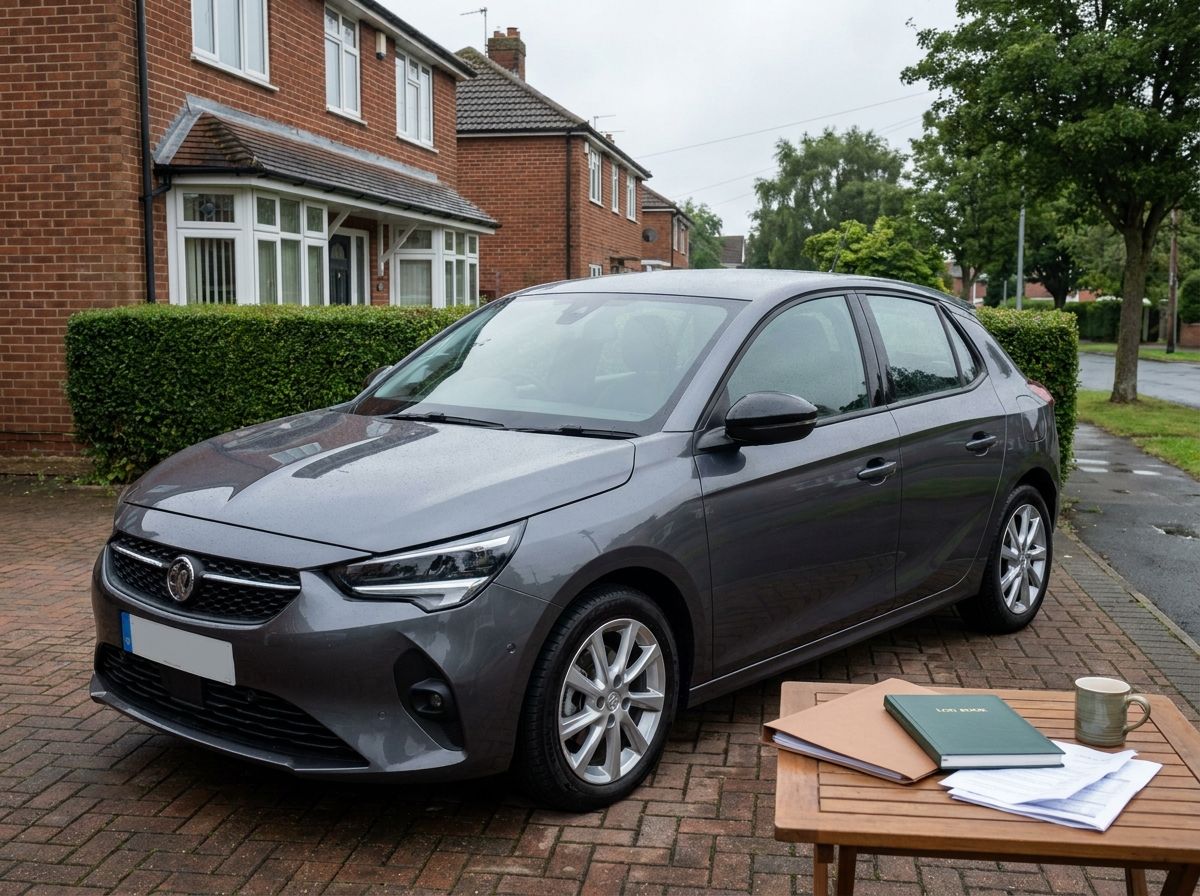
A SORN tells the DVLA that a vehicle isn’t being kept or used on public roads, so it doesn’t need vehicle tax, an MOT or insurance while it’s off the road. According to GOV.UK, you’re off the road if the car is in a garage, on a private drive or on private land, not on the street, in a public car park, or on a verge.
A SORN isn’t optional guesswork. The DVLA assumes a vehicle is still in use unless you actively declare it off the road, even if it hasn’t moved in months.
Who Can Make a SORN Declaration
Only the registered keeper named on the V5C log book can apply for a SORN in most cases. If you’ve just bought a vehicle and haven’t been registered as the keeper yet, you’ll usually need to apply by post using the new keeper section of the V5C, or the V5C/2 supplement if you don’t have the full log book.
You must declare a SORN if any of the following apply, according to GOV.UK:
- Your vehicle is not taxed
- Your vehicle is not insured, even for a short gap, say while you switch policies
- You’re breaking a vehicle for parts before scrapping it
- You’ve bought or received a vehicle and want to keep it off the road (a SORN doesn’t transfer from the previous keeper)
How to SORN a Car: Three Ways to Apply
You can declare your vehicle SORN using the reference number from your V5C log book (11 digits) or from a V11 tax reminder letter (16 digits). Here’s how each method works.
1. Declare Your Vehicle SORN Online
The quickest route is the government’s SORN service. Head to gov.uk/make-a-sorn, enter your reference number, confirm the vehicle details, and submit. It’s free and takes effect immediately.
You’ll get email confirmation, and a paper confirmation letter follows in the post within a few days. This is the method most drivers use because there’s no waiting on hold and no form to post.
2. SORN by Phone
Call the DVLA’s vehicle service line on 0300 123 4321. It’s an automated line that runs 24 hours a day, so you don’t need to speak to an adviser. Have your 11 or 16-digit reference number ready, as you’ll need it to complete the call.
A phone SORN also takes effect immediately, the same as the online service.
3. SORN by Post (V890 Form)
If you’re not yet the registered keeper, or you can’t apply online or by phone for any reason, you’ll need to fill in form V890 and post it to DVLA, Swansea, SA99 1AR. This is the only route available if the log book hasn’t been updated in your name yet.
A postal SORN doesn’t start the moment you post it. It takes effect from the date the DVLA actually receives and processes the form, so build in a few extra days if you’re relying on this method to cover a deadline.
SORN Rules UK Drivers Need to Know
Once your SORN goes through, a few rules kick in straight away and stay in force until you tax the vehicle again.
Where you can keep a SORN vehicle: it must stay off public roads entirely. That means a garage, a driveway, or private land you own or have permission to use. You cannot leave it on the street, in a public car park, or even on a grass verge next to the road, according to the RAC.
Timing of your SORN: if you apply outside the month your tax is due to expire, or your tax has already lapsed, the SORN starts immediately. If you apply during the exact month your tax runs out, it starts on the first day of the following month. You can’t backdate a SORN to cover a period before you applied.
No renewal needed: a SORN lasts indefinitely once declared. It only ends when you tax the vehicle, sell it, scrap it, or permanently export it.
Can You Drive a SORN Car?
No, not on a public road, and this is the rule drivers get caught out on most often. A SORN vehicle can only move under its own power on private land. The single exception is driving it to a pre-booked MOT test, and only on the most direct reasonable route there and back.
Driving or even just parking a SORN vehicle on a public road is a prosecutable offence. Courts can impose a fine of up to £2,500, according to Aviva and the RAC, on top of the vehicle potentially being clamped, impounded or destroyed by the DVLA. Separately, simply failing to SORN or tax a vehicle at all carries an automatic fixed penalty of £80, which the DVLA issues without a court case, though this rises if you don’t pay promptly.
SORN Refund: Getting Your Tax Money Back
Once your SORN is confirmed, the DVLA automatically refunds any full remaining months of vehicle tax you’d already paid for, whether you paid for 6 or 12 months upfront. You don’t need to apply separately for this; it’s triggered by the SORN itself.
The refund is calculated from the date the SORN starts, and only covers complete months, so a part-month isn’t refunded. It’s usually paid by cheque to the registered keeper’s address on file, and most drivers report it arriving within four to six weeks, though timings can shift, so check the official DVLA guidance if yours is taking longer than expected.
Declaring SORN When You Sell a Vehicle
When you sell or transfer a car, tell the DVLA straight away using the yellow section of the V5C, or online. Any remaining full months of tax are refunded automatically to you, the seller, and the vehicle effectively drops back to an off-road status on DVLA’s system until the new keeper taxes it.
A SORN never transfers with the vehicle. The buyer has to make their own declaration, or tax it themselves, the moment they take ownership if they want to drive it.
How SORN Affects Your Car Insurance
Under Continuous Insurance Enforcement rules, every registered vehicle in the UK must be insured unless it has a valid SORN on record. That’s the trade-off: SORN removes the legal requirement to insure the car, alongside removing the tax and MOT requirement, as long as it genuinely stays off the road.
If you cancel your policy without declaring SORN first, the DVLA’s systems will flag the gap, and you can expect an Insurance Advisory Letter followed by a fixed penalty if it isn’t sorted. Many insurers offer a reduced “laid-up” or storage-only policy for SORN vehicles, covering fire, theft and damage while parked, which is sensible if the car is valuable or you’re storing it long-term.
Declare Your Vehicle SORN: Quick Checklist
Before you start the process, have these ready:
- V5C log book reference (11 digits) or V11 reminder (16 digits)
- Confirmation of where the vehicle will be kept off-road
- Your postcode and details as registered keeper
- A few minutes if applying online, or longer if posting a V890
FAQs
Does a SORN expire?
No. A SORN has no expiry date and never needs renewing. It stays active until you tax the vehicle again, or sell, scrap, or permanently export it. You don’t need to contact the DVLA to end it; simply taxing the vehicle cancels the SORN automatically.
Can I drive to an MOT with a SORN car?
Yes, this is the one exception to the “no driving on public roads” rule. You can drive a SORN vehicle to a pre-booked MOT test centre and back, but only by the most direct route, and only if you’ve actually booked the test in advance.
How long does SORN take?
Applying online or by phone takes effect immediately, so it can be done in a few minutes. A postal application using form V890 takes longer, since it only starts once the DVLA receives and processes the form, which can add several days.
How do you SORN a car?
Use your V5C or V11 reference number to apply online at gov.uk/make-a-sorn, call the DVLA’s 24-hour line on 0300 123 4321, or post a completed V890 form to DVLA, Swansea, SA99 1AR if you’re not yet the registered keeper.
Is there a fee to declare SORN?
No, it’s completely free through all three methods: online, phone and post.
Can you drive a SORN car on private land?
Yes. The SORN rules only restrict use on public roads. You can drive it around your own driveway, yard or private land without breaking any rules.
What happens to my road tax when I SORN my car?
Any full months of tax you’ve already paid for are refunded automatically once the SORN is confirmed, usually arriving within four to six weeks.
Do I need to SORN a car I’ve just sold?
No. Once you tell DVLA you’ve sold the vehicle, you don’t need to SORN it yourself; that responsibility passes to the new keeper if they want to keep it off the road.