If you want a calisthenics workout plan you can start today, here it is in short: train 3 to 4 days a week, split between push, pull and leg-dominant bodyweight moves, rest at least one day between sessions that hit the same muscles, and progress by adding reps before you add difficulty. That’s the whole idea. Calisthenics uses your own bodyweight instead of a barbell or dumbbells, so you can do it in your living room, your local park, or one of the outdoor gyms popping up across UK cities.
This guide covers a full 4-week beginner plan, intermediate and advanced progressions, the exact exercises and form cues, how it stacks up against a gym membership, and a UK-specific FAQ pulled from what people are actually asking.
What Is Calisthenics, Exactly?
Calisthenics is strength training that uses your own bodyweight as resistance: think push-ups, pull-ups, squats, dips and planks, rather than machines or free weights. The word comes from the Greek “kallos” (beauty) and “sthenos” (strength), and versions of it have been used in military and school PE training for well over a century.
A good calisthenics workout plan doesn’t need a gym membership, and you can build real strength with nothing more than a doorway pull-up bar (from around £15 to £30 on Amazon UK) or a local park with rails. According to the NHS, adults should do muscle-strengthening activities that work all major muscle groups on at least 2 days a week, and calisthenics ticks that box comfortably.
Who This Plan Is For
This plan works whether you’re completely new to exercise, coming back after a break, or already reasonably fit and want a structured bodyweight programme instead of the gym. You don’t need any equipment to start the beginner phase, though a pull-up bar opens up more options from week 3 onwards.
If you have an existing injury, are pregnant, or haven’t exercised in a long time, check with a GP or physiotherapist before starting any new strength programme.
How to Build a Calisthenics Workout Plan (The Principles)
Before the actual schedule, it helps to understand the four rules behind it, because these are what let you keep progressing for years rather than plateauing after a month.
1. Train Push, Pull and Legs Separately
Split your exercises into three categories: push (press-ups, dips), pull (rows, pull-ups) and legs (squats, lunges). Hitting all three across a week means no muscle group gets neglected, and it’s the same logic gym-based programmes use.
2. Progress Reps Before You Progress Difficulty
Add one or two reps per set each week before jumping to a harder variation. Going from knee push-ups straight to one-arm push-ups skips the steps that actually build the strength and control you need, and it’s how most bodyweight injuries happen.
3. Rest Is Part of the Plan
Muscles repair and grow during rest, not during the workout itself. Leave at least 48 hours before training the same muscle group again, which is why most plans below run 3 to 4 days a week rather than daily.
4. Warm Up Properly
Five to ten minutes of light cardio (jogging on the spot, jumping jacks) plus dynamic stretches (arm circles, leg swings, hip openers) reduces injury risk and improves performance in the session itself.
The 4-Week Beginner Calisthenics Workout Plan
This is a 3-day-a-week full-body plan, ideal if you’re new to structured exercise. Train on non-consecutive days, for example Monday, Wednesday and Friday, leaving weekends free.
Week 1 to 2: Learn the Movements
- Knee push-ups: 3 sets of 8 to 10 reps
- Bodyweight squats: 3 sets of 12 to 15 reps
- Plank: 3 sets, hold for 20 to 30 seconds
- Glute bridges: 3 sets of 12 reps
- Standing rows (using a resistance band or towel looped round a door handle): 3 sets of 10 reps
Rest 45 to 60 seconds between sets. Focus entirely on form rather than speed here; a slow, controlled push-up builds more strength than a fast sloppy one.
Week 3 to 4: Add Volume and One New Move
- Full push-ups (or incline push-ups against a bench if you’re not ready): 3 sets of 8 to 12 reps
- Walking lunges: 3 sets of 10 reps per leg
- Plank: 3 sets, hold for 30 to 45 seconds
- Superman holds (lie face down, lift arms and legs): 3 sets of 10
- Assisted pull-ups or dead hangs (if you’ve got access to a bar): 3 sets, hold as long as possible
By the end of week 4 you should be able to comfortably complete every exercise with good form. That’s your cue to move to the intermediate plan below.
Intermediate Calisthenics Workout Plan (4 Days a Week)
Once the basics feel manageable, a 4-day push/pull/legs/core split adds more targeted volume.
Day 1: Push
- Push-ups: 4 sets of 12 to 15
- Pike push-ups (shoulder-focused): 3 sets of 8 to 10
- Tricep dips (using a bench or park bench): 3 sets of 10 to 12
Day 2: Pull
- Pull-ups or negative pull-ups: 4 sets of 5 to 8
- Inverted rows (under a sturdy table or low bar): 3 sets of 10
- Chin-ups: 3 sets of 5 to 8
Day 3: Legs
- Bulgarian split squats: 3 sets of 10 per leg
- Jump squats: 3 sets of 12
- Single-leg glute bridges: 3 sets of 12 per leg
Day 4: Core and Conditioning
- Hanging leg raises (or lying leg raises if no bar): 3 sets of 10 to 12
- Side plank: 3 sets, 30 seconds each side
- Mountain climbers: 3 sets of 20
Rest a full day between sessions where possible, and take a complete rest day at least once a week.
Advanced Calisthenics Workout Plan
At this stage, exercises get harder rather than higher in volume. A typical advanced week rotates between:
- Muscle-ups: 4 sets of 3 to 5
- Pistol squats: 3 sets of 6 to 8 per leg
- Handstand push-ups against a wall: 3 sets of 5 to 8
- Archer pull-ups: 3 sets of 5 per side
- L-sits: 3 sets, hold for 15 to 20 seconds
These moves demand a strong base, so don’t rush here. Most people take 6 to 12 months of consistent training to move comfortably from intermediate to advanced calisthenics work.
Where to Train in the UK
You don’t need a gym for any of this. Options include:
- At home: a patch of floor space and a doorway pull-up bar (around £15 to £30) covers almost everything above.
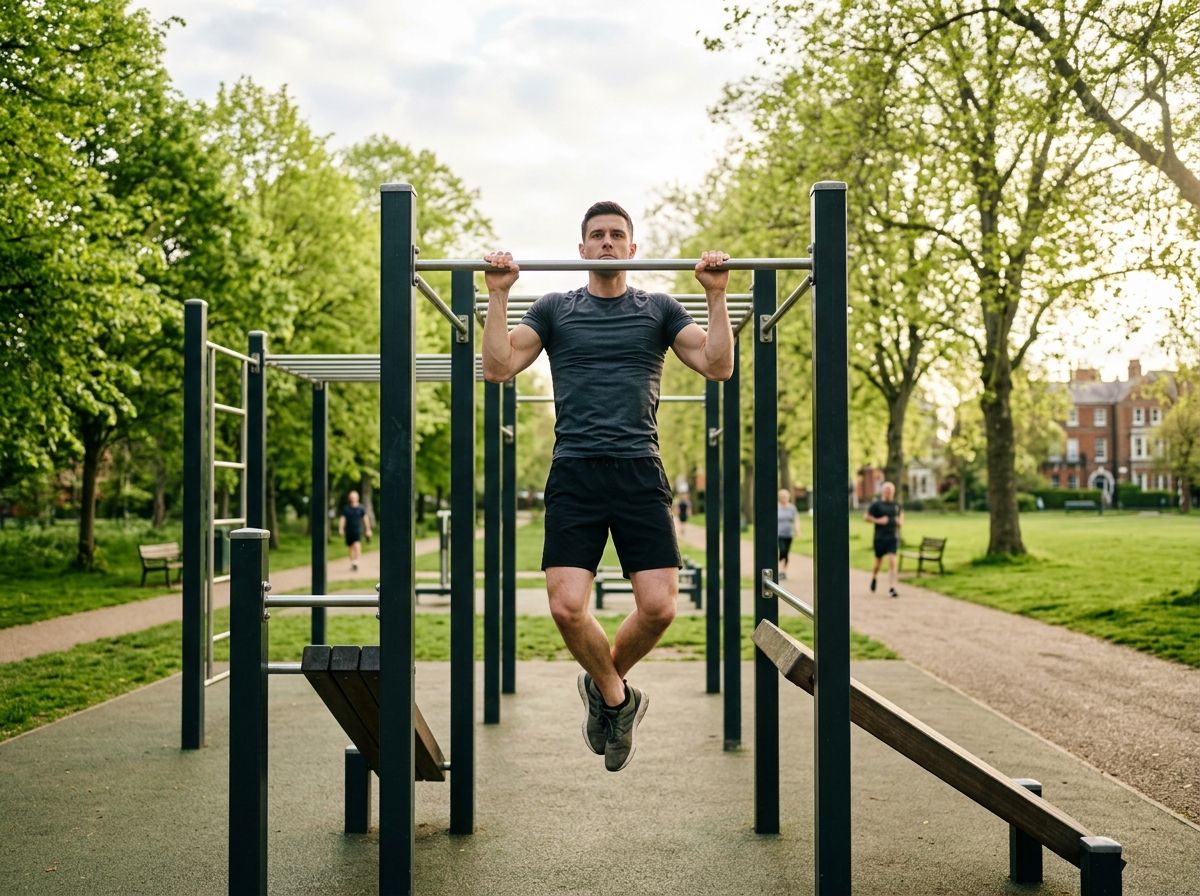
- Outdoor gyms: many UK parks now have free outdoor gym equipment, including pull-up bars, dip stations and parallel bars. Councils such as those in London, Manchester and Birmingham have installed dozens of these over the past decade, and they’re free to use.
- Calisthenics parks: dedicated bar setups (sometimes called “street workout” parks) have grown in cities including London, Bristol and Leeds, often built or maintained by local calisthenics communities.
- A standard gym: if you’d rather train indoors with a pull-up bar and dip station on hand, most UK gym memberships run from roughly £20 to £50 a month, though prices vary a lot by location and chain.
Nutrition and Recovery Basics
You can’t out-train poor recovery. Aim to eat enough protein to support muscle repair, roughly 1.2 to 1.6g per kg of bodyweight a day is a reasonable general target for people doing regular strength work, though individual needs vary and it’s worth speaking to a dietitian for personalised advice. Sleep matters just as much: most adults need 7 to 9 hours a night for proper recovery.
Drink water throughout the day rather than only during workouts, and don’t skip the rest days in your plan. Overtraining is one of the most common reasons people stall or get injured with bodyweight training.
Common Mistakes to Avoid
- Skipping the warm-up: cold muscles are more prone to strains, especially in cooler UK weather if you’re training outdoors.
- Rushing progressions: jumping from assisted pull-ups to weighted pull-ups too soon is a common cause of shoulder strain.
- Ignoring form for reps: a half push-up with your hips sagging trains bad movement patterns, not strength.
- Training the same muscles daily: without rest, you’ll plateau or get injured rather than progress.
- Not tracking progress: write down your reps and sets each session so you know when you’re actually ready to move up a level.
FAQS
How many days a week should I do calisthenics?
Most beginners do well with 3 non-consecutive days a week, moving to 4 days once the basic movements feel comfortable. This lines up with NHS advice to do muscle-strengthening activity on at least 2 days a week, spread across the week rather than back to back.
Can you get fit with calisthenics alone?
Yes. Calisthenics builds strength, muscle endurance, mobility and, if you include jump squats or burpees, cardiovascular fitness too. Many people use it as their only form of strength training with no issues, though some choose to combine it with running or cycling for extra cardio.
Do I need a pull-up bar to start calisthenics?
No. Push-ups, squats, lunges, planks and core work all need zero equipment. A pull-up bar, whether a £15 to £30 doorway bar or a free outdoor gym bar, opens up pulling exercises like pull-ups and rows, but you can start without one.
How long before I see results from a calisthenics workout plan?
Most people notice better strength and endurance within 3 to 4 weeks of consistent training, and visible muscle tone changes typically take 8 to 12 weeks depending on training frequency, diet and starting point.
Is calisthenics better than weightlifting?
Neither is objectively better; they suit different goals. Calisthenics is more accessible, cheaper and better for relative strength and mobility, while weightlifting makes it easier to isolate specific muscles and load progression precisely. Many people do both.
Can beginners do calisthenics every day?
It’s not recommended. Muscles need time to repair, so training the same muscle groups on consecutive days increases injury risk and slows progress. A rest day between sessions, or alternating muscle groups, works better.
What’s a realistic calisthenics workout plan for weight loss?
Combine the strength plan above with 150 minutes of moderate cardio a week (the NHS-recommended minimum for adults), such as brisk walking, cycling or jogging, alongside a modest calorie deficit through diet. Calisthenics alone builds strength and can support fat loss, but it isn’t a substitute for managing your overall calorie intake.
Are outdoor gyms in UK parks free to use?
Yes, outdoor gym equipment installed by local councils in public parks is free and open to anyone, with no booking or membership needed. Availability and equipment vary by area, so check your local council’s website for locations near you.
Can women follow the same calisthenics workout plan as men?
Yes, the exercises and progressions are the same regardless of gender. Strength and pacing will vary from person to person rather than by gender specifically, so adjust reps and difficulty to your own starting point.