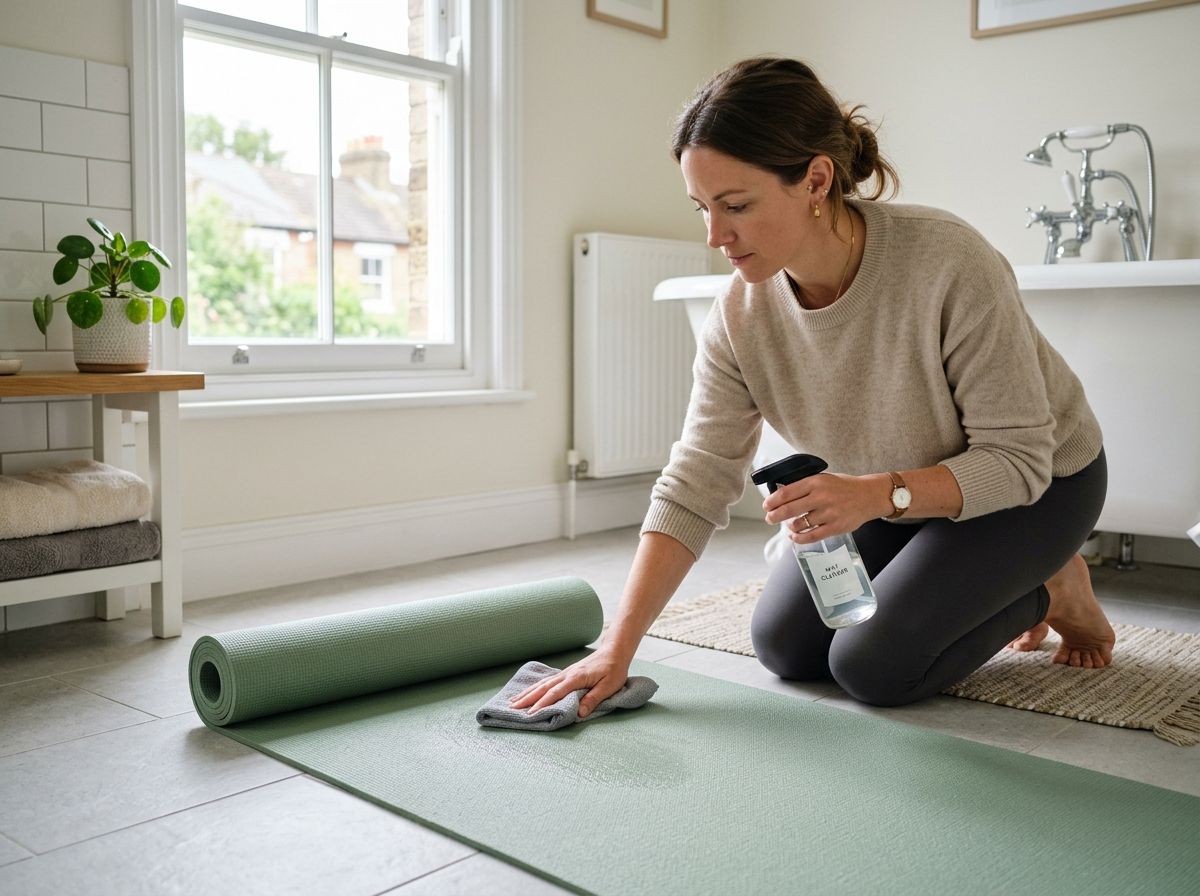
If your yoga mat smells faintly of a changing room, it needs a clean. The quickest fix is to spray it with a mix of water and a few drops of mild soap, wipe both sides with a soft cloth, then hang it up to dry completely before you roll it away. That covers the day-to-day. For a proper deep clean, you’ll want to hand wash it in a basin or bath roughly once a month, more often if you’re doing hot yoga or sweating heavily. Below, we’ll walk through both methods step by step, plus how your mat’s material changes the rules, whether you can risk the washing machine, and how to shift stubborn smells for good.
What You’ll Need to Clean a Yoga Mat
- A spray bottle or small bowl
- Warm water
- A few drops of mild washing-up liquid, or white vinegar for a natural option
- A soft microfibre cloth (not an abrasive scourer, which can wear down the surface)
- A second clean cloth or towel for rinsing
- Somewhere flat or a sturdy rail to dry it
You don’t need to buy a specialist product to get a clean mat. That said, plenty of UK yoga practitioners prefer a ready-made spray for convenience, and we’ve included a few below.
How to Clean a Yoga Mat in 6 Simple Steps
- Mix your solution. Combine two cups of warm water with two to three drops of mild washing-up liquid in a spray bottle. If you’d rather skip the soap, one part white vinegar to three parts water works well on most PVC and TPE mats.
- Roll out the mat. Lay it flat somewhere you don’t mind getting a little damp, such as a bathroom floor or the garden if it’s dry outside.
- Spray lightly. Don’t soak it. A fine mist across the surface is enough.
- Wipe in circular motions. Use your soft cloth to work over the whole surface, paying extra attention to the areas where your hands and feet land most.
- Wipe again with clean water. A second pass with a damp, soap-free cloth removes any residue, which stops the mat feeling slippery next time you use it.
- Dry fully before rolling. Hang it over a shower rail, a drying rack, or the back of a chair until it’s completely dry. This usually takes a few hours, sometimes longer in a cold or humid room.
How to Deep Clean a Yoga Mat
A wipe-down handles daily grime, but every so often your mat needs a proper soak. This is especially true if you can see discoloured patches, notice a lingering smell even after wiping, or haven’t cleaned it beyond a quick spritz in weeks.
If your mat can be submerged (check the label first, since not all can): fill a bath or large basin with warm water and a squeeze of mild soap. Submerge the mat, leave it for a few minutes, then work the soapy water into the surface with a cloth. Drain the tub, rinse thoroughly, and press out as much water as you can before hanging it to dry.
If your mat can’t be submerged: stick to the spray-and-wipe method above, but go over it twice and let it sit for 30 seconds before wiping, giving the solution more time to lift dirt and oils.
How Often Should You Clean a Yoga Mat?
For most people practising two or three times a week, a wipe-down after every session and a proper deep clean once a month is about right. If you’re doing hot yoga, sweating heavily, or practising daily, aim to deep clean every two weeks instead. Skipping the daily wipe is the biggest reason mats start to smell, since sweat and skin oils build up faster than most people expect.
Can You Wash a Yoga Mat in the Washing Machine?
Generally, no. Most yoga mats, including PVC, natural rubber, TPE and cork, aren’t designed for a washing machine. The spinning and agitation can tear the surface, cause flaking, or strip away the grip that makes a mat useful in the first place. Some thin, closed-cell PVC mats can technically survive a gentle cycle without detergent, but it’s still a risk to the mat and, if it soaks up a lot of water, to your machine too.
There are exceptions. Combo mats with a microfibre towel bonded to a rubber base are often designed to be machine washable, so it’s worth checking the label or the manufacturer’s own care page before you decide. Never put any yoga mat in the tumble dryer. The heat can melt PVC, crack natural rubber, and warp TPE.
How to Clean a Yoga Mat According to Material
Not every mat responds to cleaning the same way. Here’s how the main types differ.
PVC Mats
The most common and easiest to clean. A simple soap-and-water wipe works well, and PVC can generally tolerate a diluted vinegar solution too. Avoid prolonged sun exposure while drying, since UV rays can make PVC brittle and fade its colour over time.
TPE (Thermoplastic Elastomer) Mats
Popular for being lighter and more eco-friendly. TPE is sensitive to heat, so keep water lukewarm rather than hot and never leave it near a radiator to dry. A gentle soap solution is fine; strong vinegar mixes are best avoided.
Natural Rubber Mats
These need a lighter touch. Rubber doesn’t like vinegar, which can speed up the breakdown of the material, or direct sunlight, which causes it to oxidise and turn brittle. Stick to plain water and a touch of mild soap, and dry it away from a window.
Cork Mats
Cork is naturally antimicrobial, which means it needs cleaning less often than other materials. When it does need a wash, use a barely damp cloth rather than a soaked one, as excess water can loosen the cork layer from its rubber base.
Microfibre-Topped Mats
These often have a towel-like surface designed to absorb sweat, and many are machine washable on a gentle, cool cycle. Always check the specific product page, since this varies by brand.
Best Yoga Mat Cleaners in the UK
If you’d rather buy than mix your own, several UK retailers stock dedicated mat sprays. Prices vary, so treat these as a guide rather than a guarantee, since retailers change their pricing often.
| Product | Typical UK price | Notes |
| OKIEOKIE Natural Yoga Mat Cleaner | around £9.90 | Suitable for most mat types |
| Revive Yoga Mat Cleaner Spray | around £15 | Fresh scent, sold via Yogamatters |
| E-Cloth General Purpose Cloth (pack of 4) | around £11.92 | Reusable microfibre, good for wiping mats |
According to Saga’s guide to mat care, you don’t strictly need a specialist cleaner. A cloth and a well-diluted soap solution does the job for most mats, and a dedicated spray is really about convenience and scent rather than a deeper clean.
How to Get Rid of Yoga Mat Smell
A persistent smell usually means sweat and oils have built up faster than your cleaning routine can keep up. Try a deeper soak using the bath method above, and once the mat is dry, leave it unrolled somewhere well ventilated for a few extra hours before storing it. If the smell keeps coming back within a day or two of cleaning, it may be a sign that moisture is trapped inside the mat rather than sitting on the surface, particularly with open-cell or rubber mats. In that case, more frequent air-drying, rather than more soap, tends to solve it.
How to Dry a Yoga Mat Properly
Never roll a mat away while it’s even slightly damp. Trapped moisture is the main cause of mould and musty smells. Hang it flat over a wide surface such as a shower rail, a drying rack, or a bannister, and avoid direct sunlight, which can fade colours and dry out rubber. In a cold or damp UK home, drying can take anywhere from a couple of hours to a full day, so plan your deep clean for a morning rather than right before your next class.
How to Store a Yoga Mat So It Stays Clean
Once fully dry, roll the mat loosely rather than tightly, which helps air circulate and stops creases forming. Store it somewhere cool and dry, away from radiators and direct sun. If you use a mat bag, give it an occasional shake out too, since dust and grit collect there just as easily as on the mat itself.
Signs It’s Time to Replace Your Yoga Mat
Cleaning extends a mat’s life, but it won’t last forever. Watch for peeling layers, a permanent smell that won’t shift no matter how you clean it, or a surface that’s gone slippery even when dry. Most mats last between one and three years with regular use and proper care, though cheaper mats tend to wear out faster.
FAQs
How often should I clean my yoga mat?
Wipe it down after every session and deep clean it around once a month. If you practise daily or do hot yoga, deep clean every two weeks instead, since sweat builds up faster and can start to smell or affect grip.
Can I use antibacterial wipes on a yoga mat?
You can, but check the label first, since some contain alcohol or harsh chemicals that dry out rubber or degrade PVC over time. A mild soap and water wipe is gentler and works just as well for everyday cleaning.
Is vinegar safe for all yoga mats?
No. Diluted white vinegar is fine on most PVC and TPE mats, but it can speed up the breakdown of natural rubber. Always dilute it heavily, roughly one part vinegar to three parts water, and avoid it on rubber or cork mats.
Can I put my yoga mat in the washing machine?
Generally no. Most mats, including PVC, rubber, TPE and cork, can be damaged by the agitation and water of a washing machine. Some microfibre-topped combo mats are the exception, so check the manufacturer’s care instructions first.
Why does my yoga mat smell even after cleaning?
This usually means moisture is trapped inside the mat rather than on the surface. Let it air dry unrolled for longer than usual, ideally overnight in a well-ventilated room, before rolling it away again.
Can I dry my yoga mat in the sun?
Brief sun exposure is fine, but prolonged direct sunlight can fade the mat and make rubber or PVC brittle over time. A shaded, airy spot indoors or outdoors is the safer choice.
How do I clean a cork yoga mat?
Use a barely damp cloth with a touch of mild soap rather than soaking it. Cork is naturally antimicrobial, so it needs cleaning less often, but too much water can loosen the cork layer from its backing.
Do I need to clean a brand new yoga mat before using it?
Yes, it’s worth giving a new mat a wipe with soapy water before first use. Manufacturing residue and packaging dust can make a new mat feel slippery, and a quick clean sorts that out.