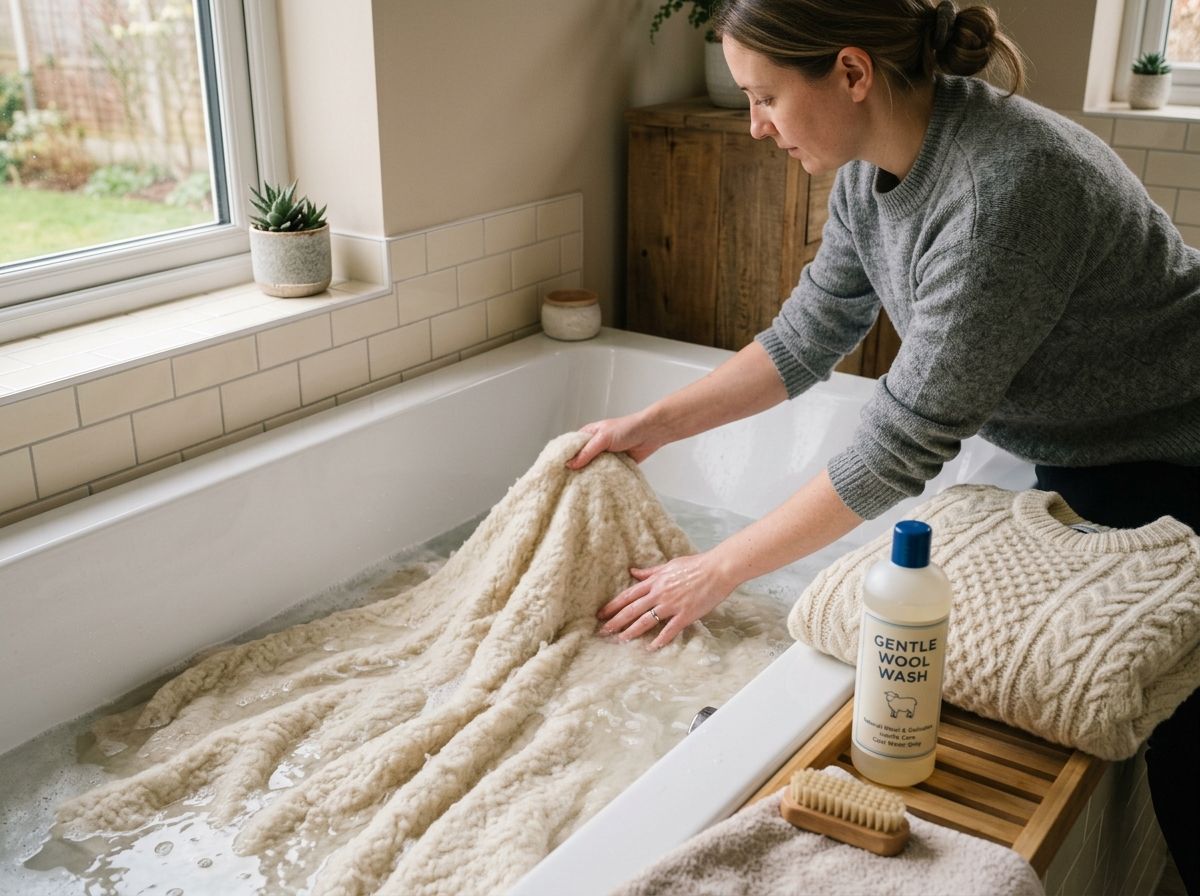
If you want to know how to wash a wool blanket without ruining it, here’s the short version: check the care label first, then either hand wash in cold water with a wool-specific detergent, or use your washing machine’s wool cycle if the label allows it. Never use hot water, never wring it, and never put it in the tumble dryer, since heat and rough handling are what actually cause wool to shrink and felt, not water itself.
The same basic rules apply to a wool jumper, though a few of the details differ, which is why this guide covers both. Below you’ll find full step-by-step instructions for hand washing and machine washing, how to dry wool properly, what the care symbols on the label actually mean, and when it’s genuinely worth paying a dry cleaner instead.
Check the label before you do anything
Every wool blanket and jumper should have a care label, and it’s worth reading properly before you wash anything, since not all wool is treated the same way in manufacturing. Some wool is “superwash” treated, meaning the fibres have been coated to resist felting, which makes it genuinely machine washable. Untreated pure wool is far more likely to felt and shrink if it’s agitated too much or exposed to sudden temperature changes.
Look for a wash tub symbol with two lines underneath it, which indicates a gentle wool wash cycle. A wash tub with a cross through it means the item mustn’t go anywhere near water and needs professional dry cleaning instead. If the label has faded or you’ve lost it entirely, treat the item as hand wash only until you know more, since that’s the safer default.
How to wash a wool blanket
Hand washing a wool blanket
Hand washing is the gentlest option and the one most wool care guides, including Woolmark’s own care advice, recommend as the safest default. Fill a bath or large basin with cold or lukewarm water, no more than 30°C, and add a small amount of wool-specific detergent such as Woolite or a similar mild, pH-neutral wash.
Submerge the blanket fully and gently press it through the water for a few minutes, rather than rubbing, twisting, or scrubbing, since friction and agitation are what cause wool fibres to felt together. Leave it to soak for around 10 to 15 minutes, then drain the water and refill with clean water at the same temperature to rinse, repeating until the water runs clear.
Machine washing a wool blanket
Only machine wash a wool blanket if the label specifically says it’s suitable, and even then, always use the wool or delicate cycle rather than a standard cold wash. These specialist cycles use a shorter wash time, cooler water, and minimal spin and agitation, which matters far more than the temperature alone.
Use a wool-specific detergent rather than a standard biological or non-biological one, and skip the fabric conditioner entirely, since it coats and clogs the natural fibres over time. Wash the blanket on its own or with a mesh laundry bag rather than alongside other laundry, and avoid overloading the drum, which increases friction against the sides of the machine.
How to dry a wool blanket properly
Never tumble dry a wool blanket, and never hang a wet one on a washing line, since the weight of the water will stretch it out of shape. Instead, lay the blanket flat on a clean, dry towel, then roll the towel up with the blanket inside to squeeze out excess water without wringing or twisting.
Unroll it and lay the blanket flat again, this time on a drying rack, spare towel, or clean floor space, reshaping it gently to its original dimensions as you go. Keep it away from direct sunlight and radiators, since both can cause uneven fading or shrinkage, and allow it to dry fully before folding or using it again, which can take a day or two depending on thickness.
How to remove stains from a wool blanket
Wool is naturally water and stain resistant for the first few minutes after a spill, so blot immediately with a clean, dry cloth rather than rubbing, which pushes the stain further into the fibres. For most everyday marks, a small amount of wool-safe detergent diluted in cold water, applied with a soft cloth and gently blotted, will lift the stain without needing a full wash.
For stubborn or set-in stains, a solution of one part white vinegar to two parts cold water can help, applied the same way and left for a few minutes before blotting again. Always test any stain treatment on a hidden corner of the blanket first, since some dyes can react unpredictably even to mild solutions.
How to wash a wool sweater
Wool jumpers follow the same core principles as blankets, cold water, gentle handling, no wringing, but a few extra details matter because of how knitwear is constructed and how it’s worn against the body.
Hand washing a wool jumper
Fill a basin with cold water and a small amount of wool detergent, then submerge the jumper and press gently through the water rather than agitating it. Pay particular attention to areas that pick up more oil and sweat, like the underarms and collar, giving them a slightly longer soak if needed. Rinse in fresh cold water until no suds remain, then press (don’t wring) to remove excess water before moving to the drying stage.
Drying a wool jumper without stretching it
This is where most people go wrong with jumpers specifically. Never hang a wet wool jumper on a hanger, since the weight of the water will stretch the shoulders and body out of shape almost immediately. Lay it flat on a towel, roll to remove excess moisture as described for blankets, then reshape it on a drying rack or a second dry towel, gently pulling the sleeves, hem, and neckline back to their original measurements before it starts to dry.
Fixing a felted or shrunk wool jumper
If a jumper has already gone into the wash too hot and come out smaller or matted, there’s a genuine fix worth trying before giving up on it. Soak the jumper in cool water with a small amount of hair conditioner or baby shampoo for around 20 minutes, since this relaxes and lubricates the fibres. Gently stretch the damp jumper back towards its original shape on a towel, checking against a similar unshrunk garment if you have one, then let it dry fully in that stretched position. This won’t undo severe felting, where fibres have permanently locked together, but it often helps with mild shrinkage.
Understanding wool wash symbols on UK labels
UK care labels use a small set of standard symbols that tell you exactly how a wool item should be treated, and it’s worth being able to read them at a glance rather than guessing.
- A wash tub with two lines underneath means use the gentle or wool wash cycle, cool water and minimal agitation.
- A wash tub with a hand inside means hand wash only, no washing machine at all.
- A wash tub with a cross through it means don’t wash in water at all, dry clean only.
- A circle symbol on its own indicates dry cleaning, with any letter inside telling a professional dry cleaner which solvent to use.
- A tumble dryer symbol with a cross through it means never tumble dry, which applies to almost all wool items regardless of other symbols.
If you’re at all unsure what a specific label means, UK laundry brands including Ariel publish full symbol guides online, and it’s worth a quick check before washing anything unfamiliar.
When to use a dry cleaner instead
Some wool items genuinely aren’t worth risking at home, particularly delicate merino or cashmere blends, heavily structured blankets, or anything with a “dry clean only” symbol. Dry cleaning a jumper in the UK typically costs somewhere between £6 and £9, based on current published price lists from several UK dry cleaners, while a blanket usually runs from around £13 for a single size up to £25 or more for a king size, depending on the cleaner and whether it’s washed or solvent dry cleaned.
Prices vary noticeably by region and individual business, so it’s worth checking with a couple of local dry cleaners before committing, especially for anything valuable or sentimental where you’d rather not risk a home wash going wrong.
Storing wool blankets and jumpers to prevent moths
Wool is a natural fibre that moths genuinely find attractive, so storage matters as much as washing if you want your blanket or jumper to last. Always store wool clean, since moths are drawn to the natural oils and skin cells left behind on worn or unwashed items, not clean wool itself.
Fold items rather than hanging them, and store them in a breathable cotton bag rather than a sealed plastic one, which can trap moisture and encourage mildew. Cedar blocks or lavender sachets tucked in with stored wool act as a natural deterrent, and it’s worth giving stored items an occasional shake and airing even during months you’re not using them.
FAQs
Can you wash a wool blanket in the washing machine?
Yes, but only if the care label specifically allows it, and even then you should use the wool or delicate cycle with cold water and a wool-safe detergent. Hand washing remains the gentler and generally safer option if you’re unsure about the label.
Why does wool shrink when you wash it?
Wool shrinks and felts because of a combination of heat, agitation, and sudden temperature changes, which cause the microscopic scales on wool fibres to lock together permanently. Cold water and gentle handling alone rarely cause shrinkage, which is why temperature and movement matter more than the water itself.
Can I tumble dry a wool blanket or jumper?
No, almost all wool items should never go in a tumble dryer, since the heat and tumbling action causes shrinkage and felting very quickly. Always air dry wool flat on a towel or drying rack instead.
How often should I wash a wool blanket?
Most wool blankets only need a full wash once or twice a year, since wool is naturally odour and dirt resistant and regular airing outdoors is usually enough to keep it fresh. Spot clean any specific stains as they happen rather than washing the whole blanket unnecessarily.
Can you fix a shrunk wool jumper?
Sometimes, yes. Soaking the jumper in cool water with a little hair conditioner for around 20 minutes, then gently stretching it back to shape while damp and letting it dry flat in that position, can reverse mild shrinkage, though severe felting usually can’t be undone.
What detergent should I use to wash wool?
Use a wool-specific detergent, such as Woolite or an equivalent mild, pH-neutral wash, rather than standard biological or non-biological laundry detergent, which can be too harsh for wool fibres. Avoid fabric conditioner entirely, since it coats and clogs the natural fibres over time.
How much does it cost to dry clean a wool blanket in the UK?
Dry cleaning a wool blanket in the UK typically costs from around £13 for a single size up to £25 or more for a king size, based on current published price lists from UK dry cleaners. A wool jumper usually costs between £6 and £9 to dry clean, though prices vary by region and business.
Does wool need to be dry cleaned?
Not always. Many wool blankets and jumpers can be safely hand washed or machine washed on a wool cycle at home, and dry cleaning is only strictly necessary if the care label specifically says so, using a wash tub symbol with a cross through it.