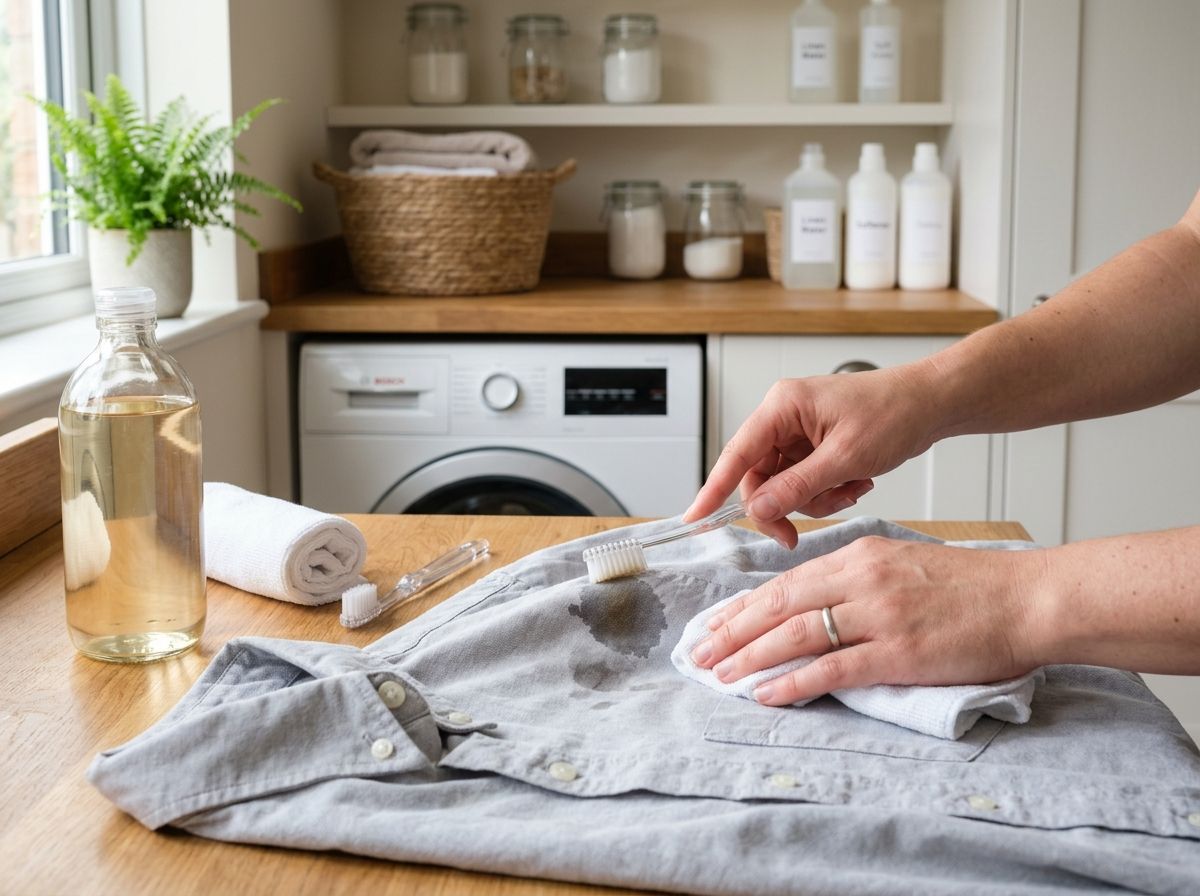
The fastest way to remove oil stains from clothes is to blot away the excess, work neat washing-up liquid into the stain with your fingers, leave it for ten minutes, then wash at the warmest temperature your garment’s care label allows. Oil repels water, so a normal wash cycle alone won’t shift it: you need a grease-cutting surfactant like washing-up liquid to break the oil down first.
If you’ve just splashed cooking oil down your top or come in from the garage with a grease mark on your jeans, this guide covers the full step-by-step method, what to do once a stain has already dried in, which UK products are worth buying, and how to remove stains from carpet using the same basic principle.
How to Remove Oil Stains From Clothes
Oil is hydrophobic, meaning it physically repels water rather than dissolving in it. That’s why chucking an oily shirt straight into the washing machine, however hot the cycle, usually just moves the stain around rather than removing it. You need something that breaks the oil into tiny droplets water can carry away, and washing-up liquid does exactly that.
What You’ll Need
A clean cloth or kitchen roll, plain washing-up liquid (avoid brightly coloured or dyed ones, since some can transfer colour onto pale fabrics), an old toothbrush, and access to warm water is all this takes. You won’t need anything specialist for a fresh stain.
Step-by-Step Method
- Lay the garment flat and gently blot the stain with a dry cloth to lift off any excess oil. Don’t rub, since that pushes the oil deeper into the fibres.
- Apply washing-up liquid directly and neat onto the stain, covering it completely.
- Work it in gently with your fingers or a soft toothbrush in small circular motions.
- Leave it to sit for at least 10 minutes, longer for a heavier stain.
- Rinse from the back of the fabric with warm water, pushing the oil back out the way it went in.
- Machine wash at the warmest temperature the care label allows, using your normal detergent.
- Air dry and check the stain has gone before doing anything else. Never tumble dry a garment until you’re sure the stain is fully out, since heat can set any oil that’s left behind permanently.
If the mark is still visible after drying, repeat the whole process rather than assuming one wash will finish the job. Most fresh oil stains need at least two rounds of treatment.
Removing Old or Set-In Oil Stains
A stain that’s already dried in, or worse, already been through the tumble dryer, takes more work but usually isn’t a lost cause.
Start by saturating the stain with neat washing-up liquid and covering it in a generous layer of bicarbonate of soda. Leave this overnight, for at least 12 hours, so the bicarbonate has time to draw the oil out. Rinse with the hottest water your fabric can safely take, then soak for around 30 minutes in a solution of roughly two litres of hot water with 50g of bicarbonate of soda and 50ml of white vinegar, before washing at 60°C with a little extra detergent.
For white fabrics specifically, an oxygen-based stain remover such as Vanish Oxi Action, applied neat to the stain and left for up to an hour before a hot wash, tends to give the most reliable results on set-in marks. A 500ml bottle of Vanish Oxi Action pre-wash spray currently costs around £6 (or £4.50 with a Tesco Clubcard), which is a reasonable price for something you’ll only need occasionally.
Avoid chlorine bleach unless it’s genuinely your last option, since it can weaken and yellow natural fibres like cotton and linen over repeated use.
Washing Temperature Guide by Fabric
Oil and grease are semi-solid at room temperature, so warmer water genuinely helps liquefy and shift them, unlike some stains where hot water can make things worse.
As a rough rule, cotton clothing generally copes fine with a 60°C wash, synthetics are usually safer at 40°C, and delicates should stay at 30°C or below. Always check the care label first though, since fabric blends and finishes vary, and washing above the recommended temperature can shrink or damage the garment even if it does lift the stain.
What Not to Do
A few common shortcuts do more harm than good. Putting a stained item straight in the tumble dryer is the biggest mistake, since the heat sets any remaining oil into the fibres almost permanently, turning a treatable stain into one that’s there for good.
Reaching for WD-40 on the theory that “oil dissolves oil” isn’t a great idea either. It can shift the original stain briefly, but it leaves behind its own petroleum residue that’s often just as stubborn to remove. Hairspray is another old-fashioned tip that’s largely stopped working, since modern formulas contain far less alcohol than older ones did, so don’t rely on it for anything more than a very light mark.
Finally, resist scrubbing hard at a fresh stain. It feels productive, but it just works the oil further into the weave and can damage delicate fabrics in the process. Gentle blotting and patience beat vigorous rubbing every time.
How to Remove Stains From Carpet
The same core principle, absorb first, then break down the oil, applies to carpet as it does to clothing, though the method looks a little different since you can’t put a carpet in the washing machine.
Blot the spill immediately with a clean cloth or kitchen roll, working from the outside of the stain inward so it doesn’t spread further. Scrape off any thicker residue with a spoon if needed, then sprinkle a generous layer of bicarbonate of soda or cornflour over the whole area and leave it for 15 to 30 minutes (longer, even overnight, for a stubborn or older stain) so the powder can absorb the oil trapped in the fibres.
Vacuum the area thoroughly once the powder has done its job. If any mark remains, mix a few drops of washing-up liquid into a bowl of warm water, dip a clean cloth into it, and blot the stain gently, working from the edges toward the centre. Rinse with a cloth dampened in plain water to remove any soap residue, then blot dry with a clean towel and let the carpet air dry fully.
For carpet stains that won’t shift with washing-up liquid, a dedicated product like Vanish Oxi Action Carpet Stain Remover (around £5 to £6 for a 195ml pump bottle from most UK supermarkets) is designed specifically for this job and includes a scrubbing head built into the cap. Always patch-test any product on an inconspicuous corner of carpet first, since some formulas can affect colour.
FAQS
Does washing-up liquid actually remove oil stains from clothes?
Yes. Washing-up liquid is a surfactant specifically formulated to break down grease, which makes it more effective on oil stains than a standard laundry detergent used alone. Apply it neat, leave it for at least 10 minutes, then wash as normal.
Can you remove old oil stains that have already been through the dryer?
It’s harder but often still possible. Saturate the stain with washing-up liquid and bicarbonate of soda, leave overnight, then wash at the hottest temperature the fabric allows, repeating if needed; results can vary depending on how set the stain has become.
Should you wash oil stains in hot or cold water?
Warm to hot water, as hot as your garment’s care label allows, works best for oil, since oil is semi-solid at room temperature and warmer water helps it liquefy and lift away. This differs from protein-based stains like blood, which should always be treated with cold water.
Does WD-40 remove oil stains from clothes?
It’s not recommended. While the theory that oil dissolves oil has some truth to it, WD-40 leaves behind its own petroleum-based residue that can be just as difficult to remove as the original stain.
Can you get oil stains out of carpet without professional cleaning?
Yes, in most cases. Blotting the spill, absorbing it with bicarbonate of soda or cornflour, then treating any remaining mark with a washing-up liquid solution removes the majority of household oil stains without needing a professional carpet cleaner.
Why does tumble drying make an oil stain worse?
Heat causes any remaining oil in the fabric to bond more permanently with the fibres, effectively setting a stain that might otherwise still be treatable. Always check a stain is completely gone before tumble drying, and air dry if you’re at all unsure.
Does bicarbonate of soda work on all oil stains?
It works well as a first step on most oil stains, both on fabric and carpet, by absorbing oil out of the fibres before you apply a cleaning solution. It’s rarely enough on its own for a heavily set stain, though, and usually needs to be followed by washing-up liquid or a dedicated stain remover.
Is it safe to use bleach on oil stains?
Chlorine bleach can remove oil stains from white cotton, but it’s a harsh option that can weaken fibres and yellow fabric over repeated use. An oxygen-based stain remover such as Vanish Oxi Action is generally a gentler and equally effective alternative.