If you’ve just bought a new carbon steel or cast iron wok, here’s the short answer to how to season a wok: scrub off the factory coating, heat it until the metal changes colour, then build up thin layers of oil at high heat until the surface turns dark and naturally non-stick. It takes about 20 to 30 minutes the first time, and you’ll need to keep it up with regular cooking afterwards to maintain that layer, known as the patina.
Stainless steel and enamel-coated woks don’t need this process at all, so the first job is working out what kind of wok you actually have. This guide covers the full seasoning method for both gas and induction hobs, how to choose the right wok in the first place, and what to do if yours rusts or the seasoning goes patchy.
Do you need to season your wok?
This depends entirely on the material. Carbon steel and cast iron woks need seasoning, since both are reactive metals that rust on contact with water and food acids unless protected by a layer of baked-on oil. Stainless steel woks don’t develop a seasoning patina in the same way and don’t need this treatment, though a light oiling before first use still helps reduce sticking. Non-stick coated woks should never be seasoned using the high-heat method at all, since it can damage or release the coating.
Check the label or product page if you’re not sure, since UK retailers like John Lewis typically state the material clearly, and School of Wok’s own carbon steel woks come with printed seasoning instructions in the box.
How to season a wok: step by step
What you’ll need
- A carbon steel or cast iron wok
- A stiff scrubbing brush or steel wool
- Washing up liquid
- A high smoke point oil, such as vegetable, sunflower, or rapeseed oil
- Kitchen roll or a clean cloth
- Tongs or a heatproof basting brush
Step 1: Scrub off the factory coating
Most new carbon steel woks come coated in a thin layer of machine oil or wax to prevent rust during shipping, and this needs to come off before seasoning starts. Wash the wok thoroughly with washing up liquid and a stiff scrubbing brush or steel wool, working over the entire inside surface, then rinse and dry it immediately with a cloth rather than leaving it to air dry, since even a few minutes of dampness can cause flash rust on bare steel.
Step 2: Heat the wok until it changes colour
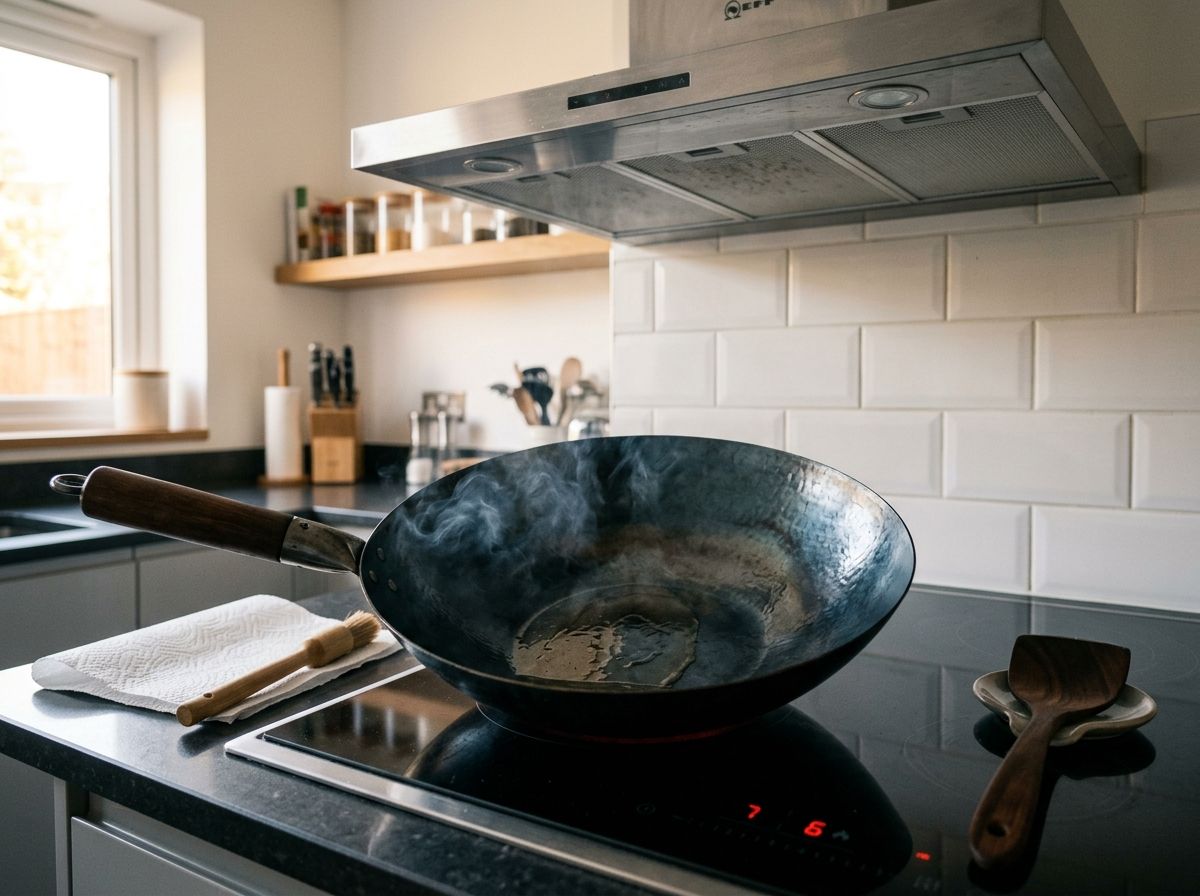
Place the empty, dry wok over high heat, whether that’s a gas ring or an induction hob with a suitably flat-bottomed wok. Move and tilt it so the heat reaches the sides as well as the base, and keep going until the metal turns a light straw colour, then a blue-grey, right across the surface. This step opens up the pores in the metal, which lets the oil bond properly in the next stage.
Step 3: Apply a thin layer of oil
Remove the wok from the heat and let it cool slightly, then dip a folded pad of kitchen roll into a small amount of oil and spread it thinly across the entire inside surface using tongs, so you’re not holding hot metal directly. A thin, even coat matters more than a generous one here, since pooled oil will turn sticky and gummy rather than forming a smooth patina.
Step 4: Heat again until it smokes
Return the oiled wok to medium heat for around 10 to 15 minutes, until it starts to smoke and the oil darkens the surface. Keep your kitchen well ventilated with a window open or the extractor fan on, since this step does produce a fair amount of smoke. Once the smoking stops and the surface looks dark grey to black, remove it from the heat and let it cool.
Step 5: Repeat
Repeat the oiling and heating process two or three more times to build up a solid base layer of seasoning. The wok should look noticeably darker and slightly glossy by the end, and this base layer will keep developing and improving every time you cook with it afterwards.
Seasoning a wok on an induction hob
Induction hobs need a completely flat-bottomed wok to make proper contact with the ceramic surface, since round-bottomed traditional woks simply won’t heat evenly, or at all, on induction. Look for “induction compatible” clearly stated on the product listing, as with the John Lewis Carbon Steel Non-Stick Wok range, which is tested to British and European safety standards for induction use.
The seasoning method itself is the same regardless of hob type, but induction hobs often heat more slowly and evenly than gas, so you may need slightly longer at each stage to get the surface hot enough to change colour properly. Some manufacturers, including Craft Wok, specifically advise heating flat-bottomed woks gradually on induction rather than jumping straight to the highest setting, to avoid warping the base.
Choosing the right wok before you season it
Not every wok suits every kitchen, and getting this right first saves you buying twice.
Round bottom vs flat bottom: traditional round-bottomed woks are designed for gas rings with a wok stand or a recessed wok burner, common in Chinese restaurant kitchens but rare in UK domestic setups. Flat-bottomed woks sit directly on any hob, including induction, and are the more practical choice for most UK homes.
Carbon steel vs cast iron: carbon steel heats up and cools down quickly, which suits the fast, high-heat stir-frying technique wok cooking is built around. Cast iron holds heat for longer and is heavier, which some cooks prefer for deep frying or slower dishes, but it’s slower to respond to heat changes during a quick stir-fry.
Pre-seasoned vs raw: some woks, including several School of Wok models sold through John Lewis, come pre-seasoned from the factory, meaning you can skip the initial scrub-and-season process and start cooking straight away. A raw, unseasoned carbon steel wok is typically cheaper but needs the full process described above before its first use.
What a wok costs in the UK
Prices vary by size, brand, and finish, so treat these as a general guide rather than fixed figures. A basic uncoated carbon steel wok from a UK retailer currently runs from around £24 to £50 depending on size, with pre-seasoned versions typically costing £40 to £60. Larger 36cm carbon steel woks can reach £59 or more from established brands, while budget imported carbon steel woks are available from under £20 on marketplaces, though quality and thickness vary considerably at that end.
Caring for a seasoned wok
Once seasoned, a wok needs a slightly different cleaning routine to protect the patina you’ve just built up. Never use washing up liquid or a dishwasher on a seasoned wok, since both strip the oil layer straight back off. Instead, rinse with hot water straight after cooking while it’s still warm, using a soft sponge or bamboo brush to loosen any stuck food, then dry it immediately over a low heat on the hob to prevent rust.
Cooking regularly is genuinely the best maintenance, since high-fat, high-heat dishes like stir-fries continue to build and reinforce the seasoning naturally over time. A wok that’s used weekly will develop a better patina within a few months than one that’s used occasionally, however carefully it’s looked after in between.
Fixing a rusted or patchy wok
Rust on a carbon steel wok isn’t a disaster, and it’s genuinely common if the wok has been left damp or unused for a while. Scrub the rusted area with steel wool until the bare metal shows through and the rust is completely gone, then dry it thoroughly and repeat the full seasoning process from step two onwards.
Patchy or blotchy seasoning, where some areas look darker than others, is also completely normal in the early stages and usually evens out with continued use. If the seasoning feels sticky rather than smooth, it usually means too much oil was used in one of the earlier steps, and cooking a few high-heat, oily dishes will generally smooth it back out over time.
FAQs
How long does it take to season a wok?
The initial seasoning process takes around 20 to 30 minutes, covering two to three rounds of heating and oiling. The seasoning will keep improving with regular cooking for weeks or months afterwards, so the first session is just the starting point.
What oil is best for seasoning a wok?
A high smoke point oil works best, such as vegetable oil, sunflower oil, or rapeseed oil, all widely available in UK supermarkets. Avoid olive oil, since its lower smoke point means it can burn and turn sticky rather than forming a smooth patina.
Do you need to season a stainless steel wok?
No, stainless steel doesn’t develop a seasoning patina the way carbon steel and cast iron do, so the high-heat seasoning process isn’t needed. A light oiling before first use can still help reduce sticking, but it won’t build up over time in the same way.
Why is my wok rusting?
Carbon steel woks rust when they’re left wet or stored in a damp environment without a protective layer of seasoning oil. Always dry your wok immediately after washing, ideally over a low heat on the hob, and make sure the seasoning is properly built up before regular use.
Can you season a wok in the oven?
Yes, some cooks prefer oven seasoning at around 220°C for consistent, even heat across the whole surface rather than relying on a hob ring. The hob method described in this guide works just as well for most home cooks and doesn’t require heating the whole oven.
What’s the difference between a wok and a stir fry pan?
A wok has deep, sloped sides designed for tossing food at high heat with minimal oil, while a stir fry pan is typically shallower with a flatter base, closer to a large frying pan. Woks generally give better results for genuine stir-frying, though a flat-bottomed wok can do double duty as a deep stir fry pan in most UK kitchens.
Can I use metal utensils on a seasoned wok?
Yes, on a raw carbon steel or cast iron wok, metal utensils are fine and won’t damage the seasoning once it’s properly built up. Avoid metal utensils on any wok with a non-stick coating, since these will scratch and damage the coating itself.
How do I know if my wok is properly seasoned?
A properly seasoned wok looks dark grey to black and slightly glossy across the whole cooking surface, with food naturally releasing rather than sticking during cooking. If food still sticks consistently, it usually means more seasoning layers or more regular cooking use is needed before the patina fully develops.