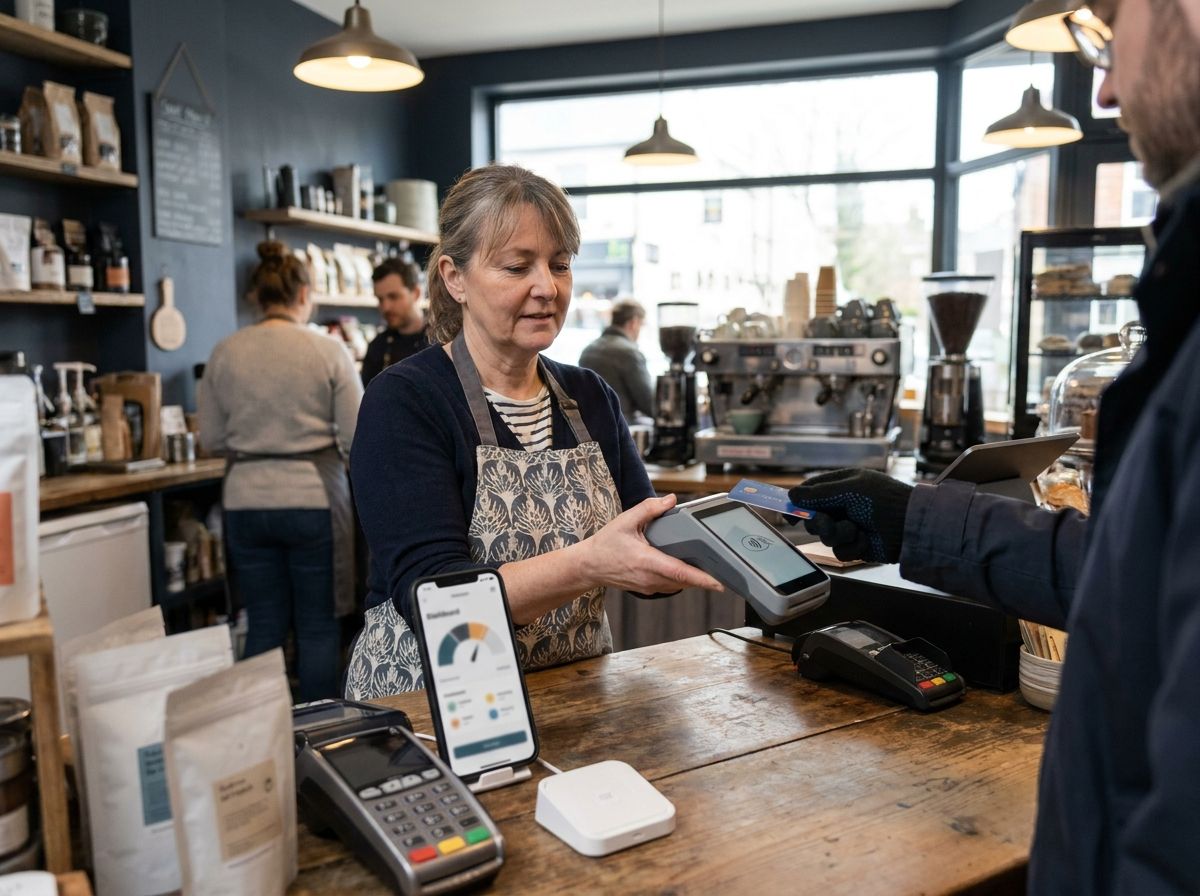
There’s no single best card payment machine for every business, but the shortlist narrows fast once you know your monthly card turnover. Under roughly £15,000 a month, a pay-as-you-go reader from SumUp, Square or Zettle usually works out cheapest, since there’s no monthly fee and no contract. Above that, a blended-rate machine from a provider like Dojo or Tyl typically saves more than it costs, even after you factor in the monthly charge. This guide compares the current UK providers on hardware price, transaction rate, settlement speed, contract terms and connectivity, with a dedicated SumUp vs Zettle section and a decision path by business type.
Best card payment machines UK: compared
Rates and prices below were checked against each provider’s own UK pricing page in the past few weeks. Providers do revise pricing without much notice, so treat this as a strong starting point rather than a guarantee, and double-check the live rate before you commit.
| Provider | Hardware price | Transaction rate | Monthly fee | Contract | Settlement | Connectivity |
| SumUp Air | £39 | 1.69% (0.99% on Payments Plus, £19/mo) | None | None | Next day (instant available) | Bluetooth, phone required |
| SumUp Solo | £99 to £149 | 1.69% | None | None | Same day or next day | Built-in 4G SIM, no phone needed |
| Zettle Reader 2 | £29 + VAT | 1.75% | None | None | Instant to PayPal balance, 1 to 2 days to bank | Bluetooth, phone required |
| Zettle Terminal | £99 | 1.75% (0.9% via PayPal QR) | None | None | Instant to PayPal balance | Built-in 4G SIM |
| Square Reader | £19 + VAT | 1.75% | None | None | Next day, including weekends | Bluetooth, phone required |
| Square Terminal | £149 + VAT | 1.75% | None | None | Next day, including weekends | Wi-Fi and built-in connectivity |
| myPOS Go 2 | £49 | 1.10% + 7p | £0 in year one, then £3.99 | None | Instant to myPOS e-money account | Built-in 4G SIM |
| Dojo | Custom quote | 1.2% blended (under £100k annual turnover) | Varies by plan | Often none on current plans | Next day, by 9am, including weekends | Wi-Fi, 4G or ethernet |
| Tyl by NatWest | Custom quote | 1.39% + 5p (UK/EU personal cards) | Varies by plan | Varies | Next working day | Wi-Fi or 4G |
| Worldpay (Simplicity) | Custom quote | 1.50% (Visa/Mastercard only) | Varies by plan | Varies | Next working day | Wi-Fi or 4G |
| Teya Pro | From £14.99/month rental | Custom-quoted, blended or tiered | £29.99 if turnover under £2,500/month | Rolling monthly | Next day, by 9am, including weekends | Wi-Fi or 4G |
| Revolut Reader | Custom quote | From 0.8% + 2p | Varies by plan | Varies | Next working day | Bluetooth, phone required |
A word on the flat-rate providers: SumUp, Square and Zettle never move off their published percentage no matter how much you process, which is exactly why they’re simple and exactly why they stop being the cheapest option once your volume grows. A shop taking £20,000 a month on Square’s 1.75% pays £350 in fees. The same volume on a blended rate closer to 1.2% costs roughly £240, a saving that usually covers a machine rental within the first month.
What counts as a chip and pin machine for small business now
A chip and pin machine used to mean a single thing: a countertop terminal wired into a phone line. In 2026, the category has split into four physical formats, and most small businesses will end up using at least one of the newer three.
- Countertop terminal: fixed at the till, usually leased or bought outright, best for shops and cafés with one payment point.
- Portable card machine: connects over Wi-Fi or 4G and can be carried around a venue, useful for restaurants taking payment at the table.
- Mobile card reader: a small Bluetooth device paired with a phone or tablet, the standard choice for market stalls and mobile trades.
- Tap to Pay on iPhone: no separate hardware at all. A compatible iPhone running a recent iOS version takes contactless card and Apple Pay payments directly through an app from SumUp, Square, Zettle, Stripe, Tide or Revolut.
Whichever format you pick, nearly every current device handles chip and PIN, contactless and mobile wallet payments (Apple Pay, Google Pay) as standard. If a chip and pin machine for small business doesn’t cover all three, it’s worth looking elsewhere.
Square card reader UK: fees, hardware and who it suits
The Square Reader costs £19 plus VAT, charges a flat 1.75% on every in-person UK card payment, and comes with no monthly fee and no contract. It’s a Bluetooth device that pairs with the free Square POS app on a phone or tablet, and it’s one of the fastest ways to start accepting cards, since there’s no application process to wait on.
Square Terminal, the standalone all-in-one version, costs around £149 plus VAT and works without a paired phone, printing receipts and running the same free POS software on its own screen. Both devices settle funds to your UK bank account the next working day, including weekends and bank holidays, so a Saturday market stall sees its takings on Sunday.
The free POS app is where Square pulls ahead of SumUp and Zettle: it includes inventory tracking, staff logins and reporting at no extra cost, which matters more to a café or small shop than to a market trader taking the odd card payment. The catch is that 1.75% rate never drops on the free plan. Non-UK cards add a further 1.5% for in-person payments (3.25% total), and Instant Transfer to your bank costs an extra 1.5% on top of the standard next-day settlement. Square does not currently charge a fee when a customer disputes a payment, which is worth knowing since SumUp charges £10 per chargeback and PayPal (and by extension Zettle) charges £14.
SumUp vs Zettle: full head-to-head
SumUp and Zettle get compared constantly because they solve the same problem in almost the same way: no contract, no monthly fee by default, and a flat percentage per transaction. The differences only really show up once you look closely.
| SumUp | Zettle | |
| Standard transaction rate | 1.69% | 1.75% |
| Lower-rate option | 0.99% on Payments Plus, £19/month | Custom pricing above £10,000/month |
| Cheapest hardware | £39 (Air) | £29 + VAT (Reader 2) |
| SIM-equipped device | Solo and Terminal (built-in, no monthly SIM fee) | Terminal only (4G, no monthly SIM fee) |
| Settlement | Same day or next day to your bank | Instant to PayPal balance, 1 to 2 days to bank |
| Business account | Dedicated SumUp Business Account | Funds sit in PayPal Business balance |
| Chargeback fee | £10 | Handled through PayPal’s dispute process |
| Best fit | Sole traders and businesses prioritising the lowest flat rate | Businesses already using PayPal, or wanting instant access to a PayPal balance |
On price alone, SumUp is very slightly cheaper: 1.69% against Zettle’s 1.75%, which on £5,000 of monthly card takings works out to roughly £84.50 against £87.50, a difference of £3 a month. It’s not a gap worth agonising over at low volumes.
Where the two genuinely diverge is settlement and ecosystem. Zettle pays into a PayPal Business balance almost immediately, which suits anyone who already spends from PayPal or sells on eBay, where payments often land in the same place. SumUp settles to a standard UK bank account (or its own SumUp Business Account) same day or next day, which is more useful if you don’t want money parked inside PayPal.
For market traders specifically, Zettle Terminal has an edge: it includes 4G at no ongoing cost, matching SumUp’s Solo and Terminal, but Zettle’s version pairs with PayPal’s near-instant settlement, which some traders value if they’re buying stock again the same day.
Best card reader for small business by scenario
The right answer changes depending on where and how you’re actually taking payments, so here’s a decision path for the three most common setups.
Market traders
Prioritise a device with its own SIM, since market venues often have patchy Wi-Fi and you don’t want to rely on a phone’s data plan running low mid-morning. SumUp Solo, SumUp Terminal and Zettle Terminal all include built-in 4G at no extra monthly cost, and myPOS Go 2 goes a step further with instant settlement to an e-money account, useful if you need to buy stock again the same day rather than waiting for a bank transfer.
Mobile trades
For hairdressers, plumbers, dog groomers and anyone visiting a customer’s home or workplace, a lightweight Bluetooth reader paired with a phone is usually enough, since coverage is rarely as much of an issue as it is on an open market pitch. SumUp Air, Zettle Reader 2 and Square Reader are all under £40 and handle this job well. If you already carry a compatible iPhone, Tap to Pay removes the need for separate hardware entirely.
Fixed premises
Shops, cafés, salons and restaurants taking regular volume benefit most from comparing total monthly cost, not just the headline rate. Below roughly £10,000 a month, Square Terminal is a strong default: free EPOS software, no contract, next-day settlement including weekends. Above that, it’s worth getting quotes from Dojo, Tyl or Teya, since their blended rates around 1.2% to 1.4% start to beat a flat 1.75% by a meaningful margin, and several now offer rolling monthly terms rather than the multi-year contracts that used to be standard in this category.
When to move off a flat-rate machine
Flat-rate providers are simple because you always know the fee in advance, but that simplicity has a ceiling. As a rough guide, once monthly card takings pass £15,000 to £20,000, a blended or interchange-plus rate from a provider like Dojo, Tyl or Worldpay usually costs less overall, even after adding back any monthly device fee.
Work it out with your own numbers before switching: take your average monthly card turnover, multiply by your current flat rate, then compare that figure against a blended quote plus its monthly cost. If the difference covers more than a token saving, in most cases anything over £50 to £100 a month, it’s worth the switch, though weigh that against giving up the no-contract flexibility that pay-as-you-go providers offer.
FAQs
What is the best card payment machine for a small business in the UK?
For most small businesses starting out, SumUp Solo or Square Reader offer the best combination of low upfront cost, no monthly fee and no contract. Once monthly card turnover passes around £15,000, a blended-rate provider such as Dojo or Tyl usually works out cheaper overall.
Is SumUp or Zettle cheaper?
SumUp is very slightly cheaper on the standard rate, 1.69% against Zettle’s 1.75%, though the gap is small at low transaction volumes. Zettle can suit businesses better if they already use PayPal, since funds settle into a PayPal balance almost instantly rather than a bank account.
How much does a Square card reader cost in the UK?
The Square Reader costs £19 plus VAT with no monthly fee, and charges 1.75% per in-person UK card transaction. The Square Terminal, a standalone device that doesn’t need a paired phone, costs around £149 plus VAT at the same transaction rate.
Do I need a contract to get a card machine?
No. Pay-as-you-go providers including SumUp, Square, Zettle and Revolut Reader operate with no contract and no monthly fee by default, so you can stop using them at any time. Traditional providers like Worldpay and some Dojo and Tyl plans may still involve a rolling monthly or fixed-term agreement, so check before signing.
How quickly do I get paid after a card payment?
Most modern providers settle funds within one working day, and several, including Square, Dojo and Teya, settle daily including weekends and bank holidays. Zettle and myPOS pay into an app-based balance almost instantly, though moving that to a bank account can take one to two further working days.
Can I take card payments without buying a machine?
Yes. A payment link generated through most of these providers lets you take a card payment by sending a link or QR code, with no physical hardware required, and a compatible iPhone can accept contactless payments directly through Tap to Pay with no separate reader at all.
What’s the cheapest card reader for a market trader?
SumUp Air at £39 and Zettle Reader 2 at £29 plus VAT are the cheapest devices with a reasonable feature set, though neither has its own SIM, so you’ll need a phone with signal. SumUp Solo and Zettle Terminal cost more upfront but include built-in 4G, which is more reliable at busy markets or events.
Does a card machine charge a fee if a customer disputes a payment?
It depends on the provider. SumUp charges £10 per chargeback, PayPal (and Zettle by extension) charges £14, while Square currently applies no chargeback fee at all, which is worth factoring in if disputes are common in your line of business.