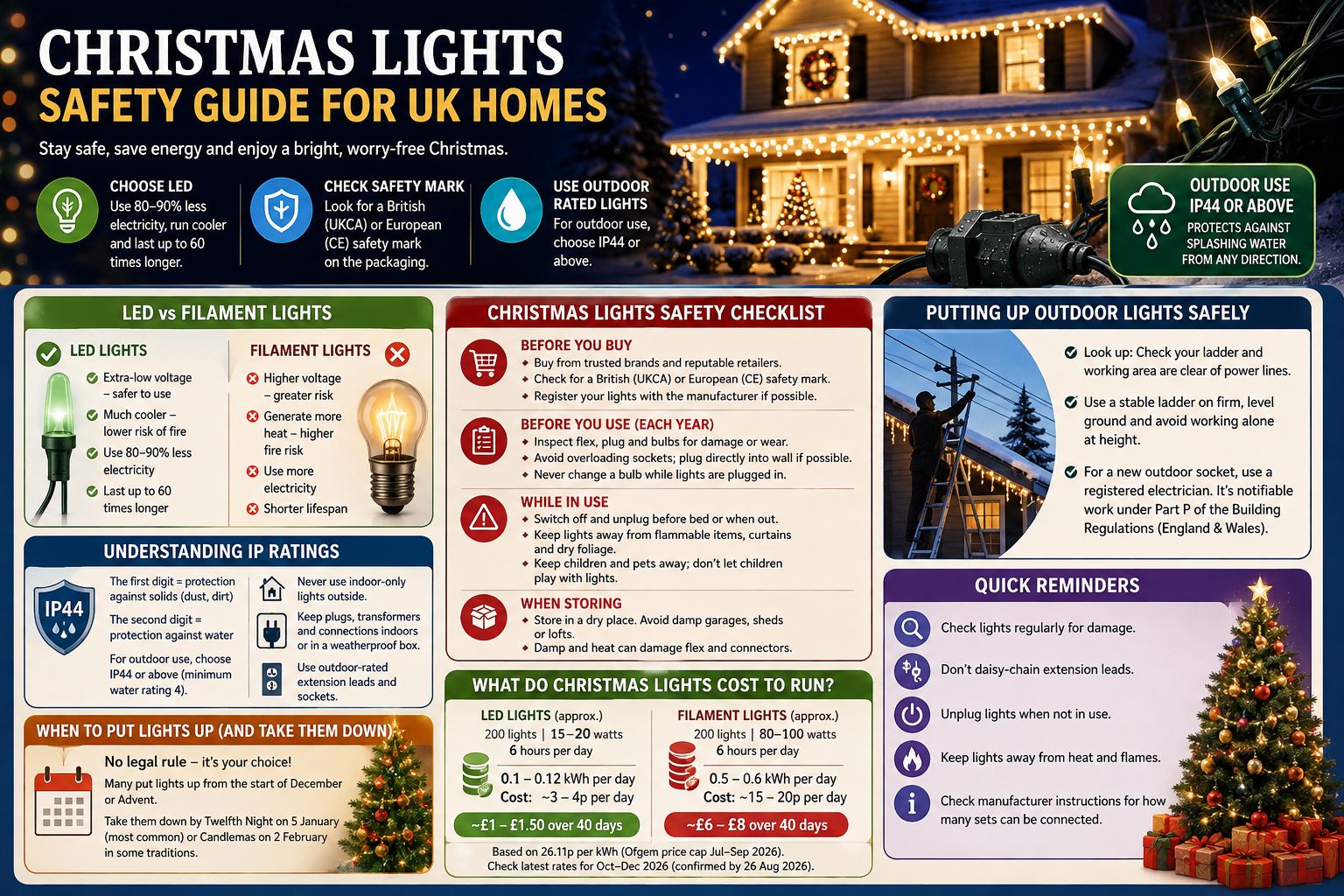
If you’re buying Christmas lights this year, the short version is this: choose LED over old-style filament lights, check for a British or European safety mark, and only use lights rated for outdoor use (IP44 or above) outside. LED Christmas lights use an estimated 80 to 90% less electricity than older filament versions, according to Electrical Safety First, and they run cooler, which cuts the risk of fire. Whether you’re decorating a tree indoors or putting up a full display outside, the rules below cover the safety checks worth making before you buy, plus what your lights are likely to cost to run through December.
LED vs Filament Christmas Lights
Most Christmas lights sold in the UK now are LED, and there’s a good reason for that beyond energy bills. LED lights operate at extra-low voltage, which significantly reduces the risk of electric shock even if a fault occurs or a bulb breaks, according to Electrical Safety First.
They also generate far less heat than traditional filament bulbs, cutting the risk of burns or fire if a string of lights ends up tangled against curtains, wrapping paper, or a dry Christmas tree. On top of the safety benefits, LEDs typically last up to 60 times longer than filament lamps, so a decent set bought this year should still be working well beyond a single festive season.
If you already own older filament lights, there’s no legal requirement to replace them, but it’s worth checking the plug, flex, and bulbs carefully each year before use, since these are the parts most likely to degrade over time.
Understanding IP Ratings for Outdoor Christmas Lights
If any part of your display is going outside, this is the single most important thing to check before you buy. Outdoor Christmas lights should carry an IP (Ingress Protection) rating, shown as “IP” followed by two numbers, or at minimum a water droplet symbol on the packaging.
The first digit indicates protection against solid objects like dust and dirt, while the second digit indicates protection against water. Electrical Safety First recommends outdoor lights carry a water resistance rating of 3 or higher, though most UK outdoor Christmas lighting is sold at IP44 or above, which protects against splashing water from any direction, a sensible minimum given British winter weather.
A few practical rules to foll
- Never use indoor-only lights outside, even under cover, since they’re not designed to handle damp conditions.
- Keep plugs, transformers, and connection points indoors or in a weatherproof enclosure, even if the lights themselves are outdoor-rated.
- Use an outdoor-rated extension lead and socket if you’re powering a display any distance from the house, and avoid running cables through open windows or doors where they can be pinched or damaged.
Christmas Lights Safety Checklist
Beyond IP ratings, Electrical Safety First recommends a short set of checks each year, since most Christmas lighting faults come from wear, damage, or overloaded sockets rather than the lights themselves being faulty from new.
Before you buy:
- Choose a known, trusted brand from a reputable retailer, and be cautious buying Christmas lights from third-party online sellers with no clear safety information.
- Check for a British or European safety mark on the packaging.
- Register your lights with the manufacturer if that option is offered, so you’re notified of any product recalls.
Before you use them each year:
- Inspect the flex, plug, and bulbs for any signs of damage, fraying, or scorch marks before switching on.
- Avoid overloading sockets. Plug lights directly into a wall socket where possible, and don’t daisy-chain multiple extension leads together.
- Never change a bulb while the lights are still plugged in.
While they’re in use:
- Switch lights off and unplug them before going to bed or leaving the house.
- Keep lights well away from flammable decorations, curtains, and dry foliage.
- Keep young children and pets away from lights and wiring, and teach children not to play with them.
When storing them:
- Store lights somewhere dry, avoiding damp garages, sheds, or lofts with big temperature swings, since both damp and heat can degrade the flex and connectors over time.
Putting Up Outdoor Christmas Lights Safely
If you’re decorating the outside of your home, UK Power Networks, the country’s largest electricity distributor, issues an annual reminder to take extra care around overhead power lines, particularly if you’re using a ladder.
Before you start, look up and check your ladder or working area is well clear of any power cables, including smaller lines that may run from a nearby pole to serve several houses, sometimes clipped along the front of a property. Position ladders on firm, level ground, and avoid working alone on a roof or high ledge if you can get help.
If you’re planning a larger display and don’t already have a dedicated outdoor socket, it’s worth getting one installed properly rather than running multiple extension leads from an indoor socket through a window each year. Installing a new outdoor socket is notifiable work under Part P of the Building Regulations in England and Wales, meaning it should be carried out by a registered electrician or notified to your local authority’s building control before work begins.
What Do Christmas Lights Cost to Run?
This is one of the most searched questions each December, and it’s easy enough to work out roughly for your own setup. Under the current Ofgem price cap for July to September 2026, the average Direct Debit electricity rate is 26.11 pence per kWh, though the rate covering the Christmas period (October to December 2026) will be confirmed by Ofgem by 26 August 2026, so it’s worth checking the latest figure closer to the time.
As a working example, a typical LED string of around 200 lights uses roughly 15 to 20 watts. Run for 6 hours an evening, that works out to around 0.1 to 0.12 kWh a day sales, costing roughly 3 to 4 pence a day, or around £1 to £1.50 across a 40-day festive period from late November to early January.
Older filament sets draw considerably more power, sometimes 80 to 100 watts for a similar length of string, which can push daily running costs up closer to 15 to 20 pence a day, or around £6 to £8 over the same period. Costs will vary depending on your specific lights, tariff, and how many hours you run them, so treat these figures as a rough guide rather than an exact bill forecast.
When to Put Christmas Lights Up (and Take Them Down)
There’s no legal rule in the UK about when you can put lights up, and it comes down entirely to personal preference and, where relevant, any restrictions in a rental agreement or leasehold contract. That said, many people follow informal traditions: putting lights up from the start of December, or from Advent, and taking them down by Twelfth Night on 5 January, which is the more common date, or Candlemas on 2 February in some regions and traditions.
If your lights are staying outside for an extended period over winter, it’s worth periodically checking connections haven’t loosened or been affected by wind and rain, particularly after any storms.
FAQS
Are LED Christmas lights safer than filament lights?
Yes, LED Christmas lights operate at extra-low voltage, which significantly reduces the risk of electric shock, and they generate far less heat, lowering the risk of fire or burns. Electrical Safety First specifically recommends LED over traditional filament lighting for these reasons.
What IP rating do I need for outdoor Christmas lights?
Outdoor Christmas lights should have a water resistance rating of at least IP44, which protects against water splashing from any direction. Always check the specific packaging or product listing, since a lower rating isn’t suitable for exposed outdoor conditions.
How much do Christmas lights cost to run?
A typical LED string of around 200 lights, run for 6 hours a day, costs roughly 3 to 4 pence a day based on current electricity prices, adding up to around £1 to £1.50 over a 40-day festive period. Older filament lights can cost several times more to run over the same period.
Can I use indoor Christmas lights outside?
No, indoor-only lights aren’t designed to handle rain or damp conditions and shouldn’t be used outdoors, even in a sheltered spot. Always check for an IP rating or water droplet symbol before using any lights outside.
When should I take my Christmas lights down?
There’s no legal deadline, but Twelfth Night on 5 January is the most commonly followed date in the UK, with some households instead taking decorations down at Candlemas on 2 February. It’s largely a matter of personal or family tradition.
Do I need an electrician to put up outdoor Christmas lights?
Not for plugging in ready-made outdoor Christmas lights using an existing outdoor socket, but installing a brand new outdoor socket is notifiable work under Part P of the Building Regulations and should be carried out by a registered electrician or notified to your local council.
Can Christmas lights cause a house fire?
They can, particularly older filament lights, damaged wiring, or lights left on unattended near flammable decorations. Following basic safety steps, checking for damage each year, unplugging lights when out or asleep, and keeping them away from dry foliage, significantly reduces this risk.
How many strings of lights can I safely connect together?
This varies by product, so always check the manufacturer’s instructions on the packaging, since exceeding the recommended number of connected sets can overload the circuit and create a fire risk. As a general rule, avoid daisy-chaining multiple extension leads together to power a display.