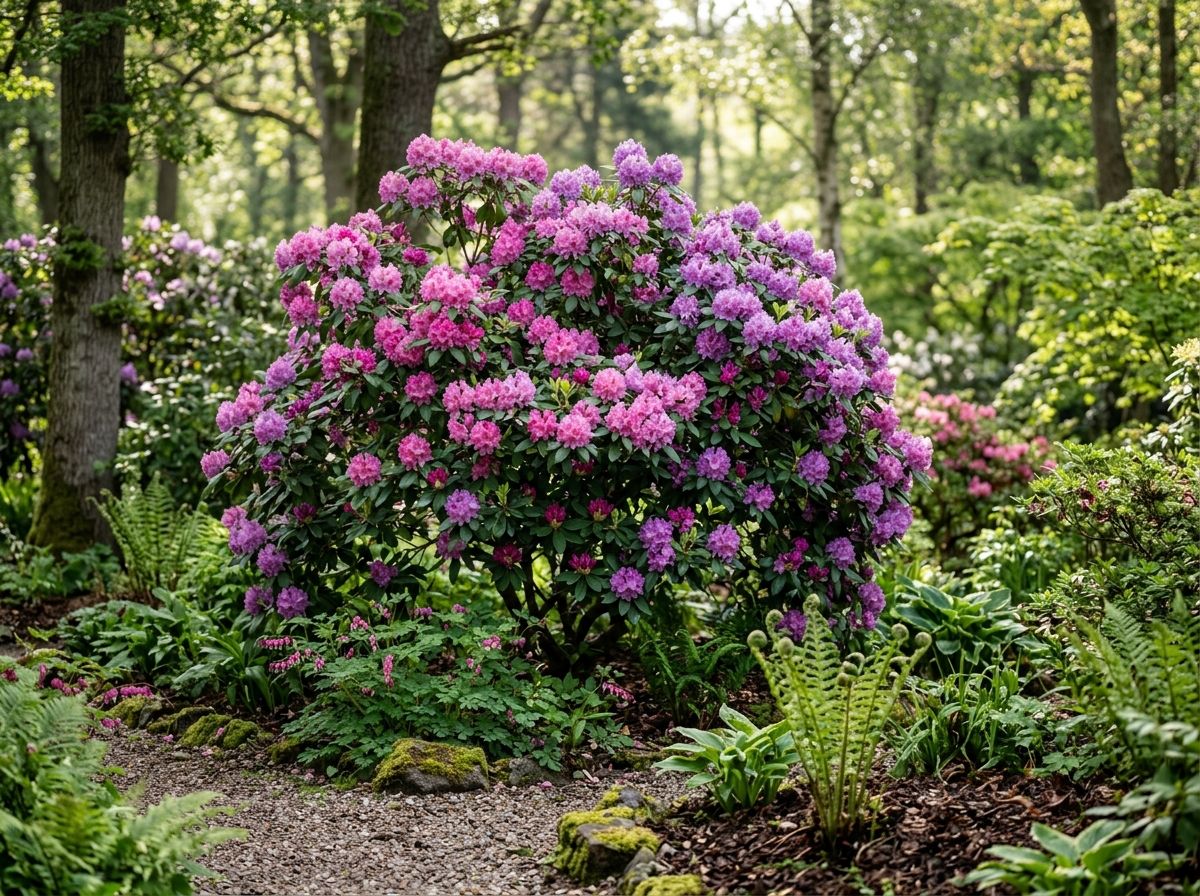
A rhododendron is an evergreen flowering shrub that needs acidic, moist but well-drained soil to thrive, and it’s one of the most reliable spring-flowering plants for UK gardens with the right conditions. There are thousands of cultivars, ranging from dwarf alpine types under half a metre tall to large woodland shrubs reaching several metres, all producing the same distinctive funnel-shaped flower trusses each spring. Before you plant one, it’s worth knowing that not every rhododendron is straightforward: one particular species, Rhododendron ponticum, is legally classed as invasive in the UK, which we’ll cover further down. This guide walks through everything from soil prep to pruning, plus the legal and safety details most growing guides skip.
What Is a Rhododendron?
Rhododendron is a large genus of flowering shrubs and small trees, most of them evergreen, prized for their bold spring blooms and glossy foliage. Azaleas, once classified separately, are now grouped within the same genus, though they’re generally smaller and more compact than classic rhododendrons.
Sizes vary enormously. Dwarf alpine varieties like ‘Ginny Gee’ stay under 45cm and suit rock gardens or containers, while larger woodland types can reach several metres and work best as specimen shrubs or informal hedging in bigger gardens. Flower colours span the full range, from soft pastel pinks and whites through to fiery reds, oranges and deep purples.
Soil and Site: What Rhododendrons Actually Need
Getting the soil right matters more with rhododendrons than almost any other common garden shrub. They need acidic (ericaceous) soil with a pH of roughly 5.0 to 6.0, according to the RHS, and struggle badly in neutral or alkaline conditions.
Test your soil first. A simple pH testing kit from any garden centre will tell you where you stand. If your soil is naturally alkaline or chalky, don’t fight it: grow rhododendrons in containers filled with peat-free ericaceous compost instead, which lets you control the growing medium directly.
Choose a sheltered spot. Rhododendrons generally prefer partial shade to full sun, with shelter from cold, drying winds. Avoid planting directly under dense tree canopy, since this creates overly heavy shade, but a woodland-edge position or a sheltered border works well for most varieties.
Keep the soil moist but not waterlogged. Rhododendrons like consistently damp conditions and don’t tolerate either drought or standing water well, so free-draining but moisture-retentive soil, improved with plenty of organic matter, gives the best results.
How to Plant a Rhododendron
- Dig a wide, shallow hole. Rhododendrons are surface-rooting, with a fibrous root system that sits mostly in the top 15cm of soil, so the hole should be wider than it is deep.
- Improve the soil. Mix leaf mould and peat-free ericaceous compost into the excavated soil before backfilling, and spread a thick layer of acidic organic matter over the surface beforehand if your soil needs more help.
- Plant at the right depth. This is the single most common mistake. The top of the root ball should sit level with, or very slightly below, the surrounding soil surface. Planting too deep is one of the most frequent causes of rhododendron failure, since a buried crown can rot within a year or two.
- Water in thoroughly. Give the plant a deep soak straight after planting, and keep watering regularly through the first year while the root system establishes.
- Mulch generously. Apply a layer of acidic mulch, such as pine bark or leaf mould, at least 5cm thick from late autumn to late winter, keeping it clear of the stem itself to avoid encouraging rot at the base.
October is generally considered the ideal planting month in the UK, giving roots time to establish over a mild, moist autumn and winter before spring growth begins.
Feeding and Watering Through the Seasons
Rhododendrons growing in genuinely acidic soil need very little extra feeding. If your soil pH isn’t quite right, though, plants can develop deficiencies in magnesium, manganese or iron, usually showing up as yellowing between the leaf veins.
Feed sparingly in spring as the flower buds swell, using an ericaceous fertiliser formulated for acid-loving plants, and avoid overfeeding, since too much fertiliser can scorch the roots. Container-grown plants generally do better with a slow-release or liquid ericaceous feed rather than a one-off dose.
Water consistently through dry spells, particularly for the first couple of years after planting, and pay close attention during any UK summer with an extended dry period, since rhododendrons are more prone to stress from drought than from cold.
Pruning Rhododendrons
Most rhododendrons need very little pruning. Left alone, they naturally form a rounded, well-balanced shape, so routine maintenance mostly comes down to removing dead, damaged or crossing growth and deadheading spent flowers to tidy the plant and encourage a better display the following year.
If a rhododendron has become overgrown or leggy, hard renovation pruning is possible, typically cutting back to around 60cm above ground in March. This triggers regrowth from dormant buds lower down the stem, though it usually takes two to three years before the plant flowers again, so it’s a trade-off worth planning for rather than a quick fix.
Timing matters. Since next year’s flower buds form on this year’s growth, pruning too late in the year, particularly into autumn, can significantly reduce flowering the following spring. Where pruning is needed, doing it shortly after flowering finishes in early summer gives the plant the longest possible growing season to set new buds.
Common Problems and How to Spot Them
Yellowing leaves (chlorosis) usually points to soil that’s too alkaline for the plant, causing an iron or manganese deficiency. Treating with an ericaceous feed or a chelated iron supplement can help, though a genuinely unsuitable soil pH is better solved with a container or a soil improvement plan.
Bud blast, a fungal condition that turns flower buds black and papery before they open, is common in damp climates and is often linked to leafhopper damage the previous summer. Removing and disposing of affected buds helps limit spread.
Vine weevil can damage roots, particularly in container-grown plants, causing sudden wilting despite adequate watering. Checking the compost for C-shaped white grubs is the quickest way to confirm this as the cause.
Rhododendron Ponticum: The Invasive Species You Should Know About
This is where most general growing guides fall short, and it’s worth understanding clearly before you plant, buy, or inherit a rhododendron in the UK. While the vast majority of rhododendron cultivars sold in garden centres are entirely well-behaved garden plants, one species and its close relatives are legally classed as invasive.
Rhododendron ponticum, along with Rhododendron luteum (yellow azalea) and the hybrid Rhododendron ponticum x maximum, is listed on Schedule 9 of the Wildlife and Countryside Act 1981. Under Section 14 of the Act, it’s an offence to plant, or otherwise cause to grow, any of these species in the wild.
What this actually means for gardeners:
- It is not illegal to have Rhododendron ponticum growing in your own garden, and there’s no legal requirement to remove it.
- It is illegal to allow it to spread into the wild, which matters most for larger properties, woodland, or land bordering open countryside.
- Cut material, roots and seed heads should be disposed of carefully rather than left where they could root or spread, since the species readily regenerates from stem layering and produces large quantities of viable seed.
Rhododendron ponticum was introduced to the UK from Gibraltar in the late 18th century as an ornamental plant and later used widely on Victorian estates and for game cover, before its tendency to form dense, light-blocking thickets in woodland and heathland became a serious conservation problem. It’s now a particular issue in parts of Wales, Scotland and the West Country, where the mild, wet climate suits it well, and it’s also known to host Phytophthora ramorum, a pathogen linked to the decline of oak and larch trees.
If you’re buying a rhododendron for a typical garden border, this almost certainly doesn’t affect you, since most modern cultivars sold by garden centres and nurseries are not the invasive ponticum type. If you’ve inherited a large, old, purple-flowered rhododendron on a rural or wooded property, it’s worth checking whether it matches Rhododendron ponticum, since these older plantings are the ones most likely to be the invasive species.
Are Rhododendrons Toxic?
Yes, all parts of rhododendron plants contain compounds, including grayanotoxins, that are toxic if eaten by people, pets, or livestock. Symptoms of poisoning can include vomiting, drooling, and in more serious cases, cardiac or breathing difficulties, so it’s worth keeping a close eye on pets and young children around the plant and seeking veterinary or medical advice promptly if ingestion is suspected.
The toxins are also present in honey made from rhododendron nectar in some regions, historically referred to as “mad honey,” though this is a much bigger concern in parts of the world with dense wild rhododendron populations than in typical UK garden settings.
FAQs
What soil do rhododendrons need?
Rhododendrons need moist, well-drained, acidic soil with a pH of roughly 5.0 to 6.0. If your garden soil is neutral or alkaline, growing rhododendrons in containers filled with ericaceous compost is the most reliable alternative.
Are rhododendrons illegal to grow in the UK?
No, most rhododendron cultivars are entirely legal and common garden plants. Only Rhododendron ponticum and two closely related species are listed under the Wildlife and Countryside Act 1981, and even then, it’s only illegal to let them spread into the wild, not to grow them in a garden.
When should I prune a rhododendron?
Most rhododendrons need minimal pruning beyond removing dead or damaged growth and deadheading spent flowers. If pruning is needed, do it shortly after flowering finishes in early summer, since next year’s buds form on this year’s growth and late pruning can reduce next spring’s flowers.
Why are my rhododendron leaves turning yellow?
Yellowing leaves usually mean the soil isn’t acidic enough, causing an iron or manganese deficiency. Treating with an ericaceous feed can help, though soil that’s persistently too alkaline is better addressed by growing the plant in a container instead.
Are rhododendrons poisonous to dogs?
Yes, all parts of the rhododendron plant are toxic to dogs and other pets if eaten, and can cause vomiting, drooling, and in serious cases more significant symptoms. Contact a vet promptly if you suspect your dog has eaten any part of the plant.
How deep should I plant a rhododendron?
Very shallow. Rhododendrons are surface-rooting, and the top of the root ball should sit level with, or just slightly below, the surrounding soil surface. Planting too deep is one of the most common causes of rhododendrons failing to thrive.
Can I grow a rhododendron in a pot?
Yes, and it’s a good option if your garden soil isn’t naturally acidic. Use peat-free ericaceous compost, choose a pot with plenty of room around the root ball (around 15cm of space is a good guide), and keep watering consistent, since containers dry out faster than open ground.
What’s the difference between a rhododendron and an azalea?
Azaleas are now classified within the same Rhododendron genus rather than as a separate group. Generally, azaleas are smaller, often deciduous, and tend to have smaller, more delicate flowers compared to the larger evergreen blooms typical of classic rhododendrons.