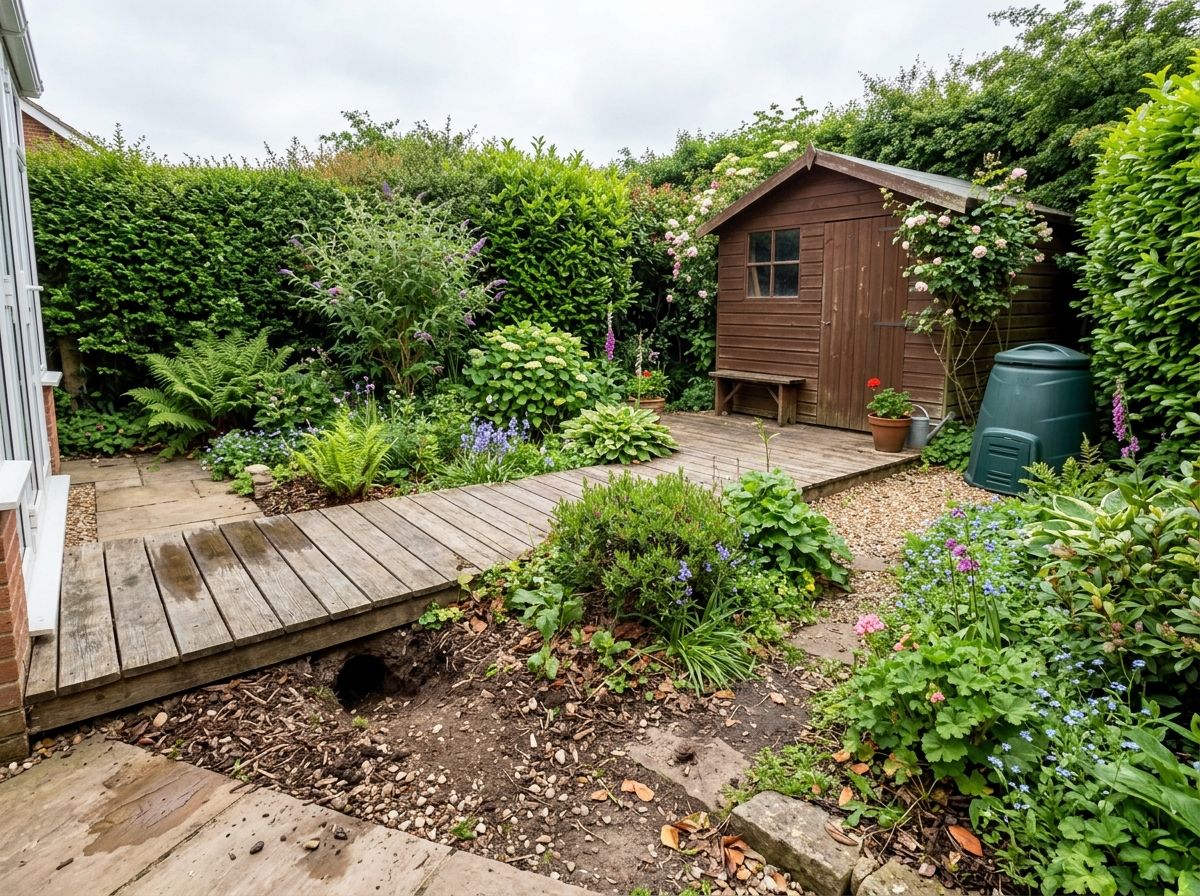
If you’ve spotted a rat in your garden, the first question is usually “where’s it living?” Rats nest close to food and water, in places that give them cover from predators and people. In UK gardens, that means under decking, inside compost heaps, in log piles, sheds, dense hedges, and along the base of fences and walls. Once you know where to look, you can find a nest, confirm it’s active, and shut it down before it grows into a bigger problem.
This guide walks through every common UK garden rat nesting spots, how to tell a rat nest from a mouse or squirrel one, who’s legally responsible for dealing with it, and what it typically costs to get rid of.
Why Rats Choose Gardens in the First Place
Rats need three things to settle anywhere: food, water, and shelter. A garden that offers all three, even a tidy one, is fair game. Fallen fruit, birdseed, pet food left out overnight, and open compost bins all count as food.
Water comes from ponds, birdbaths, dripping outdoor taps, or even a leaking hose. Shelter is the part gardeners underestimate. Rats don’t need mess to hide in. They need cover, which a well-planted border or a stack of firewood provides just as well as a rubbish pile.
Brown rats (also called Norway rats) are by far the most common species in UK gardens. According to Newcastle City Council, an adult brown rat’s body runs to roughly 200 to 270mm long, with a tail of 150 to 200mm on top of that, and colouring that ranges from greyish brown to almost black. Black (ship) rats are far rarer outdoors in Britain now and tend to climb rather than burrow.
The Most Common UK Garden Rat Nesting Spots
Under decking
Decking is one of the single biggest culprits, according to several UK pest control specialists. Once a rat gets underneath, it finds a dry, dark, undisturbed void that’s almost impossible to inspect without lifting a board.
Compost heaps and bins
Warm, food-rich, and rarely disturbed, compost is close to ideal rat housing. Reading Borough Council notes that rats are efficient burrowers that favour compost heaps and the areas under hedges and sheds, where they dig shallow burrows and line them with dry grass and leaves.
Sheds, greenhouses, and outbuildings
Anywhere with low human footfall and a solid roof qualifies. Sheds, garages, and other outbuildings appeal to rats precisely because people visit them less often, giving a nest plenty of time to go unnoticed.
Log piles, timber stacks, and rubble
Loose stacked material creates dozens of small voids at once. It’s worth checking under any rubbish, timber stack, or exposed drainpipe as thoroughly as you’d check decking or a garden building.
Overgrown hedges and dense borders
Thick, low growth at ground level gives rats cover to move unseen between food sources. Cutting hedges back to expose the base removes this instantly.
Drains and pipework
Broken or uncapped drains connect straight to the sewer network, one of the rat’s main highways into a garden. Councils flag this repeatedly in their advice sheets, and it’s often the entry point people miss because it’s underground and out of sight.
Cavity walls and foundations
Rats burrow along the base of walls and foundations because the solid structure gives their tunnel systems extra stability, one reason burrows so often turn up right against a house or garden wall.
What a Rat Nest Actually Looks Like
A rat’s nest is a loose, roughly shaped ball of material, softer and more insulated than you’d expect if a female is preparing to give birth. Typical materials include twigs, leaves, and grass, though rats will just as happily use man-made scraps like shredded cardboard, loft insulation, or paper if that’s what’s available.
Burrow entrances are a separate, equally reliable sign. Typical burrows are small, round holes around 2 to 4 inches across, and a fresh one has loose, disturbed soil around the rim, while an older one looks more settled and compacted. Multiple holes clustered together, often connected underground, point to an established colony rather than a single rat passing through.
Droppings help confirm it. Medway Council puts rat droppings at roughly 12mm long and 6mm wide, black or dark brown in colour and noticeably bigger and darker than a mouse’s. You may also notice smear marks along regular routes, where a rat’s oily fur brushes against walls, fences, or pipes on the same path night after night.
Rat nest vs mouse nest: the quick way to tell
Size is the giveaway. Rat nests are bigger and more deliberately shaped than mouse nests, which tend to be looser piles. Materials differ too: mice generally prefer softer bedding, while rats reach for coarser, sturdier stuff like cardboard. If the nest is under decking, in a compost bin, or along a fence line outdoors, a rat is the more likely culprit than a mouse.
Signs of an Active Nest Nearby
Look for these together rather than relying on just one:
- Fresh droppings in clusters, not scattered singly
- Loose soil around a burrow entrance that wasn’t there last week
- Gnaw marks on wood, plastic pipes, or cabling
- Scratching or squeaking, usually after dark
- A faint musky smell in enclosed spaces like sheds
- Disturbed mulch or flattened grass forming a visible run
Rats are mostly nocturnal, so daytime sightings usually mean the population has outgrown the food supply and individuals are being forced out to forage in daylight. That’s a sign to act quickly rather than wait and see.
Step-by-Step: How to Check Your Garden
- Walk the perimeter first. Start along fences, walls, and hedge bases, since these are the routes rats use to move between food and shelter.
- Check under and around decking. Look for gaps at the edges and any disturbed soil directly underneath if you can get a torch under there.
- Inspect the compost bin. Lift the lid and look at the base and sides for burrow holes or a nest ball.
- Look inside the shed or greenhouse. Check corners, behind stored items, and under any flooring that isn’t solid.
- Clear one small section of log pile or rubble to see if there’s activity underneath before deciding whether to remove the whole stack.
- Note every entry point you find so a pest controller (or you, if proofing yourself) knows exactly what needs sealing.
Who’s Responsible for Dealing With Rats in a UK Garden
Under the Prevention of Damage by Pests Act 1949, responsibility for dealing with rats on a property sits with the landowner or occupier, not the council. Reading Borough Council is explicit that owners who fail to manage rats on their own land can face enforcement action as a result.
If you rent, the position shifts slightly. Citizens Advice notes that telling your council about a rat or mouse problem can prompt them to force a landlord to carry out the necessary work, though in some private tenancies you might still have to pay for treatment yourself. Councils have a general duty to keep their district reasonably free of rats, but this doesn’t extend to clearing an individual garden for you.
What It Costs to Clear a Rat Nest in 2026
Prices vary by region and severity, but the typical range for professional rat treatment in the UK this year sits around £120 to £240 for a standard course covering two to three visits, according to trade pricing guides such as Rated People and Checkatrade, with an average of roughly £180. Expect costs around 20 to 30% higher in London and other major cities.
Proofing entry points, sealing gaps under decking or around pipework, is often charged separately and can add roughly £80 to £400 depending on how much work is involved. As with any trade quote, get this confirmed directly with the pest controller before booking, since prices do shift.
Preventing Rats From Nesting Again
- Store bird seed and pet food in metal, not plastic, containers, since rats can chew through plastic easily
- Fit a squirrel-proof or rat-resistant bird feeder rather than scattering seed on the ground
- Keep compost in a solid, base-covered bin rather than an open heap
- Trim hedges and borders back from ground level so there’s less cover to move through unseen
- Seal gaps under decking and around drainpipes as soon as you spot them
- Fix dripping taps or leaking hoses that give rats a reliable water source
None of these guarantee a rat-free garden forever, but together they remove most of what makes a garden attractive in the first place.
FAQ
Where do rats nest in gardens in the UK?
Rats most commonly nest under decking, inside compost heaps, in sheds and greenhouses, within log piles or rubble, and along the base of hedges, fences, and walls. They favour spots that combine shelter, warmth, and easy access to food and water.
What does a rat’s nest look like outdoors?
It’s a loosely formed, ball-shaped mass of dry grass, leaves, twigs, and sometimes shredded cardboard or insulation. It’s usually tucked under decking, inside a compost bin, or in dense vegetation, and looks softer and more padded if a female is nesting with young.
How do I know if I have an active rat burrow?
Look for a round hole roughly 2 to 4 inches across with loose, freshly disturbed soil around the entrance. Older, inactive burrows have settled, compacted edges instead. Multiple connected holes in one area point to an established colony.
Do rats nest in gardens all year round?
Yes, but activity tends to pick up in autumn and winter as rats seek warmth and shelter from the cold. Breeding also continues year-round in sheltered spots, so a nest found in summer is just as worth clearing as one found in December.
Is it my responsibility or the council’s to deal with rats in my garden?
It’s yours. Under the Prevention of Damage by Pests Act 1949, landowners and occupiers are responsible for controlling rats on their own property. Councils have a general duty to keep their area free of rats but won’t usually clear an individual garden for free.
How much does it cost to get rid of a rat nest in the UK?
Professional treatment typically costs £120 to £240 for a standard two to three visit course, averaging around £180, with London prices often 20 to 30% higher. Proofing entry points afterwards is usually quoted separately.
Can I remove a rat nest myself?
You can, but most pest control firms and several UK councils advise against DIY removal, since bait bought over the counter is often weaker than professional-grade product and rats carry diseases such as Weil’s disease and salmonella. A professional will also proof the area so rats can’t reoccupy the same spot.
Do log piles and firewood stacks actually attract rats?
Yes. Any stacked timber, rubble, or rubbish creates small sheltered voids that rats can move through unseen, which is exactly what they look for when choosing a nesting site.
What’s the difference between a rat nest and a mouse nest?
Rat nests are noticeably larger and more deliberately shaped, and rats favour coarser material like cardboard, whereas mice build looser, less defined nests from softer material. Location matters too: mouse nests are more likely indoors or in smaller cavities, while rat nests in gardens tend to be under decking, sheds, or in compost.
Will keeping my garden tidy stop rats nesting?
It helps a lot but won’t guarantee it. A tidy garden removes obvious hiding spots and food sources, but rats will still nest under decking or in a compost bin even in a well-kept garden if food and water are available nearby.