If you’ve picked up a bottle of isopropyl alcohol and aren’t sure what strength to buy or how to use it safely, here’s the short version: isopropyl alcohol (also called IPA, isopropanol or rubbing alcohol) is a clear, fast-evaporating solvent used for cleaning electronics, disinfecting surfaces and skin, and removing grease, glue and ink. The 70% solution is best for disinfecting, while 99% is better for cleaning delicate electronics, since it leaves less residue and dries faster.
It’s flammable and shouldn’t be swallowed or used near naked flames, but for normal household and workshop use it’s straightforward once you know a few basics. This guide covers what it is, what strength to buy, where to get it in the UK, and how to store, use and dispose of it safely.
What is isopropyl alcohol?
Isopropyl alcohol is a colourless, flammable liquid with the chemical formula C3H8O, also known as isopropanol or propan-2-ol. It has a sharp, slightly sweet smell and evaporates quickly at room temperature, which is why it’s so widely used as a cleaner and disinfectant.
You’ll usually see it sold at two main strengths in the UK: 70% (mixed with water) and 99% (sometimes labelled 99.9% or “anhydrous”). Both are versions of the same chemical, just diluted differently for different jobs.
What is isopropyl alcohol used for?
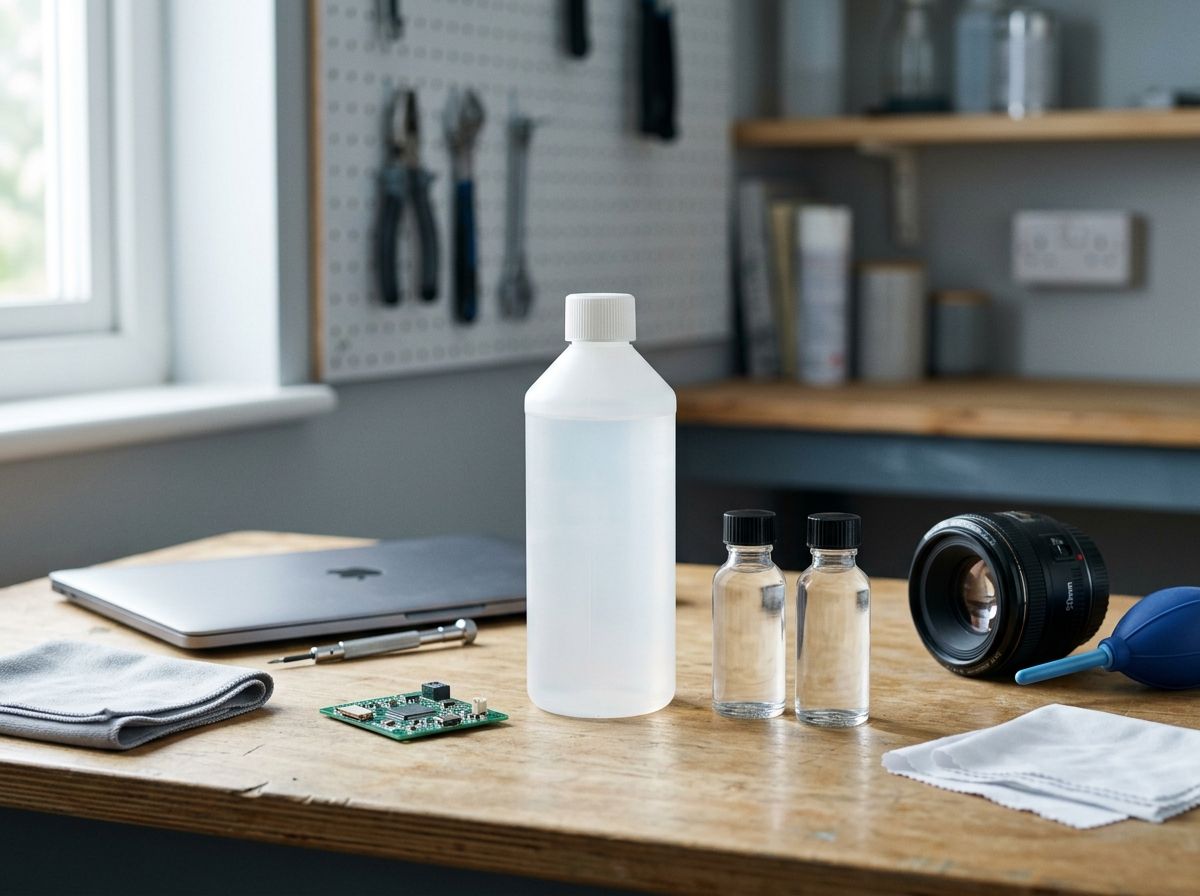
Cleaning electronics. IPA doesn’t leave a residue and dries fast, making it the standard choice for cleaning circuit boards, laptop keyboards, phone screens and camera lenses. Many repair technicians use 99% for this, since the small amount of water in 70% can be an issue around sensitive components.
Disinfecting surfaces. A 70% solution is effective against a wide range of bacteria and viruses on hard, non-porous surfaces such as worktops, door handles and light switches. The water content in 70% actually helps here, since it slows evaporation and gives the alcohol more contact time to work.
Skin antiseptic and first aid. Isopropyl alcohol is used to clean skin before an injection, wipe down small cuts and grazes, or as the active ingredient in some hand sanitisers. It stings on broken skin, so it’s used on the surrounding area rather than directly in a wound.
Removing grease, glue and ink. It dissolves oils, adhesives, permanent marker and some paints without damaging most plastics, glass or metal, which is why it turns up in workshops, garages and craft rooms.
Automotive and DIY use. It’s commonly used to degrease brake parts, wipe down surfaces before painting, and clean glass without streaking.
70% vs 99% isopropyl alcohol: which should you buy?
This is the question most people searching for isopropyl alcohol actually want answered, and the choice comes down to what you’re doing with it.
Buy 70% if you’re: disinfecting surfaces, cleaning skin before an injection, or doing general household cleaning. The added water gives it more time in contact with germs before it evaporates, which is exactly what you want for disinfection.
Buy 99% if you’re: cleaning electronics, lenses or sensitive components, or need something that dries almost instantly and leaves zero residue. It’s also preferred for tasks where any trace of water could cause a problem.
For most households, a bottle of 70% covers general cleaning and first aid, while a smaller bottle of 99% is worth keeping separately if you regularly clean electronics or camera gear.
Is isopropyl alcohol the same as surgical spirit?
Not quite, though they’re often used interchangeably. Surgical spirit sold in UK pharmacies is usually based on denatured ethanol (ethyl alcohol) with added ingredients like methyl salicylate, rather than pure isopropyl alcohol. Both work as antiseptics and both are flammable, but they’re chemically different products with different smells and slightly different uses. If a recipe or instruction specifically calls for isopropyl alcohol, surgical spirit isn’t a like-for-like substitute.
Where to buy isopropyl alcohol in the UK
Isopropyl alcohol is easy to find and doesn’t require a licence for ordinary retail purchase in the quantities most people need.
- Pharmacies, including Boots, which typically stock smaller bottles for first aid and cosmetic use
- Supermarkets such as Tesco and Sainsbury’s, usually in the health and beauty or cleaning aisles
- Hardware and DIY stores like Screwfix and B&Q, often sold as a cleaner or degreaser
- Online retailers including Amazon UK, where you’ll find the widest range of strengths and bottle sizes, from 100ml spray bottles to 5-litre containers for workshop use
- Specialist chemical suppliers such as ReAgent or CleanLab for bulk or higher-purity grades used in labs and industry
Prices vary a fair amount by strength, brand and bottle size, so treat these as rough guides rather than fixed figures: expect to pay roughly £6 to £10 for a 500ml bottle of 70%, £10 to £18 for a litre, and upwards of £25 for a 5-litre container bought in bulk from a trade supplier. Always check the label carefully, since some cheaper listings marketed as 70% have been found to be significantly weaker, which won’t disinfect properly.
Is isopropyl alcohol safe to use?
Used sensibly, yes, but it comes with a few real hazards worth taking seriously.
It’s highly flammable. Isopropyl alcohol has a low flash point, and its vapour can form an explosive mixture with air in poorly ventilated spaces. Keep it away from naked flames, sparks, and heat sources, and never use it near an open fire or lit hob.
It can irritate eyes and skin. Wear gloves for extended use and avoid splashing it in your eyes. If contact happens, rinse thoroughly with water and seek medical advice if irritation persists.
Ventilation matters. In a small or enclosed room, the vapour can cause drowsiness, dizziness or headaches. Open a window or work in a ventilated space, particularly if you’re using larger quantities.
Don’t mix it with bleach or strong oxidisers. Combining isopropyl alcohol with oxidising chemicals can trigger a dangerous reaction. Store it away from bleach, hydrogen peroxide and similar products.
According to the Health and Safety Executive, isopropanol carries the hazard classifications Flam. Liq. 2 (highly flammable liquid and vapour) and Eye Irrit. 2 (causes serious eye irritation), and its vapour may cause drowsiness or dizziness in poorly ventilated spaces.
Storing isopropyl alcohol safely
For home use, small bottles kept in a cool cupboard away from direct sunlight, heat sources and children are generally fine. Keep the lid tightly closed between uses, since it evaporates quickly once open.
If you’re storing larger quantities in a workshop or business setting, HSE guidance (HSG51) sets out rough thresholds: up to 50 litres in a single workroom doesn’t legally require a dedicated flammable storage cabinet, though one is strongly recommended; between 50 and 250 litres calls for a fire-resistant cabinet or store; and anything over 250 litres needs a dedicated, separated fire-resisting storeroom. Businesses handling isopropyl alcohol regularly should also carry out a COSHH risk assessment under the Control of Substances Hazardous to Health Regulations.
What to do if isopropyl alcohol is swallowed or causes irritation
Isopropyl alcohol is toxic if swallowed and shouldn’t be used as a substitute for drinking alcohol under any circumstances. If someone swallows it, call NHS 111 or, in an emergency, 999, and don’t try to make them vomit. Keep the bottle to hand so you can tell the call handler exactly what strength was involved.
For skin or eye contact, rinse the affected area with plenty of clean water. If irritation, redness or breathing difficulty continues, seek medical attention.
Disposing of isopropyl alcohol responsibly
Small amounts used up in normal cleaning don’t need special disposal. For leftover liquid or an unwanted large bottle, don’t pour it down the sink or drain, since it’s flammable and can affect wastewater treatment. Your local council’s household waste recycling centre will usually accept small quantities as household hazardous waste. For business or workshop quantities, arrange collection through a licensed hazardous waste contractor.
FAQs
Is isopropyl alcohol the same as rubbing alcohol?
Yes, in the UK “rubbing alcohol” is generally used as another name for isopropyl alcohol diluted to around 70%, though the term is sometimes used loosely to cover similar alcohol-based antiseptics too. Always check the label for the actual concentration rather than relying on the name alone.
Can you drink isopropyl alcohol?
No, it’s toxic if swallowed and should never be consumed, even in small amounts. Symptoms of ingestion include nausea, vomiting and abdominal pain, and a fruity smell on the breath. Seek medical advice immediately through NHS 111 or 999 if it happens.
Is isopropyl alcohol flammable?
Yes, it’s classed as a highly flammable liquid, with vapour that can form an explosive mixture with air. Keep it well away from open flames, sparks and heat sources, and use it in a ventilated area.
Is 70% or 99% isopropyl alcohol better for cleaning?
It depends on the job. Use 70% for disinfecting surfaces and skin, since the water content gives it more contact time to work, and use 99% for cleaning electronics or lenses where fast, residue-free drying matters more.
Do you need a licence to buy isopropyl alcohol in the UK?
No, for typical household or small business quantities, no licence is required and it’s sold openly in pharmacies, supermarkets and online. Larger industrial quantities may involve supplier checks, but this is standard commercial practice rather than a legal licensing requirement for the buyer.
Is isopropyl alcohol safe on skin?
In small amounts and short contact, yes, which is why it’s used to clean skin before injections. Prolonged or repeated use can dry out or irritate the skin, and it will sting on any open cut or graze.
How do you dispose of isopropyl alcohol?
Small leftover amounts can usually go to your local household waste recycling centre as hazardous waste, since it shouldn’t be poured down a drain or sink. Larger business quantities need to go through a licensed hazardous waste contractor.
What’s the difference between isopropyl alcohol and surgical spirit?
Surgical spirit sold in UK pharmacies is typically based on denatured ethanol with added ingredients, while isopropyl alcohol is a different chemical entirely. Both act as antiseptics and are flammable, but they aren’t directly interchangeable in every application.