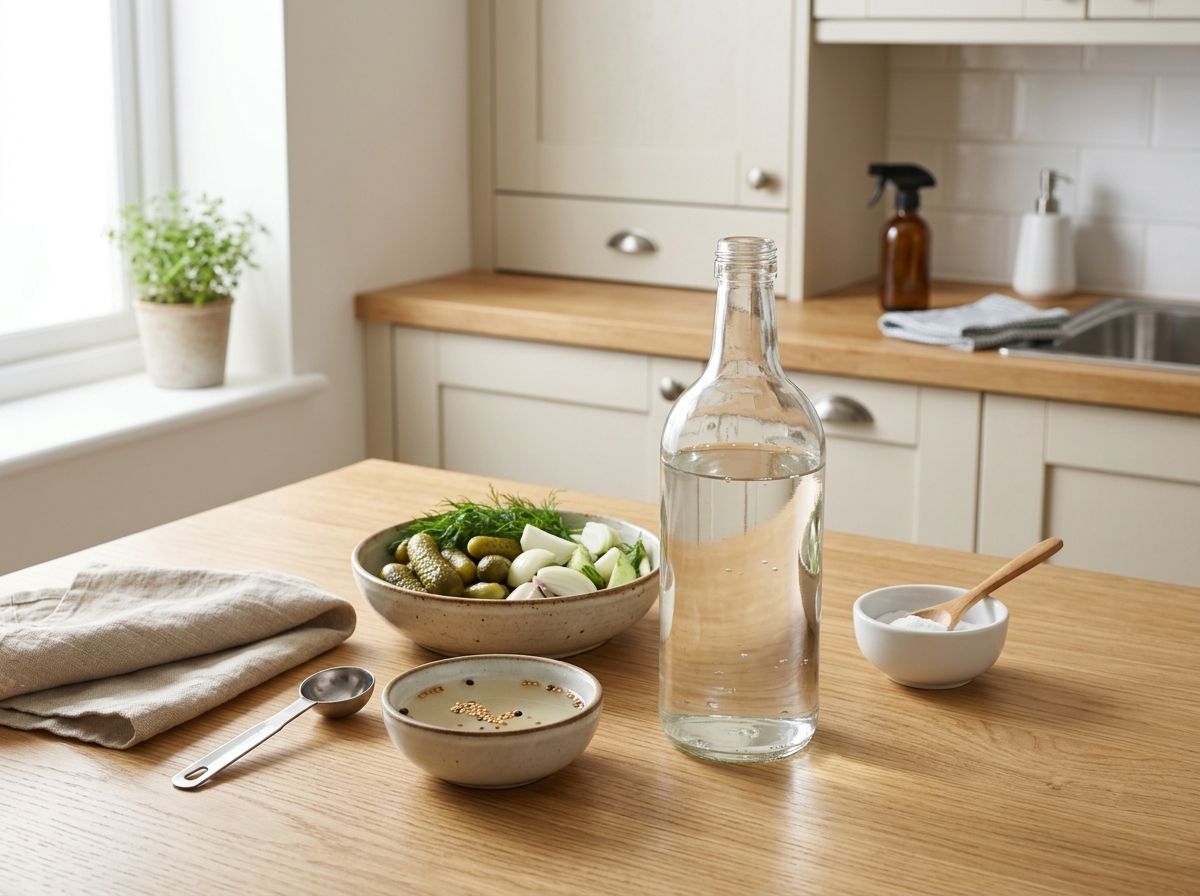
White vinegar is a clear, acidic liquid made by fermenting grain alcohol, typically containing around 5% acetic acid in water, and it’s one of the most versatile products you can keep in a UK kitchen or cleaning cupboard. It’s used for everything from pickling and baking to descaling kettles and cutting through limescale, and a basic 500ml bottle currently costs from around £1 in most UK supermarkets.
There’s a fair bit of confusion around naming, though, since “white vinegar,” “distilled vinegar,” and “distilled white vinegar” get used almost interchangeably in some places and quite differently in others. This guide clears that up, plus covers the different types sold in the UK, exact uses for cooking versus cleaning, and a genuinely surprising UK-specific fact about the vinegar you’re actually given at the chip shop.
Is white vinegar and distilled white vinegar the same thing?
Yes, for practical purposes. “White vinegar” and “distilled white vinegar” refer to the same product: a clear vinegar made from fermented grain alcohol, distilled to remove colour and impurities, and typically standardised to around 5% acetic acid. The word “distilled” simply describes part of the manufacturing process, while “white” describes the finished colour, so you’ll see both terms used on UK bottles for what is genuinely the same liquid.
Some brands also label this product spirit vinegar, which is the more traditional British term and means exactly the same thing again. If a UK label says spirit vinegar, white vinegar, or distilled vinegar, you can treat all three as interchangeable for cooking and cleaning purposes.
Is distilled white vinegar the same as vinegar in general?
No, not quite, and this is where the confusion usually starts. “Vinegar” is a broad category covering any liquid produced through acetic fermentation, including malt vinegar, cider vinegar, wine vinegar, and balsamic vinegar, alongside white vinegar. Distilled white vinegar is just one specific type within that wider category, made from grain alcohol rather than malted barley, cider, or wine.
So while distilled white vinegar is genuinely a type of vinegar, not every vinegar is distilled white vinegar. Malt vinegar, for example, is darker, maltier in flavour, and made through a different fermentation process using malted barley, which is why it suits fish and chips far better than the sharper, more neutral white variety.
What’s the difference between white vinegar and cleaning vinegar?
This is a genuine gap in most UK guidance, since “cleaning vinegar” as a distinct labelled product is common in the US but far less standardised here. In the US, cleaning vinegar typically contains around 6% acetic acid, slightly stronger than the 5% found in standard food-grade white vinegar, and it’s sold specifically for household use rather than cooking.
In the UK, you won’t usually find a product explicitly labelled “cleaning vinegar” on supermarket shelves. Instead, UK brands like Dri-Pak sell white vinegar aimed at cleaning, including a standard version and an “extra strength” version containing around 6% acetic acid, according to product listings from InTheWash. These aren’t sold as food-safe, so always check the label before assuming a cleaning-branded bottle is fit for cooking.
Types of vinegar sold in the UK
- White vinegar (distilled/spirit vinegar): clear, sharp, around 5% acetic acid, used in pickling, baking, and cleaning.
- Malt vinegar: dark brown, made from malted barley, the traditional choice for fish and chips and pickled onions.
- Cider vinegar: made from fermented apples, milder and slightly fruity, popular in dressings and reportedly used for various home remedies, though evidence for most health claims is limited.
- Wine vinegar: made from red or white wine, more complex in flavour, common in salad dressings and sauces.
- Balsamic vinegar: made from grape must, dark and sweet, used in dressings and finishing dishes rather than pickling.
What white vinegar is used for in cooking
White vinegar’s sharp, neutral flavour makes it a genuinely useful cooking ingredient rather than just a cleaning product. It’s a standard choice for pickling vegetables, since its clarity won’t discolour whatever you’re preserving, unlike malt or balsamic vinegar. It’s also used in baking, most commonly as a raising agent when combined with bicarbonate of soda, and in sauces, dressings, and marinades where you want acidity without added colour or a strong malt flavour.
A small splash added to poaching water is a classic trick for helping egg whites hold together while poaching, and it’s also used in some bread recipes to improve texture and help dough rise more reliably.
What white vinegar is used for around the home
Around the house, white vinegar is genuinely one of the most useful, low-cost products you can keep in, thanks to its mild acidity cutting through limescale, grease, and light staining.
Common uses include descaling kettles and taps (a 50/50 mix with water, left to sit before rinsing), cleaning glass and mirrors without streaking, freshening laundry by adding a small amount to the rinse cycle, and clearing slow-draining plugholes when combined with bicarbonate of soda. It’s also commonly used as a natural weed deterrent in gardens and as a rinse aid substitute in dishwashers.
There are limits worth knowing, though. Vinegar shouldn’t be used on natural stone surfaces like marble or granite, since the acid can etch and dull the finish, and it’s not suitable for cast iron pans, as it can strip their seasoning.
Safety: what not to mix with white vinegar
The most important safety point, and one that’s genuinely worth repeating, is that white vinegar should never be mixed with chlorine bleach. Combining the two releases chlorine gas, which is harmful to breathe in, so always rinse a surface thoroughly and avoid combining cleaning products unless you know exactly what you’re doing.
Cleaning-strength vinegar, particularly the 6% versions, is also not intended for consumption, and food-grade white vinegar and cleaning vinegar shouldn’t be treated as interchangeable even though they look and smell almost identical.
The chip shop vinegar you’re probably not aware of
Here’s a genuinely surprising, UK-specific fact most generic vinegar guides completely miss: the clear liquid handed out at most British fish and chip shops usually isn’t vinegar at all. It’s called non-brewed condiment, a mixture of water, acetic acid, colourings, and flavourings designed to taste like vinegar without actually going through fermentation.
Under UK trading standards rules, dating back to a 1949 court case, this product legally can’t be labelled or sold as vinegar, since true vinegar must be produced through fermentation. It’s cheaper to manufacture, doesn’t require brewing time, and is often halal and gluten-free as a result, which is part of why so many chip shops use it instead of genuine malt vinegar, according to reporting from HuffPost UK and the Wikipedia entry on the product.
How much does white vinegar cost in the UK?
Prices vary by brand, bottle size, and whether it’s positioned as a food or cleaning product, so treat these as a general guide rather than fixed figures. A standard 500ml bottle of white vinegar for cleaning, such as Dri-Pak’s, typically costs from around £1 to £3 depending on the retailer, while food-grade spirit or white vinegar for cooking is generally similarly priced per 500ml at most UK supermarkets.
Larger multipack or bulk bottles work out cheaper per litre, and buying vinegar specifically marketed for cleaning rather than a premium cooking brand is usually the more cost-effective option if descaling and household use is your main purpose.
FAQs
Is white vinegar and distilled white vinegar the same?
Yes, they’re the same product. Both terms describe a clear vinegar made from fermented grain alcohol, typically containing around 5% acetic acid, and UK labels sometimes also call this spirit vinegar.
Is distilled white vinegar the same as vinegar generally?
No, distilled white vinegar is one specific type within the broader vinegar category, which also includes malt, cider, wine, and balsamic vinegar. All are produced through fermentation, but from different base ingredients.
Can you drink white vinegar?
Food-grade white vinegar is safe to consume in small amounts as used in cooking and pickling, but it shouldn’t be drunk undiluted or in large quantities, since its acidity can irritate the throat and digestive system. Cleaning-strength vinegar is not food-safe and shouldn’t be consumed at all.
Is white vinegar the same as vinegar used for cleaning?
Broadly yes, though UK cleaning-branded white vinegar, such as Dri-Pak’s extra strength version, is sometimes slightly stronger at around 6% acetic acid compared with the standard 5% found in food-grade vinegar. Always check the label rather than assuming a cleaning product is safe to cook with.
What’s the difference between white vinegar and malt vinegar?
White vinegar is clear and made from grain alcohol, giving it a sharp, neutral taste, while malt vinegar is dark brown and made from malted barley, with a stronger, maltier flavour. Malt vinegar suits fish and chips and pickled onions, while white vinegar suits pickling, baking, and cleaning where colour matters.
Is the vinegar at fish and chip shops real vinegar?
Often not. Many UK chip shops use a product called non-brewed condiment, made from water, acetic acid, and flavourings rather than genuine fermented vinegar, and UK trading standards rules prevent it from being labelled as vinegar for exactly that reason.
Can you mix white vinegar with bleach?
No, never mix vinegar with chlorine bleach, since the combination releases chlorine gas, which is harmful to breathe. Always use cleaning products separately and rinse surfaces thoroughly between different chemicals.
How much does white vinegar cost in the UK?
A standard 500ml bottle typically costs from around £1 to £3, depending on whether it’s a basic cleaning-branded product or a food-grade cooking vinegar. Prices change regularly, so it’s worth comparing a couple of supermarkets or retailers before buying in bulk.