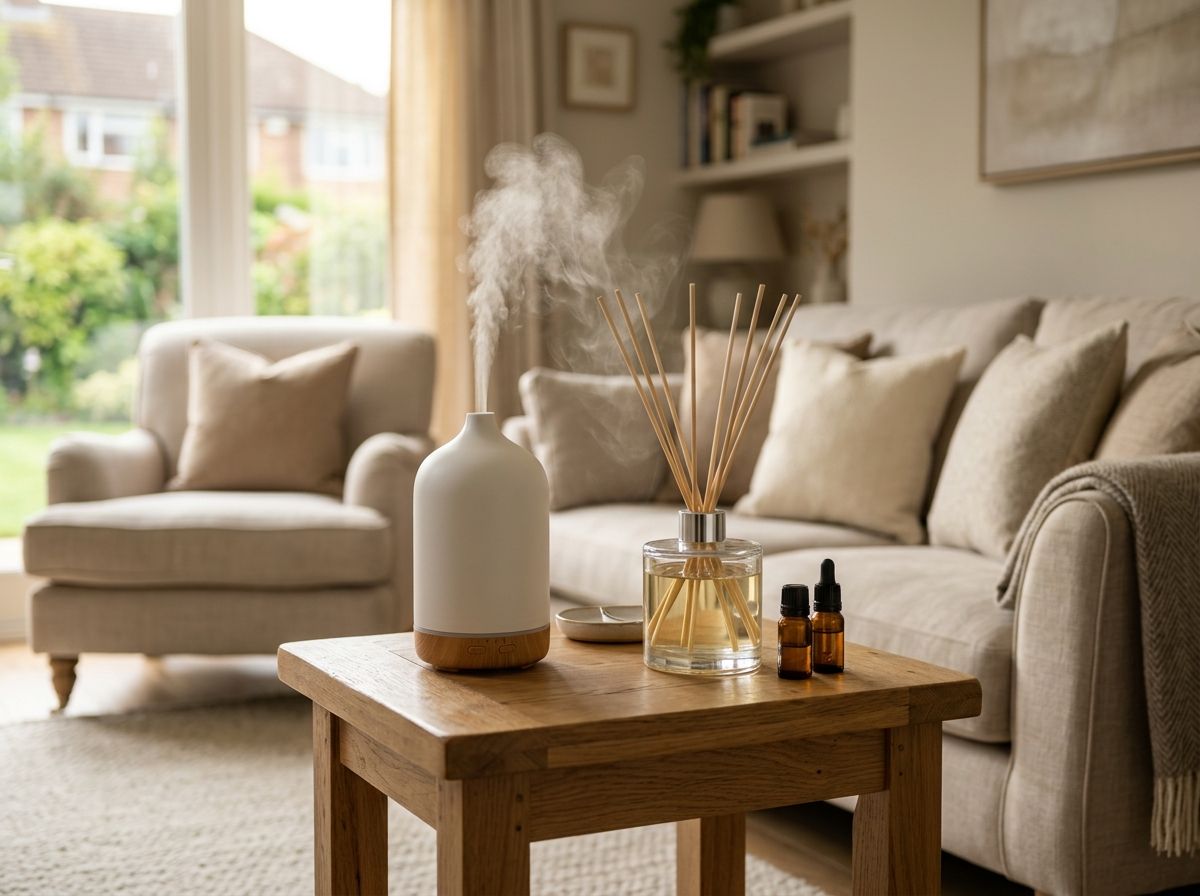
If you’re trying to work out which diffuser to buy, or whether the one on your side table is even safe to run overnight, the short answer is this: a diffuser is any device that spreads scent, usually from essential oils, into the air, and the main types are electric (ultrasonic, nebulising or heat) and passive reed diffusers. Which one suits you depends on your room size, whether you have pets or small children, and how much fuss you want to deal with day to day.
This guide walks through how each type of diffuser works, which is safest for a household with animals or babies, what things typically cost in the UK, and how to fix the most common problems, from a diffuser that won’t switch on to a reed diffuser that’s stopped smelling of anything.
What Is a Diffuser, Exactly?
A diffuser is a device or object designed to spread a scent, usually an essential oil, through the air in a room. Some do this with electricity and water, some with pressurised air, and some do it with no power at all, simply letting reeds soak up oil and release it as it evaporates.
People often lump diffusers in with humidifiers because they can look similar, but they’re not the same thing. A humidifier’s job is to add moisture to a room, and it typically holds a large tank of half a gallon or more. A diffuser holds only a small amount of water or oil, its job is fragrance rather than humidity, and most manufacturers advise against putting essential oils in a plain humidifier because the oils can damage the internal parts.
The Main Types of Diffuser
Ultrasonic Diffusers
These are the most common electric diffusers sold in the UK. A small ceramic disc vibrates at ultrasonic frequency, breaking a mix of water and essential oil into a fine cool mist. They’re quiet, don’t get hot, and usually include a light, a timer, and an auto shut-off when the water runs out.
Nebulising Diffusers
Nebulising diffusers use pressurised air to atomise pure, undiluted essential oil, with no water involved. Because there’s no dilution, the scent is far stronger, which also makes this the type to avoid in a home with young children, pets, or anyone with a respiratory condition, since concentrations are much higher than an ultrasonic model produces.
Heat Diffusers
A heat diffuser warms essential oil, usually with a small candle or an electric plate, to release its scent through evaporation. Heat can alter the chemical make-up of some oils, and any diffuser that uses a flame or heating element needs to be switched off when you leave the room.
Reed Diffusers
A reed diffuser is a bottle of fragranced oil with a bundle of porous reeds standing in it. The reeds soak up the oil and wick it upward, releasing scent continuously with no electricity, no water, and no flame. They’re a popular low-maintenance choice for bathrooms, hallways and bedrooms.
How Long Does a Reed Diffuser Last?
This depends mostly on bottle size, room temperature and how many reeds you use. As a rough guide, a 100ml bottle typically lasts around 2 to 4 months in average UK home conditions, a 200ml bottle can run for 4 to 6 months, and a large 500ml diffuser may last 6 to 12 months, though the reeds themselves often need swapping partway through to keep the scent fresh.
Keeping a reed diffuser out of direct sunlight and away from radiators slows evaporation and makes it last longer. Flipping the reeds once a week refreshes the scent, though flipping too often speeds up how quickly the oil runs out.
How to Use an Electric Diffuser
- Fill to the marked line. Most ultrasonic models take tap water up to a fill line, then a few drops of essential oil on top, usually 3 to 8 drops depending on room size.
- Choose a stable, ventilated spot. Place it away from soft furnishings and electronics, ideally on a hard surface where a small amount of mist won’t cause damage.
- Set a timer if you have one. Running a diffuser continuously in a closed room can push airborne oil concentrations higher than intended, so intermittent settings of 30 to 60 minutes on, then off, work well for most rooms.
- Clean it regularly. Oil residue builds up inside the tank over time, so an occasional wipe with a damp cloth, or a short run with just water, keeps it working properly and stops old oil going stale.
Are Diffusers Safe? What to Watch For
For a healthy adult in a well-ventilated room, an ultrasonic diffuser run for short sessions is generally considered low risk. The situation changes with pets, babies and anyone with breathing difficulties, so it’s worth taking a few precautions rather than assuming every oil and every diffuser is fine for everyone in the house.
Pets
Cats in particular struggle to process the compounds in many essential oils because they lack a liver enzyme other animals have, which makes them more vulnerable to toxicity from diffused oils than dogs. Tea tree, eucalyptus and peppermint oils are best avoided altogether if you have cats, dogs or birds in the house, and any diffuser should be used in a room pets can leave if they want to. If a pet starts showing signs of distress, such as vomiting, wobbliness or laboured breathing, contact your vet straight away.
Babies and Young Children
It’s generally advised not to run an aroma diffuser in a room with a child under six years old, and even for older children, strong oils like camphor, clove or eucalyptus aren’t recommended. If you do want to scent a nursery or playroom, running the diffuser for 15 to 20 minutes before the child comes in, then switching it off and airing the room, is a more cautious approach than leaving it running while the child is present.
Fire and Electrical Safety
Any diffuser that uses heat or a flame should never be left unattended, and all electric diffusers should be switched off, not just left on standby, before you leave the house or go to sleep in most cases. Keep the cable away from areas where a pet or toddler could pull it, and check plugs and leads for damage the way you would with any other small appliance.
What Do Diffusers Cost in the UK?
Basic ultrasonic diffusers from retailers like Amazon UK start from around £10 to £15, with mid-range models featuring timers, remote controls and coloured lights typically running £20 to £35. Design-led ceramic or ceramic-stone diffusers from specialist brands can cost £45 and upwards.
Reed diffusers are usually cheaper to start with, from around £8 for a small 30 to 50ml bottle up to £30 or more for a 200ml designer version, though the ongoing cost comes from replacing the oil every few months rather than the initial purchase. As always, prices and stock change often, so it’s worth checking a retailer’s current listing before buying rather than relying on older figures.
Troubleshooting Common Diffuser Problems
- Diffuser won’t mist: check the water is filled to the correct line and that the ultrasonic disc inside the tank is clean, since a build-up of oil residue is the most frequent cause
- Mist smells weak: try adding a couple more drops of oil, and give the tank a proper clean if it hasn’t been done recently
- Reed diffuser has stopped smelling of anything: flip the reeds so the dry ends sit in the oil, or add fresh reeds if the old ones have clogged
- Diffuser switches off quickly: most auto shut-off features trigger once the water runs low, which is normal and protects the device rather than a fault
- Room smells overwhelming rather than pleasant: cut back to fewer drops of oil, or run the diffuser on an intermittent rather than continuous setting
FAQs
What is a diffuser used for?
A diffuser spreads scent, most often from essential oils, through a room using either an electric method like ultrasonic vibration or heat, or a passive method like reed sticks soaking up fragranced oil. People use them for aromatherapy, general home fragrance, or simply to freshen a room without candles.
What’s the difference between a diffuser and a humidifier?
A diffuser is designed for scent and holds only a small amount of liquid, while a humidifier is designed to add moisture to dry air and holds a much larger tank. Most diffusers don’t release enough water vapour to meaningfully change humidity, and most humidifiers aren’t built to handle essential oils safely.
Are essential oil diffusers safe to run overnight?
Many people do run diffusers overnight, but it’s more cautious to use a timer that switches off after 30 to 60 minutes rather than leaving one on continuously in a closed bedroom. This is especially worth following if anyone in the house has asthma, is pregnant, or is very young.
Are diffusers safe for cats and dogs?
Diffused essential oils can be risky for pets, particularly cats, which process certain oil compounds poorly. Keeping sessions short, ventilating the room, avoiding oils like tea tree and eucalyptus, and letting pets leave the room if they want to are sensible precautions, and any signs of distress warrant a call to the vet.
How many drops of essential oil should I use in a diffuser?
Most ultrasonic diffusers need somewhere between 3 and 8 drops per fill, depending on the tank size and how strong you want the scent. It’s easier to start with fewer drops and add more than to over-fill and end up with an overpowering room.
How long does a reed diffuser last?
A 100ml reed diffuser typically lasts around 2 to 4 months, a 200ml bottle around 4 to 6 months, and a 500ml diffuser can run for up to a year, though the reeds often need refreshing before the oil is finished. Heat and sunlight both speed up evaporation, so a cool spot out of direct light extends the life of the diffuser.
Can I put essential oils in a humidifier?
Most humidifier manufacturers advise against adding essential oils directly to the water tank, since the oils can damage internal parts like the filter and diaphragm over time. If you want both moisture and fragrance, look for a humidifier specifically designed with a separate aromatherapy function rather than adding oil to a standard model.
Is a nebulising diffuser better than an ultrasonic one?
A nebulising diffuser produces a stronger, more concentrated scent because it uses pure oil with no water dilution, which suits larger rooms but makes it a poor choice around children, pets or anyone sensitive to strong smells. An ultrasonic diffuser is gentler and more adjustable, making it the more practical everyday choice for most UK homes.