If you’re dealing with London Liverpool Street rail disruption right now, the fastest way to check what’s actually happening is National Rail Enquiries’ live service disruptions page or the Greater Anglia app, since disruption at this station changes by the hour and any figure printed here could be out of date by the time you read it. This guide won’t tell you today’s specific incident, but it will tell you how to check it properly, what usually causes disruption at Liverpool Street, what compensation you’re entitled to, and how to make sure you’re not accidentally looking at the wrong station altogether.
That last point matters more than it sounds. A lot of people searching for rail disruption end up mixing up London’s Liverpool Street with Liverpool Lime Street, a completely different station over 200 miles away, so we’ll cover that clearly further down.
How to Check Live Disruption at London Liverpool Street
For the most current picture, go straight to these rather than a general search:
- National Rail Enquiries’ service disruptions page, which lists every active incident affecting the station by operator
- Greater Anglia’s JourneyCheck tool or app, which shows live running information for trains to and from Liverpool Street
- TfL’s status page, if you’re checking the Underground lines (Central, Circle, Hammersmith & City, or Metropolitan) rather than National Rail services
- Network Rail’s own Liverpool Street station page, which covers accessibility and facility disruption alongside train running
Station-specific apps tend to update faster than general news searches, since they’re pulling directly from the signalling and control systems rather than being reported after the fact.
Common Causes of Disruption at Liverpool Street
Disruption at this station tends to fall into a handful of recurring categories, based on recent incidents reported by Greater Anglia and National Rail.
Signalling faults are one of the most frequent causes, since Liverpool Street sits at a busy junction point on the Great Eastern Main Line and Lea Valley lines, and a single fault can back up services across the whole network for an hour or more.
Trackside incidents, including fires near the line or emergency service call-outs, can cause longer disruption, sometimes running into the following day if infrastructure such as signalling or telecoms equipment needs repair. One such incident in July 2026 caused cancellations and alterations lasting several days while Network Rail engineers assessed fire damage near Stratford.
Person struck by a train incidents, while distressing, do happen on this network and typically cause disruption across a wide stretch of line while emergency services attend the scene, sometimes lasting the rest of the day.
Planned engineering work is more predictable and usually announced well in advance through the operator’s planned service alterations page, covering things like weekend maintenance between Liverpool Street and Tottenham Hale or Stansted Airport.
Which Train Operators Run Through Liverpool Street?
London Liverpool Street is managed by Network Rail, but several different operators run trains through it, which matters because disruption from one operator doesn’t always affect the others equally.
- Greater Anglia runs the bulk of services, covering the Great Eastern Main Line to Colchester, Ipswich and Norwich, and the Lea Valley Lines to Hertford East, Cheshunt and Chingford
- Stansted Express runs a dedicated fast service to Stansted Airport
- London Overground and c2c also serve the station on specific routes
- London Underground connects at the adjoining Liverpool Street Underground station, via the Central, Circle, Hammersmith & City and Metropolitan lines
- Elizabeth line services also call nearby, connecting through to Paddington and beyond
If disruption is affecting one operator’s signalling system, it’s worth checking whether an alternative operator’s route out of the same station is still running normally before you assume your whole journey is affected.
Liverpool Street Station: City of London Location and Access
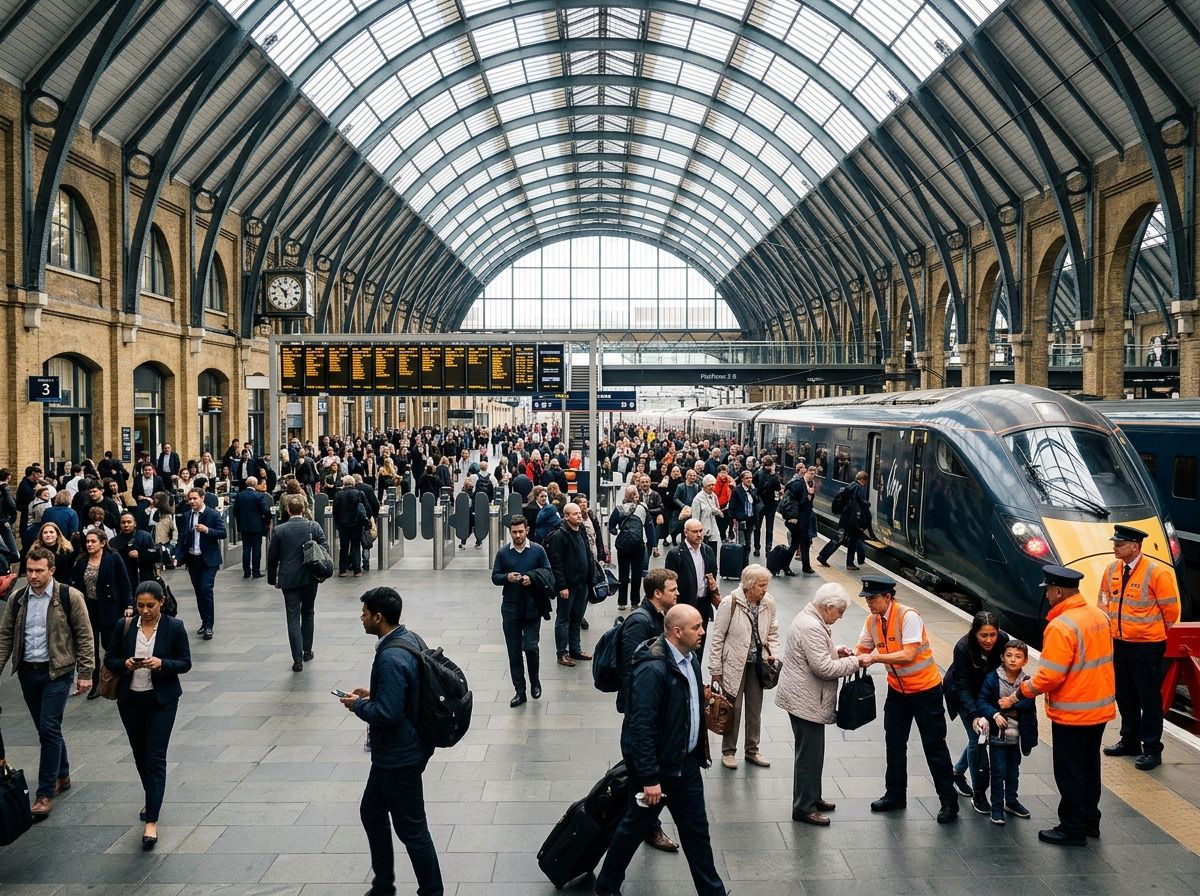
Liverpool Street station sits on Bishopsgate in the north-eastern corner of the City of London, right on the edge of the Broadgate development. It’s one of the busiest stations in the country, recording 98 million National Rail entries and exits in 2024-25, according to Wikipedia’s sourced station data, and a further tens of millions of Underground journeys on top of that.
The station has five entrances, including access from Bishopsgate, Sun Street Passage, and the Broadgate side, and it’s within easy walking distance of Spitalfields Market, the Bank of England, and the wider City of London financial district. Step-free access exists to all National Rail platforms, though only Platform 1 offers step-free access to the Underground’s eastbound Metropolitan, Hammersmith & City and Circle lines, so it’s worth planning ahead if you need level access on the Tube side.
Liverpool Street vs Liverpool Lime Street: Not the Same Station
This trips up more people than you’d expect. London Liverpool Street and Liverpool Lime Street are two completely different stations, in two different cities, over 200 miles apart.
London Liverpool Street is the East London terminus described throughout this guide, serving Essex, Hertfordshire, Suffolk and Norfolk via Greater Anglia. Liverpool Lime Street, by contrast, is the main railway station in the city of Liverpool itself, serving long-distance routes with Avanti West Coast (including the London Euston to Liverpool route, taking around two hours and fifteen minutes), Northern, TransPennine Express, and several other operators.
If you’re trying to check disruption and you’re not getting results that make sense, it’s worth double-checking which station you’ve actually searched for, since “Liverpool Street” and “Liverpool” alone can easily pull up the wrong one depending on the site you’re using.
What to Do If Your Train Is Delayed or Cancelled
- Check live status first, using the tools above, rather than heading to the station and hoping.
- Look for alternative routes, since a signalling fault on one line doesn’t always affect every operator through the same station.
- Keep your ticket, since you’ll need journey details to claim compensation if you’re delayed.
- Note your actual arrival time, as compensation is calculated against the scheduled timetable, not roughly how late you felt.
- Submit a Delay Repay claim within 28 days, through your operator’s website or app.
Compensation: What You’re Entitled To
If you travel with Greater Anglia and arrive 15 minutes or more late at your destination, you can claim compensation under the Delay Repay 15 scheme, regardless of the reason for the delay. According to Greater Anglia’s own Delay Repay page, the standard rates are:
- 15 to 29 minutes late: 25% of your single fare
- 30 to 59 minutes late: 50% of your single fare
- 60 minutes or more late: 100% of your single fare
Claims should be submitted within 28 days of the date of travel, and Greater Anglia states that payment is usually made within 14 days of a claim being agreed. Delay Repay generally doesn’t apply to pre-planned engineering work with rail replacement buses, since that’s factored into the advertised timetable rather than being an unexpected delay.
If you didn’t travel at all because of the disruption, you’re entitled to a full refund rather than Delay Repay compensation, so check which option applies to your situation before submitting a claim.
FAQS
Why is there disruption at London Liverpool Street today?
The cause varies day to day, from signalling faults and trackside incidents to planned engineering work, so check National Rail Enquiries or Greater Anglia’s JourneyCheck tool for the current specific reason rather than relying on general search results.
How do I check live disruption at Liverpool Street station?
The most reliable sources are National Rail Enquiries’ service disruptions page and Greater Anglia’s JourneyCheck app, both of which pull directly from live signalling and control data rather than being updated manually after the fact.
Is Liverpool Street the same as Liverpool Lime Street?
No. London Liverpool Street is a terminus in the City of London serving Essex, Hertfordshire and East Anglia, while Liverpool Lime Street is the main station in the city of Liverpool itself, over 200 miles away, serving long-distance routes to London Euston, Manchester and Birmingham.
How much compensation can I claim for a delayed Greater Anglia train?
Under the Delay Repay 15 scheme, you can claim 25% of your single fare for a 15 to 29 minute delay, 50% for 30 to 59 minutes, and 100% for delays of 60 minutes or more, regardless of the cause.
How long do I have to claim Delay Repay compensation?
You have 28 days from the date of travel to submit a Delay Repay claim, and Greater Anglia states that payment is usually made within 14 days of your claim being agreed.
Which Underground lines connect at Liverpool Street?
Liverpool Street Underground station connects to the Central, Circle, Hammersmith & City and Metropolitan lines, alongside nearby Elizabeth line services.
Where exactly is Liverpool Street station located?
Liverpool Street station is on Bishopsgate in the north-eastern corner of the City of London, close to Spitalfields Market and the Bank of England, and is managed by Network Rail with services run by Greater Anglia, Stansted Express, London Overground and c2c.
Does Delay Repay apply during planned engineering work?
Generally, no. Delay Repay usually applies to unexpected delays against the advertised timetable, rather than pre-announced engineering work that’s already factored into journey planning, so check the specific terms if you’re affected by planned works.