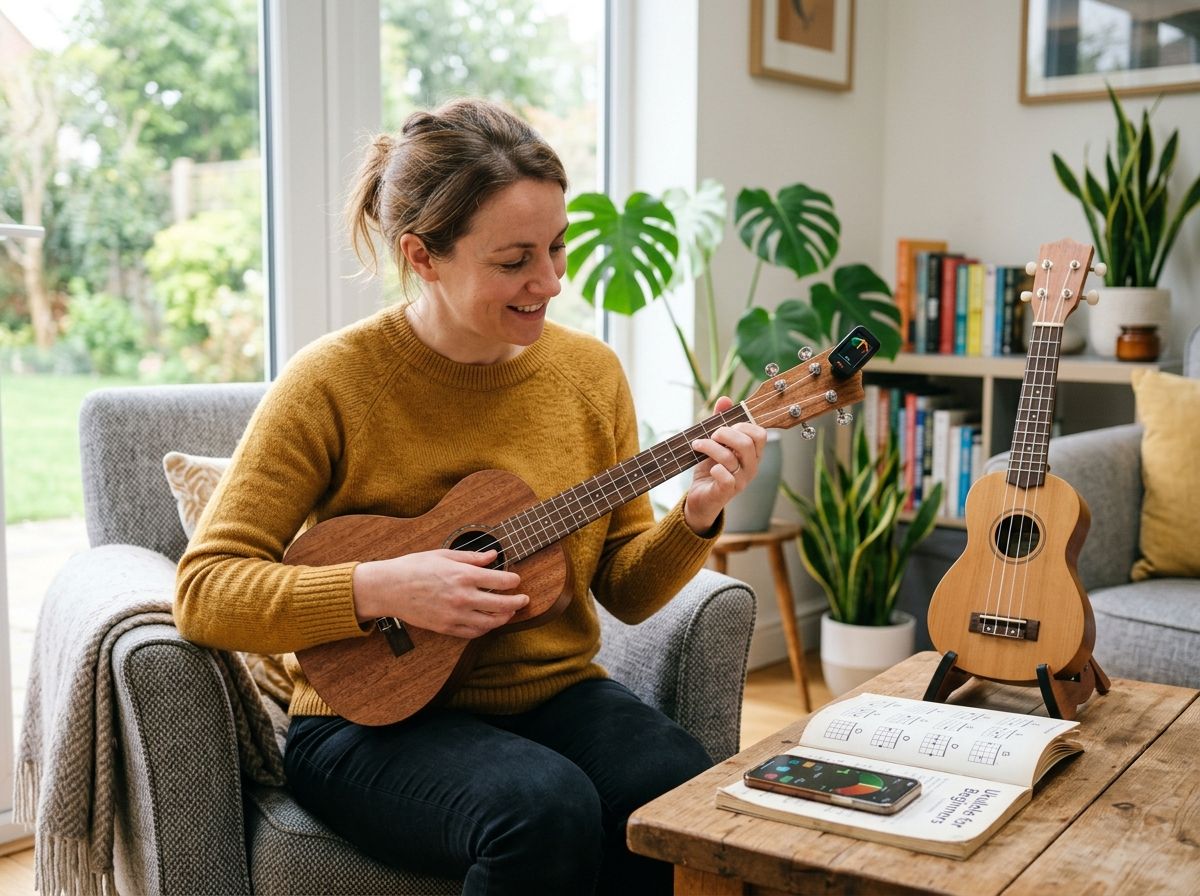
A ukulele is a small, four-stringed instrument that’s widely considered one of the easiest ways to start playing music as an adult. Its soft nylon strings don’t hurt your fingers the way steel guitar strings can, and with only four strings, basic chords come together far quicker than on a guitar. Most UK beginners can strum along to a simple song within a week or two of regular practice.
This guide walks through the ukulele sizes and prices you’ll find in UK shops, how to tune one, your first chords, and a step-by-step plan to get from unboxing to your first full song. There’s an FAQ at the end covering the questions people ask most often.
What Exactly Is a Ukulele?
A ukulele is a small stringed instrument that originated in Hawaii in the 1880s, developed from Portuguese instruments brought over by immigrants. It has four strings, usually nylon rather than steel, and is tuned differently to a guitar.
Most ukuleles use GCEA tuning, read from the lowest string to the highest. That reentrant tuning (where the G string sits higher in pitch than the C string below it) is part of what gives the ukulele its bright, jangly sound.
Which Ukulele Size Should You Buy?
There are four common sizes, and picking the right one matters more than picking the right brand.
- Soprano is the smallest and most traditional, around 21 inches long. It has the classic bright tone but the frets sit close together, which can feel cramped for adults with average or larger hands.
- Concert is roughly 23 inches long with more space between frets, and is a common recommendation for adult beginners because it stays comfortable without losing much of that soprano brightness.
- Tenor runs about 26 inches with a fuller, deeper sound, and suits players who want more volume or plan to fingerpick.
- Baritone is the largest at around 30 inches and uses DGBE tuning instead of GCEA, closer to the top four strings of a guitar.
For a first instrument, a concert ukulele is usually the safest choice unless you specifically want the classic soprano sound or already know you prefer a fuller tone.
How Much Does a Beginner Ukulele Cost in the UK?
You don’t need to spend much to get started. Entry-level soprano ukuleles from retailers such as Argos start from around £20, often bundled with a bag, spare strings and picks.
For something with slightly better tuning stability and tone, expect to pay somewhere between £30 and £80 from UK music retailers such as Andertons, with brands like Mahalo and Kala being common beginner picks. Above that, £100 to £200 buys a noticeably better-built instrument, often with solid wood parts rather than laminate throughout, which tends to hold its tuning better over time.
Avoid the very cheapest unbranded ukuleles below about £15, since poor tuning pegs can make even simple chords sound off no matter how well you play them. A mid-range beginner instrument, around £40 to £60, tends to be the sweet spot for someone serious about sticking with it.
What Do You Need Alongside the Ukulele?
A few extras make learning noticeably easier, though none of them are compulsory on day one.
- A clip-on tuner, usually £8 to £15, since tuning by ear is a skill in itself that takes time to build.
- A gig bag if one isn’t already included, to protect the instrument from knocks and temperature changes.
- Spare strings, since new nylon strings stretch and need retuning often in the first few weeks.
- A chord chart or app, many of which are free, showing finger positions for common chords.
How to Tune a Ukulele
Standard tuning for soprano, concert and tenor ukuleles is G, C, E, A, read from the string nearest your face to the one nearest the floor when holding the instrument to play.
The simplest method for beginners is a clip-on tuner, which clips onto the headstock and reads the pitch through vibration rather than sound, so it works even in a noisy room. Free tuner apps do the same job using your phone’s microphone if you’d rather not buy a separate device. Tune the strings in the same order every time, and expect to retune more often in the first fortnight while new strings settle.
Your First Ukulele Chords
Four chords cover a surprising number of songs: C, Am, F and G. Learning to switch cleanly between these four before moving on to anything else will get you playing recognisable songs faster than trying to learn lots of chords at once.
Start by holding each shape without strumming, just pressing down and checking every string rings clearly. Once that’s comfortable, add a simple down-down-up-up-down-up strum pattern and practise switching between just two chords, such as C and Am, until it feels automatic.
A Step-by-Step Plan for Your First Month
Step 1: Learn to hold the ukulele properly, with the body resting against your torso and the neck supported gently in the crook of your hand, before you play a single note.
Step 2: Tune it every single time you pick it up for at least the first two weeks, since new strings drift out of tune quickly.
Step 3: Learn the C chord first and practise pressing it cleanly on every string for a few minutes a day.
Step 4: Add Am, then F, then G, spending a few days on each before combining them.
Step 5: Practise switching between two chords at a time using a metronome or simple backing track, building speed gradually rather than rushing.
Step 6: Pick one easy song using only C, Am, F and G, and play it slowly all the way through before worrying about speed.
Short, daily practice beats one long session a week. Ten focused minutes a day for a month will get most beginners further than an hour once a week.
FAQs
Is the ukulele easy to learn for adults with no musical experience?
Yes, the ukulele is widely considered one of the easiest instruments for adult beginners, largely because it only has four strings and soft nylon strings that don’t hurt your fingers. Most people can play a simple song within two to four weeks of short daily practice.
What size ukulele is best for a beginner?
A concert ukulele is usually the best starting point for adult beginners, since it offers more room between frets than a soprano while staying compact and affordable. Soprano is a reasonable alternative if you specifically want the classic, brighter Hawaiian tone.
How much should I spend on my first ukulele?
A decent beginner ukulele in the UK typically costs between £30 and £80, though usable entry-level instruments start from around £20 at retailers like Argos. Spending under £15 often means unreliable tuning pegs that make learning frustrating regardless of how well you play.
How do you tune a ukulele?
Standard tuning for a soprano, concert or tenor ukulele is G, C, E, A, and the easiest way to get there is with a clip-on tuner or a free tuning app on your phone. New strings stretch during the first few weeks, so expect to retune before every practice session at first.
What are the easiest ukulele chords to learn first?
C, Am, F and G are the four chords most beginner guides start with, since together they appear in hundreds of well-known songs. Learning to switch cleanly between just two of them, such as C and Am, before adding the others tends to work better than trying to learn all four at once.
Do you need to know how to read music to play ukulele?
No, most ukulele players learn using chord charts and chord boxes rather than sheet music, showing finger positions on a simple diagram. Reading music can help later on, but it isn’t required to start playing songs.
Can children learn ukulele, or is it just for adults?
Ukuleles work well for children too, which is one reason they’re popular in UK primary schools for music lessons. Smaller soprano sizes and lighter nylon strings make them easier on young hands than a full-size guitar.
What’s the difference between a ukulele and a guitar?
A ukulele has four nylon strings tuned GCEA, while a standard guitar has six steel strings tuned differently and under far more tension. That difference makes ukulele strings gentler on beginner fingers and its chord shapes generally simpler to learn.