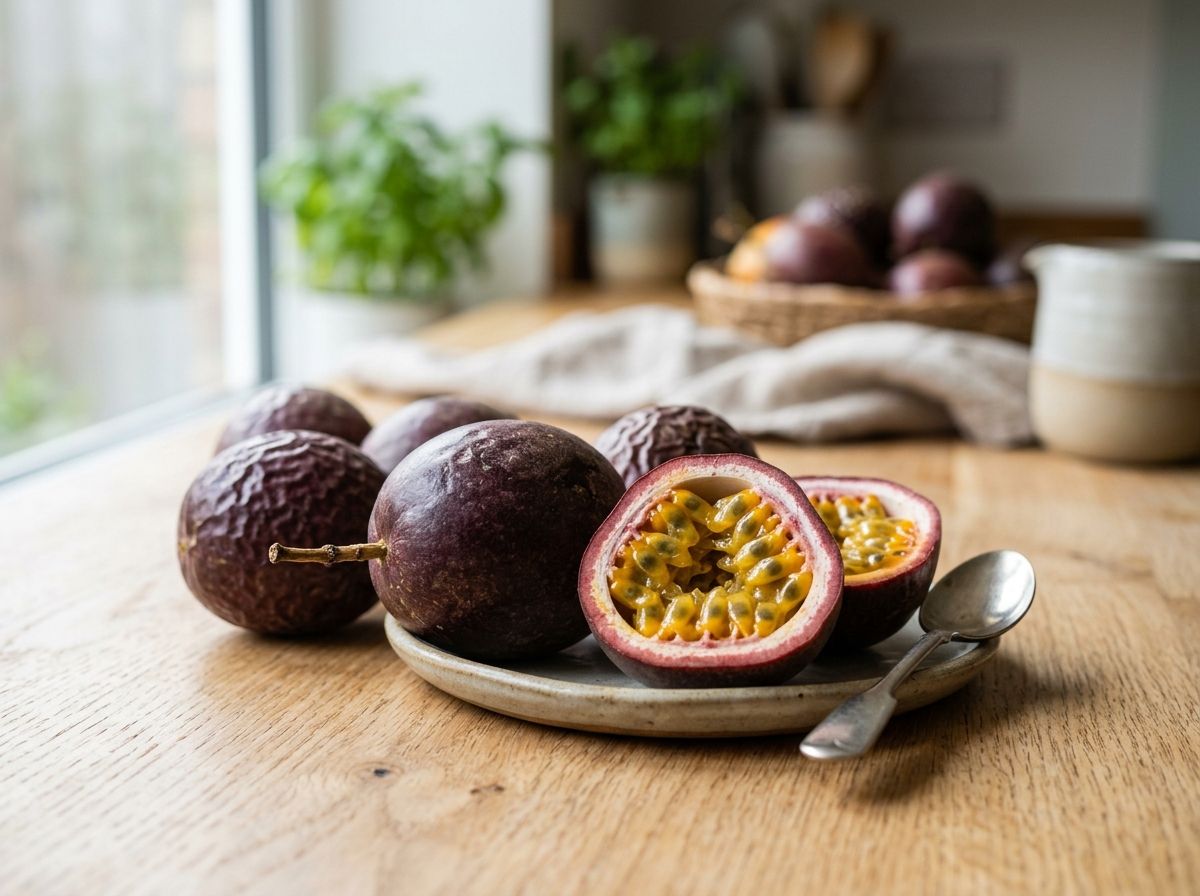
Passion fruit is native to South America, specifically Brazil, Paraguay and Argentina, according to information from UK fruit suppliers. The fruit sold in Britain is almost always the purple variety, roughly the size of a golf ball, with a tough outer shell that wrinkles as it ripens.
Inside, you’ll find a mass of orange-yellow pulp and small black seeds, both of which are edible. The flavour is sharp, sweet-tart and floral, closer to a mix of citrus and mango than anything else in your fruit bowl.
Most UK supermarket passion fruit is grown in Colombia, Kenya or Zimbabwe and flown or shipped in year-round, so unlike British berries, there isn’t really a strict UK season to wait for.
How Much Does Passion Fruit Cost in the UK?
Prices vary by retailer, pack size and time of year, but here’s a realistic snapshot for 2026:
- Supermarket three-packs (Tesco, Sainsbury’s): typically £2 to £2.50, working out at roughly 70p to 85p per fruit
- Independent greengrocers and specialist food markets: single fruits often run higher, from around £1 to £2 each depending on origin
- Retail price per kilogram across UK shops sits in a wide band, roughly £1.90 to £3.50 per kg according to wholesale market data
Prices change often, so it’s worth checking the current price on your supermarket’s website or app before you shop rather than relying on any figure printed here.
How to Pick a Good Passion Fruit
Go by weight and texture, not looks. A ripe passion fruit should feel heavy for its size and the skin should be wrinkled and slightly soft, almost like a deflated football. Smooth, tight, glossy skin usually means it’s underripe.
A few more checks worth doing at the shelf:
- Give it a gentle squeeze. It should yield slightly, not feel rock hard
- Smell the stem end. A ripe fruit often has a faint floral, tropical scent
- Avoid any with mould, soft wet patches, or a fermented smell, which signal it’s past its best
- Colour matters less than you’d think. Purple varieties can range from deep purple to almost brown once ripe
How to Store Passion Fruit
Unripe passion fruit (smooth, firm skin) keeps well at room temperature for three to five days while it finishes ripening. Once wrinkled and ripe, move it to the fridge, where it’ll keep for around one to two weeks in the salad drawer.
To freeze passion fruit, scoop the pulp out of the shell, spoon it into an ice cube tray or freezer bag, and freeze for up to six months. This is the easiest way to always have some on hand for cocktails or desserts without buying fresh each time.
How to Eat Passion Fruit
The simplest method: cut it in half across the middle and scoop the pulp straight out with a teaspoon, seeds and all. The seeds are entirely edible and add a pleasant crunch, though you can strain them out through a sieve if you’d rather have smooth pulp for a sauce or dressing.
Step by step:
- Wash the fruit under cold water
- Slice it in half with a sharp knife
- Scoop the pulp and seeds out with a teaspoon
- Eat straight from the shell, or press through a fine sieve to remove the seeds for juice, coulis or curd
- Discard the tough outer skin (it isn’t eaten, though it’s sometimes dried and ground into flour by specialist producers)
Easy Ways to Use It
- Spoon fresh pulp over natural yoghurt, porridge or pavlova
- Blend into a smoothie with mango or banana
- Stir into cocktails such as a pornstar martini
- Swirl through cheesecake batter or drizzle over ice cream
- Whisk into a passion fruit curd for tarts or on toast
Health Benefits of Passion Fruit
Passion fruit isn’t a superfood in any official medical sense, but it does have a genuinely useful nutritional profile. According to nutrition research summarised by health publications, one fruit is a good source of vitamin C, vitamin A and dietary fibre, while being low in calories.
Fibre and digestion. The pulp is high in fibre, including soluble fibre, which supports gut health and helps you feel fuller for longer.
Immune support. Vitamin C content is decent for such a small fruit, contributing to normal immune function as part of a varied diet.
Heart and blood pressure. Passion fruit contains potassium, which plays a role in regulating blood pressure, alongside fibre that may help manage cholesterol.
Skin and eyes. Vitamin A and beta-carotene support skin and eye health, both found in reasonable amounts in the pulp.
As with any fruit, these benefits come from eating it as part of a balanced diet, not from a single portion working miracles. If you’re managing a medical condition or take medication, check with your GP or pharmacist before making major dietary changes, particularly as passion fruit can interact with some blood-thinning medicines due to its vitamin K content.
Two passion fruit (about 30g of pulp) count as one of your five a day, according to NHS Eatwell guidance on portion sizes for small fruits.
Can You Grow Passion Fruit in the UK?
You can, though don’t expect a bumper crop. According to the RHS growing guide, the edible species Passiflora edulis is only hardy to around 5°C, so in most of the UK it needs to live in a large pot that spends summer outdoors in full sun and winter in a frost-free greenhouse, conservatory or bright porch.
Only in the very mildest, frost-free coastal gardens will it survive outside year-round. If you want flowers without the fuss, Passiflora caerulea (the common blue passion flower) is fully hardy down to about -10°C against a sheltered south or west-facing wall and flowers from July to October, but its fruit isn’t considered palatable.
If you want to try growing edible passion fruit at home:
- Buy a young Passiflora edulis plant from a specialist climber nursery or garden centre
- Pot it into a large container with peat-free, loam-based compost with good drainage
- Stand it outside in full sun once frosts have passed, giving it a trellis or wires to climb
- Water well through the growing season and feed regularly in summer
- Bring it under cover before the first frosts, keeping it above 10°C over winter for the best chance of fruit the following year
Even with ideal care, expect a handful of fruit rather than a harvest, and results depend heavily on how warm and sunny the summer turns out.
Is Passion Fruit in Season All Year in the UK?
Because almost all passion fruit sold in Britain is imported from warmer climates, it’s available in supermarkets throughout the year rather than following a British growing season. That said, quality and price can still shift with global supply, so you may notice slightly better fruit or lower prices at certain times depending on harvests in Colombia, Kenya and other exporting countries.
FAQs
Is wrinkled passion fruit still good to eat?
Yes, wrinkled skin means the fruit is ripe, not spoiled. The flesh becomes sweeter as the skin dimples and shrinks slightly. Only avoid fruit with mould, a fermented smell, or wet soft patches, as those are signs it’s actually gone off.
Can you eat passion fruit seeds?
Yes, the small black seeds inside are entirely edible and safe to eat along with the pulp. They add a mild crunch and extra fibre. If you don’t like the texture, press the pulp through a fine sieve to separate the juice from the seeds.
How many passion fruit make one of your five a day?
Two passion fruit, roughly 30g of pulp, count as one portion under NHS Eatwell guidance. This is smaller than portions for larger fruit like apples or bananas because passion fruit pulp is quite concentrated.
What does passion fruit taste like?
It’s sharp and tart with a strong tropical sweetness, often compared to a mix of citrus, mango and guava. The flavour is intense for such a small fruit, which is why a little goes a long way in drinks and desserts.
Can dogs or cats eat passion fruit?
The pulp itself isn’t known to be toxic in small amounts, but the tough outer shell and unripe fruit can contain compounds that are harmful to pets, and the seeds may pose a choking risk. It’s best to keep passion fruit away from pets and speak to a vet if one eats a whole fruit, shell included.
Why is my passion fruit sour rather than sweet?
This usually means it was picked or bought before it fully ripened. Leave it at room temperature for a few more days until the skin wrinkles further, which will mellow the tartness and bring out more sweetness.
Does passion fruit need to be refrigerated?
Only once ripe. Unripe, smooth-skinned fruit is best left at room temperature to finish ripening, while ripe, wrinkled fruit keeps longest in the fridge salad drawer, usually for one to two weeks.
Is passion fruit the same as granadilla?
They’re closely related but not identical. Granadilla usually refers to sweeter, often yellow or orange Passiflora varieties popular in parts of Africa and South America, while the purple passion fruit most common in UK shops is Passiflora edulis. Names vary a lot by region, so it’s worth checking the variety if it matters for a recipe.
Can you freeze passion fruit pulp?
Yes, scoop the pulp out of the shell and freeze it in an ice cube tray or freezer bag for up to six months. This is a handy way to keep a stock ready for cocktails, sauces or smoothies without buying fresh every time.