A magnifying glass is used to make small objects or text appear larger by bending light through a curved lens, and in everyday life that covers everything from reading tiny print and doing close-up hobby work to inspecting insects, examining antiques, and helping people with low vision read letters and labels. It’s one of the simplest optical tools there is, and it’s stayed useful for centuries because it solves a problem that hasn’t gone away: sometimes things are just too small to see clearly.
This guide covers the main everyday and professional uses of a magnifying glass, how the different types and magnification strengths work, what to expect to pay in the UK, and where to get proper support if you need one for reading or low vision rather than a hobby.
What Is a Magnifying Glass Used For?
At its simplest, a magnifying glass is used to see fine detail that the naked eye struggles with. The convex lens bends light rays so that when they reach your eye, the object appears bigger than it actually is.
That basic function shows up in a huge range of everyday situations, from checking the small print on a contract to spotting a splinter before you try to remove it. Most people reach for one of these:
- Reading small text, such as medicine labels, restaurant menus or the fine print in contracts
- Close-up hobby work, including stamp and coin collecting, model making, and jewellery repair
- Craft and sewing, for threading needles or checking fine stitching
- Nature and garden observation, like examining insects, leaves or plant damage
- First aid, for spotting splinters, ticks or small skin issues before treating them
- DIY and repair work, checking small components, screws or circuit boards
A magnifying glass shows up in fiction and pop culture too, most famously as the detective’s tool of choice, but the everyday version people search for is almost always one of the practical uses above.
Magnifying Glass Uses for Reading and Everyday Tasks
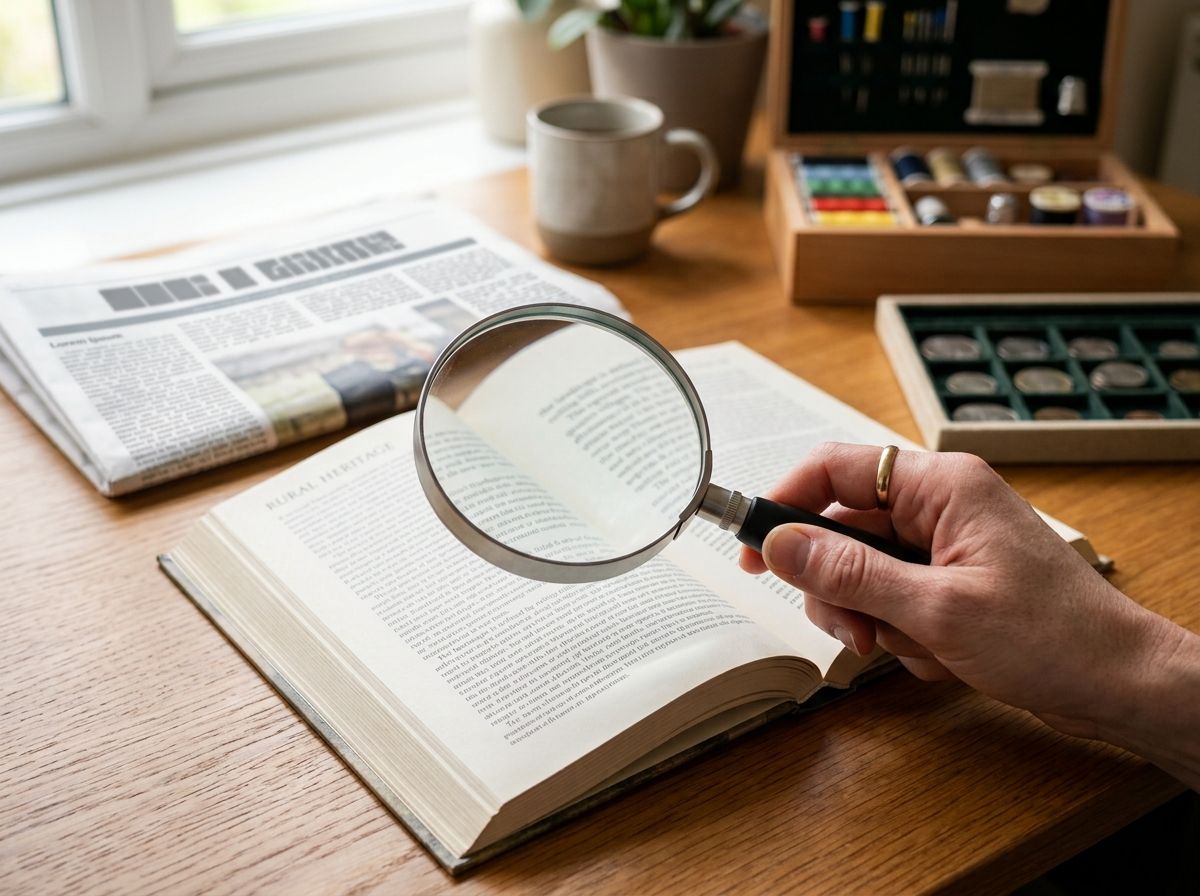
For most households, the magnifying glass gets used for reading. Small print on packaging, instructions, or a newspaper crossword is the most common reason people keep one in a kitchen drawer.
A basic handheld magnifier with 2x to 3x magnification is usually enough for this kind of everyday reading. Anything stronger and the lens has a very short working distance, meaning you have to hold it uncomfortably close to the page to keep the text in focus.
Magnifying Glass Uses in Hobbies and Collecting
Stamp and coin collectors rely on magnifying glasses to check condition, spot printing errors, and read tiny mint marks that are invisible to the naked eye. A 5x to 10x loupe, the small folding magnifier jewellers and collectors use, is the standard tool here rather than a handheld glass.
Model makers and hobbyists working with fine detail, such as painting miniatures or assembling small kits, often use a magnifying lamp instead. This combines a lens with a built-in light source and usually clips or clamps to a desk, freeing up both hands for close work.
Magnifying Glass Uses in Science and Nature
Magnifying glasses are a standard tool in school science lessons and nature study, used to look closely at leaves, insects, rocks, and other small specimens. A simple 3x or 4x handheld magnifier is usually enough for this kind of casual observation.
One safety point worth repeating here: a magnifying glass focuses sunlight into a single hot point strong enough to start a fire or cause a burn within seconds. Never leave one where a child could point it at their skin, dry leaves, or another flammable surface in direct sunlight, and always supervise children using one outdoors on a sunny day.
Magnifying Glass Uses for Low Vision and Reading Support
For people with low vision, a magnifying glass isn’t a hobby item, it’s a daily reading tool. According to RNIB, low vision services are provided free through the NHS, and if you need a magnifier for a genuine vision problem, you’re entitled to have one assessed and loaned to you rather than needing to buy one yourself.
RNIB specifically recommends a proper low vision assessment before buying any magnifier off the shelf, since the correct strength depends on your specific level of vision loss and the task you’re using it for. You can reach RNIB’s Sight Loss Advice Service on 0303 123 9999 to find your nearest low vision service.
Electronic and video magnifiers are also increasingly common for this purpose, offering higher magnification and adjustable contrast (such as yellow text on a black background) compared with a standard optical lens, though they cost considerably more, often upward of £150 for a basic handheld model.
Types of Magnifying Glass
Handheld magnifying glass
The classic version with a lens on a handle, usually offering 2x to 6x magnification. Good for general reading and casual use, but you need a free hand to hold it.
Loupe
A small, often folding magnifier, typically 5x to 10x, held close to the eye rather than the object. Standard in jewellery, watchmaking, and stamp or coin collecting.
Magnifying lamp
A lens built into a desk or floor lamp, combining light and magnification for hands-free close work. Common in craft rooms, workshops, and beauty or nail treatment settings.
Head-worn magnifier
Worn like glasses or a headband, leaving both hands completely free. Popular for model making, jewellery repair, and some medical or dental tasks.
Electronic or video magnifier
A digital device that displays a magnified, often high-contrast image on a small screen, widely used as a low vision aid rather than for hobbies.
How to Choose the Right Magnification Strength
Magnification strength is usually written as a number followed by an “x”, such as 3x or 10x, showing how many times bigger the object will appear. Higher isn’t automatically better, since stronger lenses have a much smaller field of view and a shorter working distance.
As a rough guide:
- 2x to 4x suits general reading, newspapers, and everyday small print
- 5x to 6x works well for detailed hobby work, sewing, or garden inspection
- 8x to 10x (usually a loupe) suits jewellery, coin and stamp inspection
- 10x and above is specialist territory, typically used with a stand or clamp rather than handheld, since the working distance becomes very short
If you’re buying one for reading because of a vision problem rather than a hobby, get an assessment first rather than guessing, for the reasons RNIB outlines above.
How Much Does a Magnifying Glass Cost in the UK?
Prices vary hugely depending on type and quality. A basic handheld magnifying glass from Amazon UK starts from around £4.39, while a larger bifocal magnifier, such as WHSmith’s 87mm model with 2x main lens and a 4x insert lens, typically costs a bit more.
Illuminated handheld magnifiers with a built-in LED light tend to sit in the £8 to £12 range for a decent entry-level option. At the higher end, dedicated electronic and video magnifiers for low vision start from around £150 and can run into thousands for advanced wearable devices, so it’s worth checking whether you qualify for an NHS-funded option before spending your own money.
FAQS
What is a magnifying glass mainly used for?
A magnifying glass is mainly used to make small text or objects appear larger, most commonly for reading fine print, hobby work like stamp or coin collecting, and helping people with low vision see detail more clearly.
What magnification is best for reading?
A magnification of 2x to 4x is usually best for everyday reading, since it enlarges text enough to help without shrinking the field of view or forcing you to hold the lens uncomfortably close to the page.
Can a magnifying glass start a fire?
Yes. A magnifying glass focuses sunlight into a single intense point that can ignite dry material or cause a burn within seconds, so it should never be left where children can use it unsupervised in direct sunlight.
Do I need to pay for a magnifier if I have low vision?
Not necessarily. According to RNIB, NHS low vision services provide assessments and loan magnifiers free of charge, so it’s worth getting assessed before buying one yourself.
What’s the difference between a magnifying glass and a loupe?
A magnifying glass is held away from the eye and typically offers 2x to 6x magnification, while a loupe is held close to the eye, usually offers higher magnification (5x to 10x), and is the standard tool for jewellers and collectors.
How much does a basic magnifying glass cost in the UK?
A basic handheld magnifying glass starts from around £4.39 on Amazon UK, with illuminated versions typically costing £8 to £12, though prices vary by brand and retailer.
What magnification do jewellers use?
Jewellers typically use a loupe with 10x magnification, sometimes higher for detailed inspection work such as checking gemstone clarity or hallmarks.
Are electronic magnifiers better than a standard magnifying glass?
For low vision support, electronic magnifiers often offer more flexibility, including adjustable contrast and higher magnification, but they cost significantly more than an optical magnifying glass, so the right choice depends on your needs and whether an NHS-funded option is available to you.