A helix piercing is a hole through the upper cartilage rim of your ear, usually fitted with a small stud or hoop, and in the UK it typically costs between £25 and £55 depending on the studio and jewellery. It’s the most popular cartilage piercing after the standard lobe, but because it goes through cartilage rather than soft tissue, it hurts more and takes far longer to heal than an earlobe piercing.
This guide covers everything you’re likely to be searching for: what a helix piercing actually is, how much it costs and hurts, how long it takes to heal, the age rules across the UK, and how to look after one properly.
What Is a Helix Piercing?
The helix is the curved outer rim of cartilage that runs around the top and back of your ear. A helix piercing sits somewhere along that rim, most often near the top, and it’s usually done with a single stud, though hoops and curved barbells work too.
There are a few common variations worth knowing before you book:
- Standard helix: a single piercing through the upper outer rim
- Forward helix: placed near the front of the ear, close to where it meets your head
- Double or triple helix: two or three piercings stacked along the same rim
- Floating (hidden) helix: placed away from the edge, so the jewellery appears to float on the cartilage rather than sitting on the rim
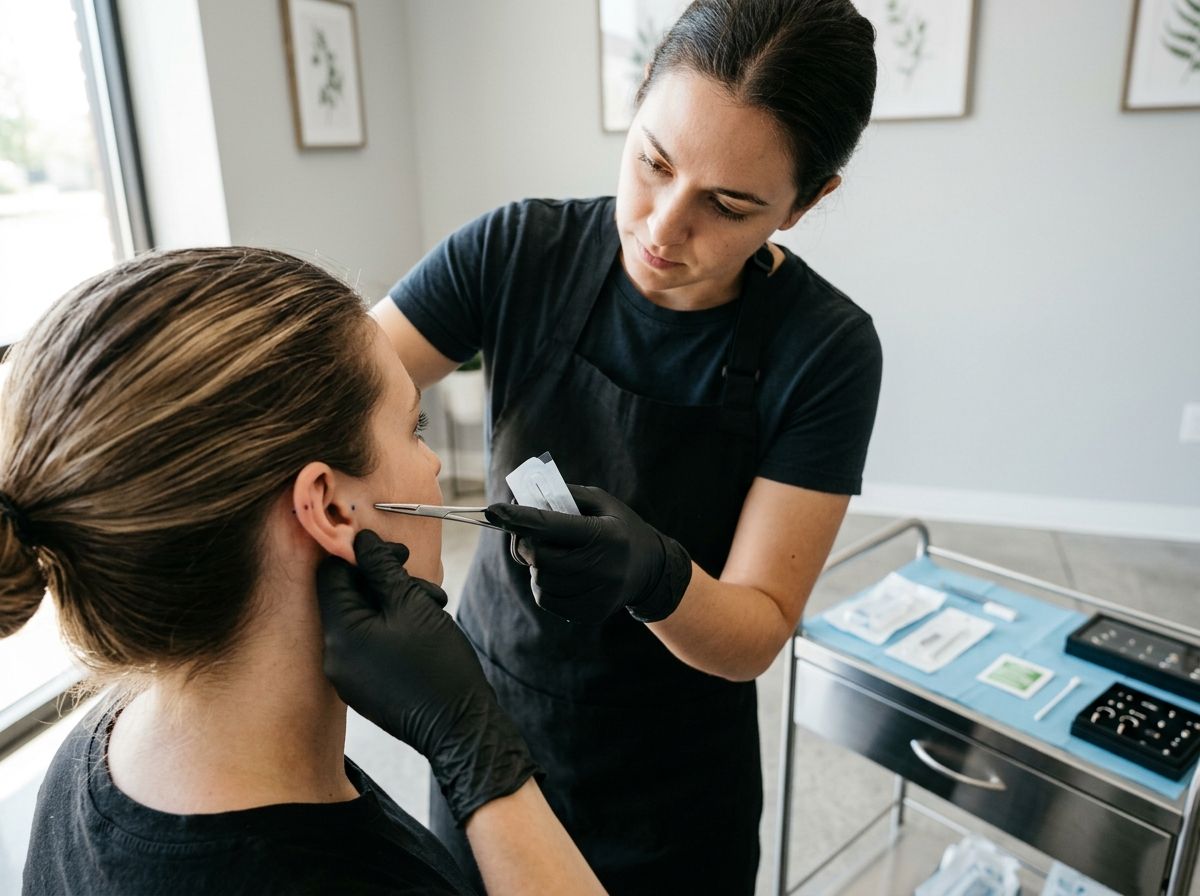
Piercers use a sterile hollow needle for all of these, not a piercing gun. Guns aren’t suitable for cartilage because they crush the tissue rather than cutting it cleanly, which increases the risk of complications, and most reputable UK studios won’t offer them for anything beyond a standard earlobe.
How Much Does a Helix Piercing Cost in the UK?
Expect to pay somewhere between £25 and £55 for a standard helix piercing at a UK studio, based on current price lists from studios including Tribal Voice in Plymouth (£25 to £37) and Hell’s Mouth Tattoo (£35). Forward helix and floating helix piercings tend to sit in a similar range, while double or triple helix work usually costs more since it involves multiple piercings in one sitting.
That price usually includes basic jewellery, often implant-grade titanium or surgical steel. If you want solid gold or a more elaborate stud, expect to pay extra on top of the piercing fee itself. Prices vary a fair amount by studio and region, so it’s worth checking a few local options before booking, since these figures move over time.
Does a Helix Piercing Hurt?
Yes, more than a lobe piercing, but it’s quick and most people find it manageable. Cartilage has fewer nerve endings than the soft, fleshy part of your ear, but it’s tougher and more sensitive to pressure, so the sensation is usually described as a sharp pinch or pressure rather than a stinging pain.
Most people rate the pain somewhere in the middle of the scale, and the piercing itself takes only a few seconds. The days that follow tend to bring more discomfort than the piercing did, with mild throbbing or tenderness that usually settles within the first week or two.
Helix Piercing Healing Time
A helix piercing typically takes 6 to 12 months to heal fully, though it can look and feel settled well before that. This is much longer than a standard lobe piercing, which often heals in 6 to 8 weeks, because cartilage has a much poorer blood supply than the fleshy lobe.
Healing generally happens in stages:
- First 2 to 4 weeks: swelling, tenderness and some discharge are normal as the initial wound settles
- 1 to 6 months: the outside often looks healed, but the tissue inside the piercing channel is still fragile
- 6 to 12 months: the piercing fully matures, with no tenderness, discharge or sensitivity left
Don’t change the jewellery, even to something you prefer, until a piercer confirms the piercing is fully healed. Swapping too early is one of the most common causes of irritation bumps and prolonged healing.
How to Look After a Helix Piercing
Aftercare makes the biggest difference to how smoothly a helix piercing heals. Stick to a simple, consistent routine rather than trying different products.
- Clean it twice a day with a sterile saline solution, either shop-bought or made from cooled boiled water and non-iodised salt
- Avoid touching it with unwashed hands, and don’t twist or rotate the jewellery
- Sleep on the opposite side, or use a travel pillow with a hole cut out, to avoid pressure on the piercing overnight
- Keep hair products, headphones and hats away from the area while it’s healing, since these are common causes of snagging and irritation
- Don’t submerge it in swimming pools, hot tubs or the sea until it’s fully healed, as these carry a higher infection risk than a shower
Signs of Infection to Watch For
Mild redness, tenderness and clear or whitish fluid are normal in the first few weeks. What isn’t normal is persistent, worsening pain, spreading redness, heat around the piercing, or thick yellow or green discharge with a bad smell.
If you notice any of these signs, don’t remove the jewellery yourself, as this can trap the infection inside. Contact your piercer for advice, and see a GP or NHS pharmacist if symptoms get worse, spread beyond the piercing site, or come with a fever.
Age Rules for Helix Piercings in the UK
There’s no single UK-wide law setting a minimum age for cartilage piercings, and the rules differ across England, Wales, Scotland and Northern Ireland.
In England and Wales, there’s generally no statutory minimum age for ear piercings, including cartilage, so studios set their own policies. Many require clients to be at least 14 to 16 for a helix, with parental consent for under-16s. Some local authorities go further: several London boroughs, including Redbridge, have byelaws under the London Local Authorities Act 1991 that prohibit cartilage piercing for anyone under 18, even with parental permission, so it’s worth checking local rules if you’re under 18 and based in London.
In Scotland, the Civic Government (Scotland) Act 1982, as amended by the Licensing of Skin Piercing and Tattooing Order 2006, requires written parental consent for anyone under 16 having any part of their skin pierced. There’s no automatic 18+ requirement for cartilage piercings specifically, but individual studios can and often do set their own higher age limits.
Whatever the legal minimum, most reputable UK studios ask for photo ID and will decline to pierce anyone who can’t provide it, so bring identification regardless of your age.
Choosing Helix Piercing Jewellery
For a fresh piercing, stick to implant-grade titanium, niobium, or solid 14k or 18k gold. These materials carry the lowest risk of allergic reaction and irritation while the piercing heals. Avoid nickel-containing metals and anything plated, since plating can wear off inside the wound and cause problems.
A straight barbell or a labret stud with a flat back is usually the standard starter jewellery, since it sits flush against the cartilage and reduces the risk of snagging. Hoops and curved designs are popular once healed, but most piercers recommend waiting until the piercing has fully matured before switching styles.
FAQS
How much does a helix piercing cost in the UK?
A standard helix piercing typically costs between £25 and £55 at a UK studio, depending on location and the jewellery included, based on current price lists from studios such as Tribal Voice and Hell’s Mouth Tattoo.
How painful is a helix piercing?
A helix piercing is more painful than a lobe piercing because it goes through cartilage, but most people describe it as a sharp pinch that lasts only a few seconds, with mild soreness for a few days afterwards.
How long does a helix piercing take to heal?
A helix piercing usually takes 6 to 12 months to heal fully, though the outside can look settled within a few months while the tissue inside the piercing channel is still healing.
Can I sleep on my helix piercing?
It’s best to avoid sleeping directly on a fresh helix piercing, since pressure overnight can slow healing and increase the risk of irritation, so sleeping on the opposite side or using a travel pillow with a cut-out centre is recommended until it’s healed.
What’s the minimum age for a helix piercing in the UK?
There’s no single UK-wide minimum age for helix piercings, and rules vary by studio, local authority and nation. Many studios set their own minimum around 14 to 16 with parental consent, though some local authorities, including several London boroughs, restrict cartilage piercing to those aged 18 and over.
Can I use a piercing gun for a helix piercing?
No, reputable UK studios use a sterile needle rather than a piercing gun for cartilage piercings, since guns can crush the tissue and increase the risk of complications compared with a clean needle piercing.
How do I know if my helix piercing is infected?
Signs of infection include worsening pain, spreading redness, heat around the piercing, or thick yellow or green discharge with an unpleasant smell, and you should contact your piercer or a GP if these appear rather than removing the jewellery yourself.
When can I change the jewellery in my helix piercing?
Wait until a professional piercer confirms the piercing is fully healed, usually somewhere between 6 and 12 months, before changing the jewellery, since swapping too early is a common cause of bumps and prolonged healing.