If you’ve picked up a bottle of Bio-Oil and wondered what it’s actually for, here’s the short version: it’s a body oil marketed to improve the look of scars, stretch marks, uneven skin tone and dry skin, and it works mainly by keeping skin well moisturised while you massage it in twice a day. It won’t erase a scar or stretch mark completely, but plenty of people find their skin looks smoother and less patchy with consistent use over a few months.
This guide covers what’s actually in the bottle, how to use it properly, what a bottle costs in the UK right now, whether it’s safe in pregnancy, and how strong the evidence really is behind the marketing claims. We’ll also flag where the evidence is thinner than the packaging suggests, since that’s something most product pages won’t tell you.
What is Bio-Oil and what’s in it
Bio-Oil is a skincare oil made by Omega Pharma, sold in the UK from an address in Wrafton, Braunton, Devon. The original formula (often called Bio-Oil Skincare Oil or Bio-Oil Classic) is a blend of plant oils, vitamin A (as retinyl palmitate), vitamin E, and a small amount of essential oils including lavender, rosemary, calendula and chamomile, held together in a mineral oil base using Bio-Oil’s own PurCellin Oil technology, which is designed to make the formula feel lighter and less greasy than a typical oil.
The brand now sells a wider range than the single bottle most people remember: a Dry Skin Gel, a Face Oil, a Body Lotion and a Micellar Water sit alongside the original oil, each aimed at slightly different skin concerns.
What Bio-Oil is used for
Scars. People use Bio-Oil on both old and new scars, including surgical scars, acne scarring and injury marks, to help soften texture and reduce redness or discolouration over time.
Stretch marks. This is where Bio-Oil built its reputation, particularly during and after pregnancy, though it’s also used for stretch marks from growth spurts, weight changes or muscle gain.
Uneven skin tone. Some people use it on patches of hyperpigmentation or areas that look blotchy compared to the rest of their skin.
Ageing skin and dry skin. The oil is also marketed as a general moisturiser for dry patches, ageing skin, and skin that just needs more hydration than a standard lotion provides.
How to use Bio-Oil properly
- Wash and dry the area first. Bio-Oil works best on clean, dry skin rather than over sweat, sunscreen or other products.
- Use a small amount. A couple of drops covers a surprisingly large area, since the oil spreads easily. Using more than you need just wastes product.
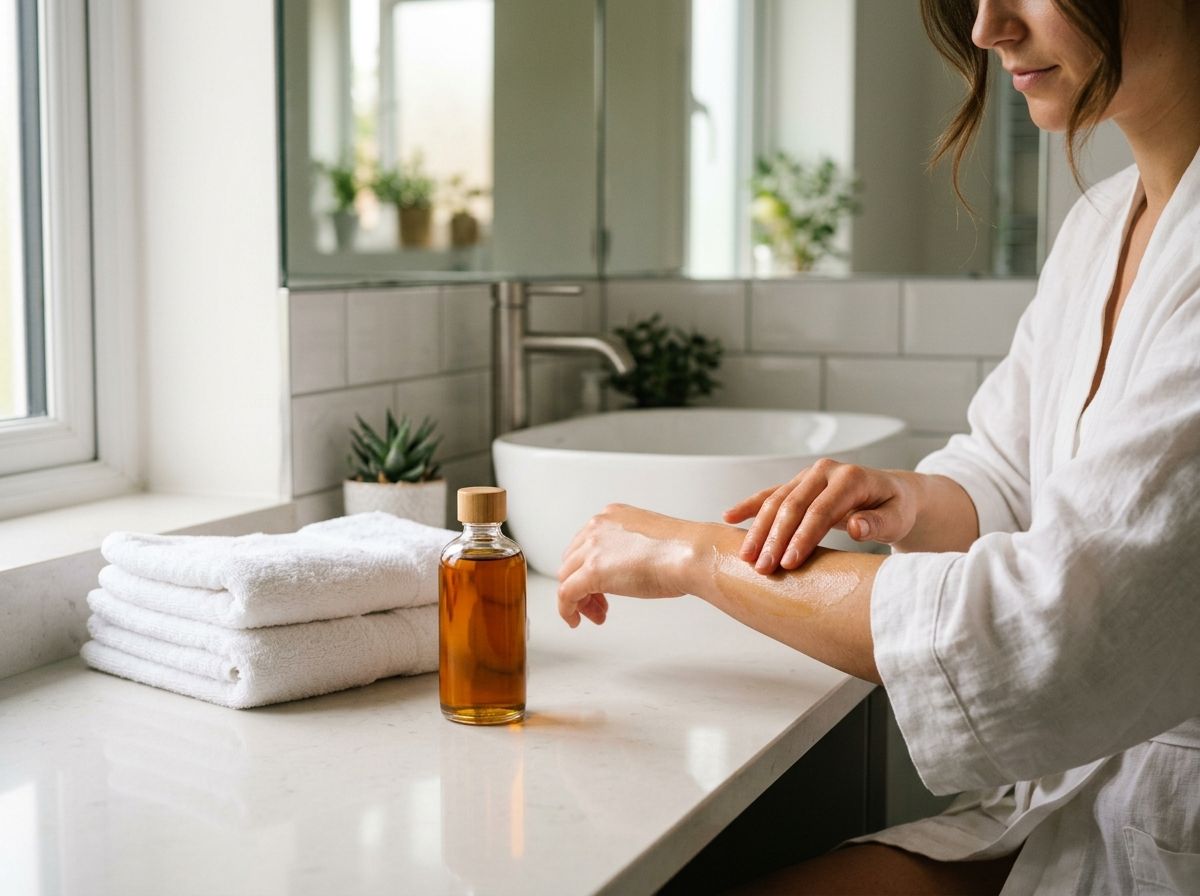
- Massage in circular motions for a few minutes. The massaging matters as much as the oil itself, since it improves circulation to the area and helps the product absorb evenly rather than sitting on top of the skin.
- Apply twice daily. Morning and evening is the standard recommendation, and most of the manufacturer’s own study results are based on that frequency.
- Stick with it for at least 8 weeks. Bio-Oil’s own clinical summaries report improvement in scar appearance after 8 weeks of twice-daily use, and stretch mark improvement from around 2 weeks, but real, visible change for most people takes longer than a fortnight.
- Avoid broken skin. Don’t apply Bio-Oil to open wounds, fresh cuts, or skin that hasn’t fully healed. It’s designed for scars that have already closed over, not for wound care.
How much does Bio-Oil cost in the UK
Prices move around a fair bit between retailers and during sales periods, so treat these as a general guide rather than fixed figures, and check Boots, Superdrug or the brand’s own site before you buy.
| Size | Typical UK price | Roughly how long it lasts |
| 60ml | Around £8 to £10 | 4 to 6 weeks with daily use on one area |
| 125ml | Around £13 to £16 | 2 to 3 months with daily use on one area |
| 200ml | Around £18 to £22 | 3 to 4 months, or less if used on a larger area like a pregnancy bump |
Boots and Superdrug both run regular offers on Bio-Oil, often 3 for 2 or price cuts around Black Friday and Boxing Day, and these can knock several pounds off the standard price. Bio-Oil Dry Skin Gel and Body Lotion are usually priced similarly to the equivalent size of the original oil.
Is Bio-Oil safe to use during pregnancy
Bio-Oil is widely used during pregnancy and generally considered safe for topical use when applied as directed, but there are a couple of things worth knowing rather than just taking that at face value. The vitamin A in Bio-Oil is retinyl palmitate, a mild derivative, and the Scientific Committee on Consumer Safety has said vitamin A in body lotions is safe up to a concentration of 0.05% retinol equivalent, a threshold Bio-Oil’s formula sits below.
The formula also contains small amounts of essential oils, including rosemary, lavender and chamomile, which some midwives suggest avoiding or limiting in the first trimester as a precaution, even though the concentrations used in Bio-Oil are low. If you’re pregnant and want to be extra cautious, it’s worth waiting until the second trimester before starting, and mentioning it to your midwife or GP if you have any specific concerns, particularly around a history of skin sensitivity.
Does the evidence back up the claims
This is the part most reviews skip. Bio-Oil’s packaging and website cite figures such as 95% of users seeing an improvement in stretch marks after 2 weeks and 92% seeing improvement in scars after 8 weeks, drawn from the brand’s own consumer perception studies.
These studies are largely based on self-reported user surveys rather than independent, peer-reviewed clinical trials measuring scar depth or stretch mark size with objective tools. That doesn’t mean the product does nothing, moisturised, well-massaged skin genuinely does look smoother and heal better in general, but it does mean the “clinically proven” language on the label reflects the brand’s own testing rather than independent verification. If you want a fair expectation going in: think “noticeably smoother and less obvious” rather than “scar disappears.”
There isn’t strong independent evidence that any topical product, Bio-Oil included, prevents stretch marks from forming in the first place. Genetics, how quickly the skin stretches, and hormonal factors play a bigger role than any cream or oil.
Common mistakes people make with Bio-Oil
Expecting results within a week or two. Real improvement, where it happens, tends to show up after several weeks of consistent use, not days.
Applying it once a day and stopping when they don’t see change. Twice daily is the tested frequency, and skipping days slows down whatever side effect the product has.
Using it on fresh, unhealed wounds. Bio-Oil is for closed scars and existing skin concerns, not for open cuts or fresh surgical incisions still healing.
Using far more than needed. A little genuinely goes a long way, and heavy application doesn’t speed up results, it just empties the bottle faster.
Bio-Oil versus other options
Plain, unscented oils such as jojoba, sweet almond or coconut oil are cheaper alternatives that some people use instead, particularly during pregnancy if they’d rather avoid essential oils altogether. They won’t contain Bio-Oil’s vitamin A or E blend, so if you specifically want those ingredients, a plain oil isn’t a direct swap.
Prescription-strength options such as silicone gel sheets have stronger independent clinical evidence behind them for scar treatment specifically, and are sometimes recommended by dermatologists for raised or keloid scars, though they’re a different product category entirely and typically cost more.
FAQS
What is Bio-Oil used for?
Bio-Oil is mainly used to improve the appearance of scars, stretch marks, uneven skin tone and dry skin. It’s applied topically and works best with regular, twice-daily use over several weeks rather than as a quick fix.
Does Bio-Oil actually remove stretch marks?
No, Bio-Oil doesn’t remove stretch marks completely, and no topical product currently on the market does. Consistent use can make stretch marks look less noticeable in texture and colour over time for some people, but the marks themselves don’t fully disappear.
How long does it take for Bio-Oil to work?
The brand’s own studies report visible improvement in stretch marks from around 2 weeks and in scars from around 8 weeks, both with twice-daily use. Individual results vary quite a bit depending on skin type, the age of the scar or mark, and how consistently it’s applied.
Can I use Bio-Oil on my face?
Yes, though the brand also sells a dedicated Bio-Oil Face Oil formulated to be lighter for facial skin. The original body oil can be used on the face too, but some people with acne-prone or very oily skin find it a bit heavy for daily facial use.
Is Bio-Oil safe in the first trimester of pregnancy?
Bio-Oil is generally considered low risk in pregnancy, but its small amounts of essential oils lead some midwives to suggest waiting until the second trimester as a precaution. Speak to your midwife or GP if you have specific concerns or a history of sensitive skin.
Where can I buy Bio-Oil in the UK?
Boots, Superdrug, Amazon and most large supermarkets stock Bio-Oil, alongside the brand’s own website. Prices vary by retailer and change during sales periods, so it’s worth comparing before you buy.
Does Bio-Oil work on acne scars?
Some people report smoother texture and less noticeable redness on acne scars with consistent use, though results depend heavily on how deep or old the scarring is. Deeper, pitted acne scars typically respond better to dermatologist treatments such as microneedling or laser therapy than to any topical oil.
Is Bio-Oil comedogenic (does it block pores)?
Bio-Oil is marketed as non-comedogenic, meaning it’s formulated not to clog pores, though individual skin reacts differently to any product. If you’re prone to breakouts, it’s worth patch-testing on a small area first before applying it more widely, especially on the face.