Searching for the best tamales tolimenses near me? Here’s the honest answer: dedicated tolimenses specialists are still rare on the UK high street, so your best bet is to search Google Maps or Just Eat for “Colombian restaurant” in your city, then ask directly whether they make tamal tolimense specifically, since many UK Colombian spots serve a more generic tamal colombiano instead. This guide explains exactly what you’re looking for, what it should cost, and how to avoid ending up with the wrong dish entirely.
Colombian communities are concentrated in a handful of UK cities, mostly London, so if you’re outside those areas your search will likely turn up delivery or catering options rather than a walk-in restaurant.
What Is a Tamal Tolimense, Exactly?
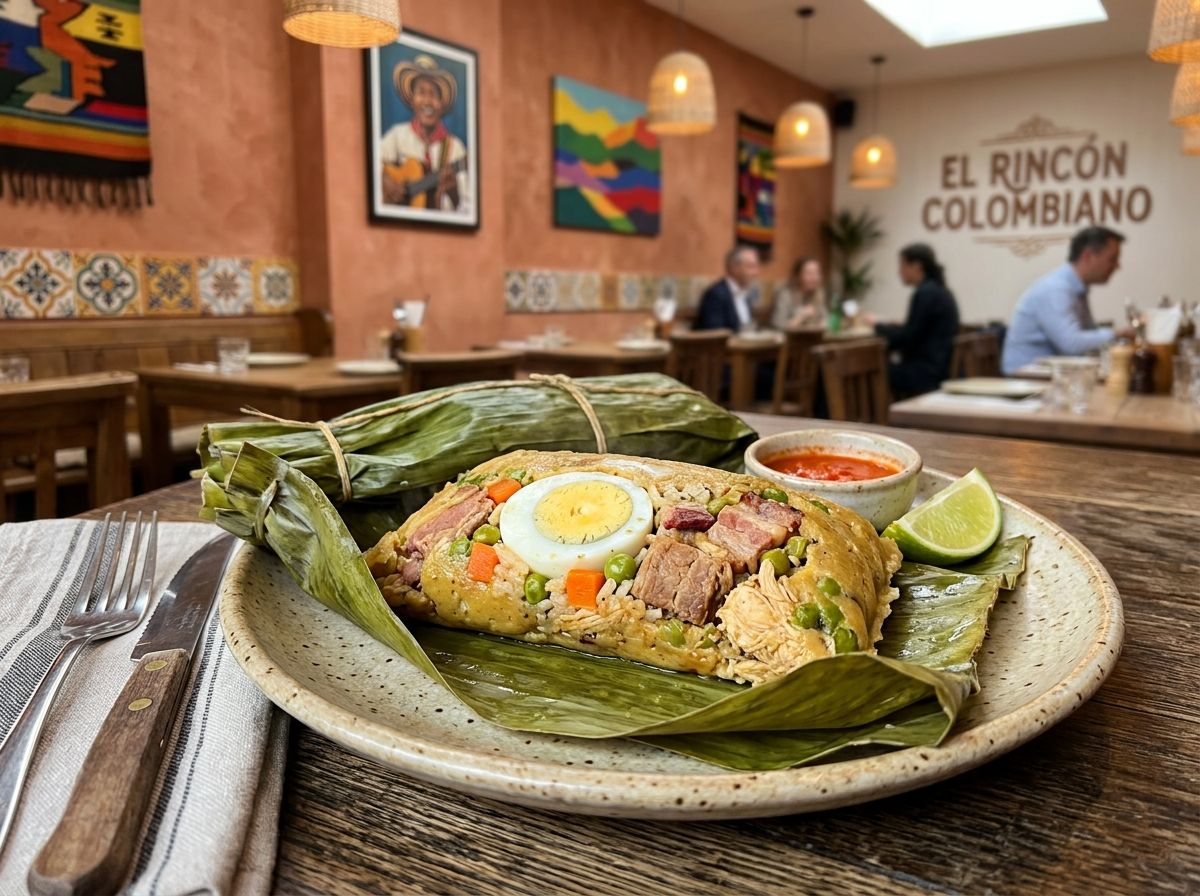
A tamal tolimense is a traditional dish from the Tolima region of central Colombia, built from rice or corn dough (masa) mixed with a combination of pork, chicken, bacon, peas, carrots and hard-boiled egg, all wrapped tightly in plantain (banana) leaf and steamed for hours. It’s heavier, more savoury and quite different from a Mexican tamal, which uses a lighter corn masa wrapped in dried corn husk rather than plantain leaf.
If you’ve only had Mexican tamales before, don’t assume tamales tolimenses will taste similar. The rice-based filling, the meat combination and the plantain leaf wrapping give it a much denser, more stew-like character.
Why “Tamales Tolimenses Near Me” Is a Tricky UK Search
Most UK Colombian restaurants serve tamales, but they don’t always specify the regional style. Tolimense is one of several Colombian tamal traditions (alongside Santandereano and Valluno styles, among others), and UK menus often just list “tamal colombiano” without saying which region it follows.
That means a search for tamales tolimenses near me will often surface general Colombian restaurants rather than a specialist. It’s not a dead end, though. It just means you need to ask the kitchen directly, or look for the word “tolimense” specifically on the menu or in reviews, rather than assuming any Colombian tamal will be the Tolima version.
Where to Actually Look in the UK
London: Elephant & Castle, Seven Sisters and Brixton
London has the UK’s largest Colombian community, concentrated mainly around Elephant & Castle, Seven Sisters and Brixton, according to reporting from Time Out and The Independent on the capital’s Latin American neighbourhoods. Elephant & Castle in particular has been the heart of Colombian London since the 1970s, with restaurants like La Bodeguita and Leños y Carbón serving Colombian staples.
Seven Sisters Market, also known as Pueblito Paisa or Latin Village, is another good option: a covered market packed with South American food traders and grocery shops, several of which sell tamales, particularly around weekends and over Christmas. Brixton and Stockwell also have smaller pockets of Colombian and wider Latin American restaurants worth checking.
Outside London
If you’re outside London, your options narrow considerably. Search Google Maps for “Colombian restaurant” or “Colombian catering” in your nearest city, and check Just Eat, Uber Eats or Deliveroo for Latin American listings, since some smaller Colombian caterers operate delivery-only or pre-order services rather than a physical shopfront.
How Much Do Tamales Tolimenses Cost in the UK?
Prices vary by seller and portion size, but expect to pay somewhere in the region of £6 to £12 for a single tamal at a UK Colombian restaurant or market stall, based on typical pricing for Colombian mains at London venues such as La Bodeguita. Catering orders for events, where you’re buying in bulk, often work out slightly cheaper per portion, but you’ll usually need to order a few days ahead.
Treat any price as a guide rather than a guarantee, since costs shift with ingredients and location, and it’s always worth checking directly with the seller before you order.
Step by Step: How to Find and Order Tamales Tolimenses Near You
- Search Google Maps for “Colombian restaurant near me” or “Colombian catering near me” rather than searching for tolimenses specifically, since the regional term rarely shows up in listings.
- Check the menu or call ahead to confirm whether they make tamal tolimense, tamal santandereano or a general tamal colombiano, since these differ in filling and wrapping.
- Ask about fresh versus frozen. Some sellers make tamales fresh to order, others sell them frozen for reheating at home. Both are legitimate, but you should know which you’re getting.
- Order ahead for events or large quantities. Tamales take hours to steam, so most sellers need advance notice for bulk or catering orders, particularly around Christmas and New Year when demand rises sharply.
- Check delivery coverage if you’re not near a Colombian restaurant, since several sellers operate through Deliveroo, Uber Eats or their own online ordering rather than a shopfront.
- Reheat properly at home. Steam or microwave a tamal still wrapped in its leaf where possible, since this keeps the filling moist rather than drying it out.
Common Mistakes to Avoid
- Assuming any Colombian tamal is tolimense. Ask which regional style you’re getting, since Santandereano and Valluno versions have different fillings and wrappings.
- Confusing it with a Mexican tamal. If a menu doesn’t specify Colombian, you might end up with a corn husk tamal that’s a completely different dish.
- Not checking spice level or allergens. Tamales tolimenses typically aren’t spicy, but they do contain pork, egg and sometimes peanut oil in the rice, so it’s worth asking if you have allergies.
- Ordering last minute for a big event. Given how long they take to steam, most sellers can’t turn around a large order same day.
- Ignoring the wrapping leaf. The plantain leaf isn’t edible. If you’re new to tamales, unwrap it fully before eating rather than biting into the leaf itself.
FAQ
What does a tamal tolimense taste like?
A tamal tolimense has a savoury, rich flavour from its mix of pork, chicken, bacon and rice, wrapped and steamed in plantain leaf, which gives it a slightly earthy, herbal aroma. It’s typically not spicy, unlike some other Latin American tamales.
Is a tamal tolimense the same as a Mexican tamale?
No, they’re different dishes. A Mexican tamale uses a lighter corn masa wrapped in dried corn husk, while a tamal tolimense uses a heavier rice or corn filling with meat, wrapped in plantain leaf and generally larger in size.
Where can I find tamales tolimenses in London?
Your best chance is around Elephant & Castle, Seven Sisters Market (Pueblito Paisa) and Brixton, which have the highest concentration of Colombian restaurants and food stalls in the UK. Not every seller specifies the tolimense style, so it’s worth asking directly before you order.
How much does a tamal tolimense cost in the UK?
Expect to pay roughly £6 to £12 per tamal at a UK restaurant or market stall, though prices vary by seller, portion size and whether you’re ordering for catering in bulk. Always confirm the current price with the seller, since costs change.
Can I order tamales tolimenses for delivery in the UK?
Yes, some Colombian restaurants and caterers list tamales on Deliveroo, Uber Eats or Just Eat, particularly in London. Availability is patchy outside major cities, so check delivery platforms for your postcode directly.
Do I need to order tamales tolimenses in advance?
For small quantities, some sellers can prepare them same day, but for catering or larger orders you’ll usually need a few days’ notice, since the steaming process alone can take several hours. This is especially true around Christmas and New Year, when demand rises.
Are tamales tolimenses suitable for vegetarians?
No, a traditional tamal tolimense contains pork, chicken and sometimes bacon, so it isn’t vegetarian. Some sellers may offer a vegetarian tamal on request, but this isn’t the traditional recipe, so ask before assuming one is available.
How do I reheat a tamal tolimense at home?
The best method is to steam it while still wrapped in its plantain leaf, which keeps the filling moist, though a short burst in the microwave also works if you’re short on time. Avoid unwrapping it before reheating, as this dries the filling out.