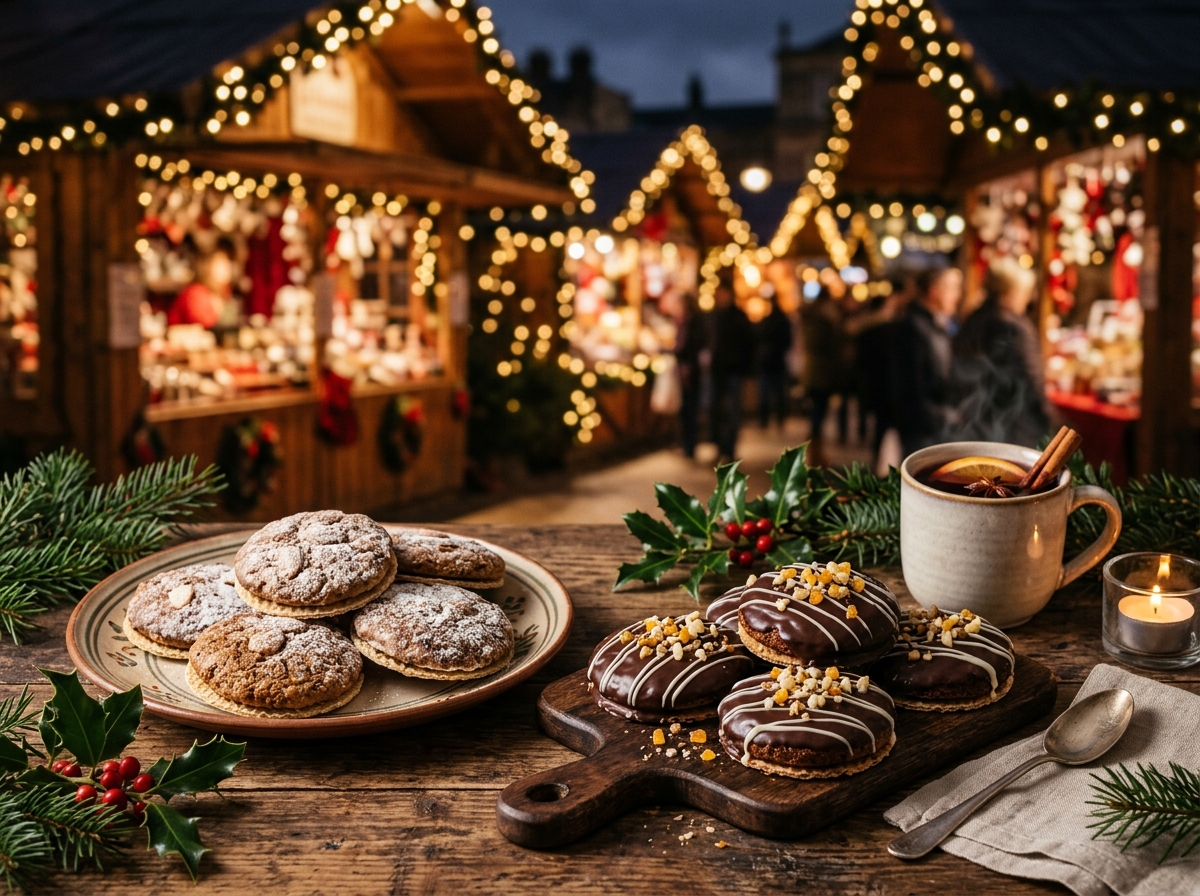
If you’re searching for the best lebkuchen near me, the honest answer depends on the time of year as much as where you live. Lebkuchen is a German spiced biscuit, somewhere between gingerbread and soft cake, and in the UK it shows up in three main places: German-style Christmas markets from November to late December, supermarket shelves over the same festive window, and specialist delis or online retailers that stock it year-round. Prices range from around £2 for a small supermarket pack to £15 or more for an authentic Nuremberg-made gift tin. Here’s exactly where to look, what you’ll pay, and how to avoid ending up with an over-processed imitation.
What is lebkuchen, exactly?
Lebkuchen translates loosely as gingerbread, but that’s a bit misleading. The spice blend does include ginger, alongside cinnamon, cloves and cardamom, but the flavour is milder and more rounded than a British gingerbread biscuit, and the texture is softer, closer to a spiced cake than a crisp biscuit.
The best version, Elisenlebkuchen, is baked on a thin wafer called Oblate and must legally contain at least 25% nuts and no more than 10% wheat flour, according to German food labelling standards. Only Lebkuchen actually baked in Nuremberg can carry the Protected Geographical Indication (PGI) “Nürnberger Lebkuchen”, the same kind of protection Parma ham or Champagne carries. Cheaper supermarket versions are usually a different, more processed recipe, which is worth knowing before you compare prices.
Where to find lebkuchen near you in the UK
German-style Christmas markets
This is where most people picture lebkuchen, and for good reason: markets are the one place you’ll reliably find it fresh, often iced or dipped in chocolate on site. Birmingham’s Frankfurt Christmas Market, the largest German-style market outside Germany or Austria, runs from Thursday 5 November to Thursday 24 December 2026 on Victoria Square and New Street, according to the market’s official site. Manchester, Edinburgh, Leeds, Bath and York all run their own Christmas markets across a similar window, typically opening in early to mid-November and closing between 22 and 24 December. Exact dates shift slightly year to year, so check each city’s official market page closer to the time rather than relying on last year’s calendar.
UK supermarkets
For the rest of the year, or if you can’t get to a market, supermarkets are the easiest option. Lidl and Aldi, both German-owned chains, stock lebkuchen every festive season, usually from late October through December, and tend to offer some of the closer-to-authentic options at supermarket prices. Tesco, Sainsbury’s, Waitrose and Marks & Spencer also carry chocolate-coated lebkuchen hearts and rounds during the same window, though these are generally the more processed, mass-produced style rather than traditional Elisenlebkuchen.
German delis and specialist shops
If you want the real thing outside the Christmas season, look for a German deli or specialist European food shop, which some UK cities have year-round. These are more likely to stock genuine Nuremberg-made lebkuchen from producers like Lebkuchen-Schmidt, often at a higher price than supermarket alternatives but with noticeably better nut content and texture.
Buying online
When nothing is nearby, ordering online is the most reliable route to the genuine article. Retailers such as Sous Chef and small UK-based bakeries selling handmade lebkuchen ship year-round, so you’re not restricted to the Christmas window if you’re after quality over convenience.
What does lebkuchen cost in the UK?
Prices vary by format and authenticity, so here’s a realistic range based on current UK listings.
- Supermarket packs (Lidl, Aldi, Tesco, Sainsbury’s): typically £1.50 to £3 for a 200g to 250g box of chocolate-coated hearts or rounds.
- Christmas market lebkuchen: usually £3 to £8 for a bag or a decorated iced heart, sometimes more for a large personalised gingerbread heart aimed at gifting rather than eating.
- Authentic Nuremberg Elisenlebkuchen: from around £8 to £20 for a tin or gift box from a specialist retailer, reflecting the higher nut content and PGI status.
- Luxury gift tins: £20 and upwards for large presentation boxes, often bought as Christmas gifts rather than everyday treats.
Prices shift by retailer and season, so treat these as a guide rather than a fixed figure, and check the current listing before you commit to a specific food shop.
How to spot good quality lebkuchen
A handful of details separate genuine Elisenlebkuchen from a cheaper imitation. Look for a visible wafer base (Oblate) underneath the biscuit, since this is a hallmark of the traditional style. Check the ingredients for a high nut content, ideally with almonds, hazelnuts or walnuts listed early on, and as little wheat flour as possible. Genuine Nuremberg lebkuchen will usually carry the PGI mark or explicitly state “Nürnberger Lebkuchen” on the packaging, since that name is legally protected and can’t be used otherwise.
Softness matters too. A good Elisenlebkuchen should be soft and slightly chewy rather than crisp or dry, and the flavour should feel rounded rather than dominated by ginger alone.
When can you actually buy lebkuchen in the UK?
Availability is heavily seasonal for most buyers. Supermarkets and Christmas markets stock lebkuchen from roughly late October through to Christmas Eve, after which it typically disappears from shelves until the following autumn. If you’re reading this outside that window, your most reliable options are specialist online retailers and German delis, both of which tend to stock it year-round, just usually at a higher price than the seasonal supermarket versions.
Mistakes to avoid
- Assuming all lebkuchen is the same. Supermarket chocolate hearts and authentic Elisenlebkuchen are genuinely different products with different textures, ingredients and price points.
- Leaving it too late in December. Christmas market stalls and supermarket festive ranges sell out or get pulled from shelves well before New Year, so shop early if you want a specific style.
- Buying decorative gingerbread hearts expecting them to taste great. The large iced hearts sold at markets are often made primarily for looks and gifting rather than eating, and can be noticeably drier than a proper Elisenlebkuchen.
- Overpaying for supermarket own-brand versions online. Some resellers mark up standard supermarket lebkuchen well above in-store prices, so compare before ordering.
- Ignoring nut allergies. Genuine Elisenlebkuchen is nut-heavy by definition, so always check the label carefully if buying for someone with allergies.
FAQS
What is lebkuchen?
Lebkuchen is a traditional German spiced biscuit, similar to gingerbread but softer and less ginger-forward, usually made with cinnamon, cloves and cardamom alongside ginger. The best version, Elisenlebkuchen, is baked on a wafer base and contains a high proportion of nuts.
Where can I buy lebkuchen in the UK?
German-style Christmas markets in cities like Birmingham, Manchester and Edinburgh sell it fresh from November to late December, while supermarkets including Lidl, Aldi, Tesco and Sainsbury’s stock it over the same festive period. Specialist German delis and online retailers such as Sous Chef stock it year-round.
How much does lebkuchen cost?
Supermarket packs typically cost £1.50 to £3, Christmas market lebkuchen runs £3 to £8, and authentic Nuremberg Elisenlebkuchen from a specialist retailer costs roughly £8 to £20 depending on size and packaging.
Is lebkuchen the same as gingerbread?
Not quite. Lebkuchen translates as gingerbread but uses a milder, more rounded spice blend and a softer, cake-like texture, whereas British gingerbread is typically crisper with a stronger ginger flavour.
What is Elisenlebkuchen?
Elisenlebkuchen is the premium version of lebkuchen, legally required to contain at least 25% nuts and no more than 10% wheat flour, baked on a thin wafer base. It’s considered the highest quality style, particularly when made in Nuremberg under PGI protection.
Is lebkuchen available all year in the UK?
Supermarket and Christmas market lebkuchen is strictly seasonal, generally available from late October to late December. Specialist online retailers and German delis are the most reliable option if you want it outside that window.
Does lebkuchen contain nuts?
Genuine Elisenlebkuchen contains a significant proportion of nuts by definition, often almonds, hazelnuts or walnuts. Cheaper supermarket versions may contain fewer nuts, but always check the label if you’re buying for someone with a nut allergy.
What’s the difference between Nuremberg lebkuchen and regular lebkuchen?
Only lebkuchen actually baked in Nuremberg, Germany can legally be called “Nürnberger Lebkuchen”, a status protected under EU and UK geographical indication rules. Regular lebkuchen made elsewhere, including most supermarket versions, doesn’t carry this protection even if it’s a similar style.