







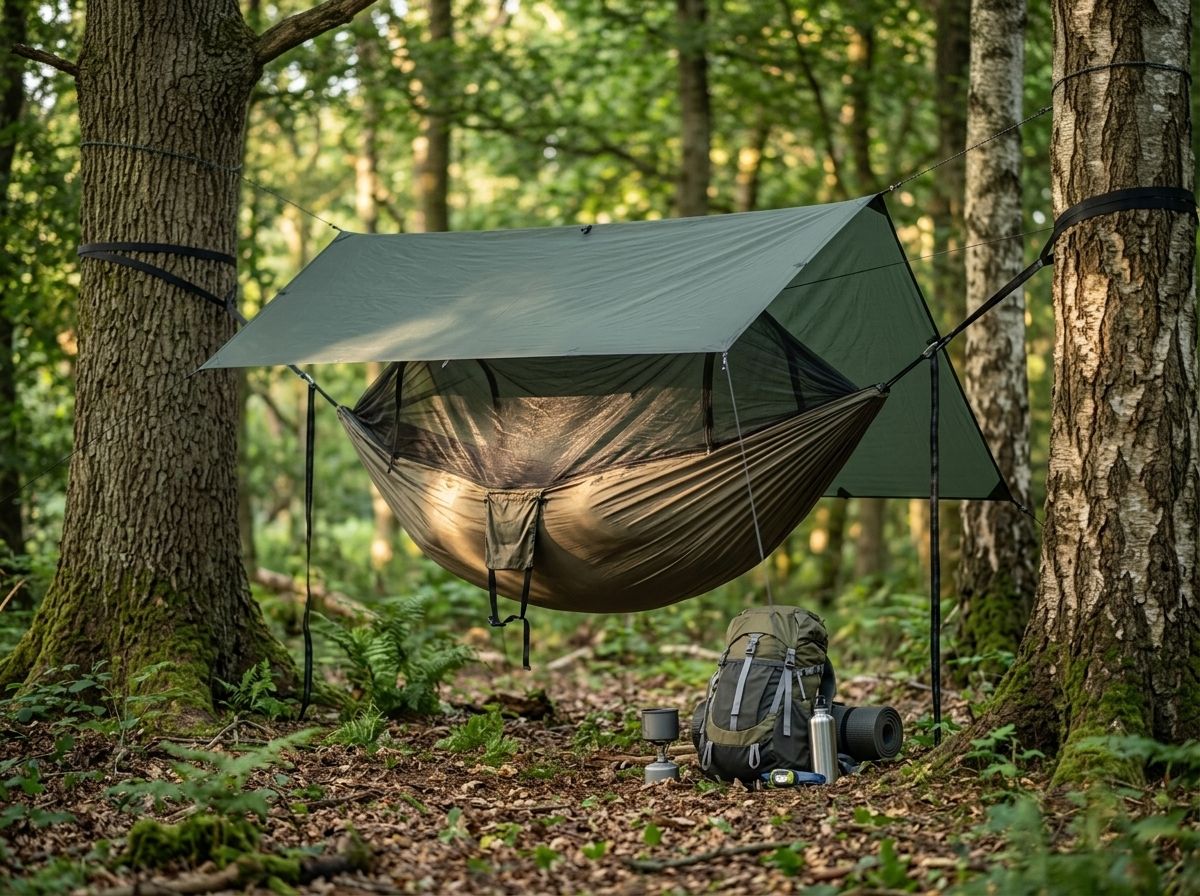
The best camping hammocks for UK use are ones with an integrated bug net, a waterproof rating on the fabric, and a proper suspension system rather than plain rope, since our climate and midge population punish anything less. A solid all-rounder like the DD Frontline Hammock (£44.95) covers most people’s needs, while a basic gathered-end design from around £27 is enough if you’re just testing whether hammock camping suits you.
If you’re weighing up your first hammock, or replacing one that let you down on a damp Welsh hillside, this guide covers what actually matters, real UK prices, how to hang one properly, and the camping pillow that goes with it.
What Makes a Good Camping Hammock?
Before comparing models, it helps to know what separates a decent hammock from one that’ll leave you cold, damp or badly slept. Four things matter most.
Fabric and waterproofing come first. Ripstop nylon is the standard, since it resists tearing and dries fast after rain, which matters a lot in a British summer. Bug protection matters almost as much; an integrated mosquito net beats a separate one you have to rig yourself, particularly around dusk near water or woodland.
Suspension quality is often overlooked. Tree straps (wide, flat webbing) spread the load and protect bark, whereas thin cord or rope can cut into a tree and is genuinely damaging over time. Weight and pack size only matter if you’re carrying the hammock any distance; for car camping, a heavier, more spacious model is often more comfortable.
Best Camping Hammocks UK Buyers Are Choosing Right Now
Prices below were checked in July 2026 and change often, so treat them as a guide rather than gospel; always check the retailer’s current price before you buy.
Best All-Rounder: DD Frontline Hammock, from £44.95
British-made and one of the most recommended hammocks among UK wild campers, the DD Frontline includes an integrated mosquito net, a built-in ridgeline for consistent hang geometry, and ripstop nylon construction. At 2.7 metres long (suitable for people up to around 190cm tall) and roughly 860g including its stuff sack, it strikes a fair balance between comfort and packability.
Best Budget Option: DD Camping Hammock, from £26.95
This is the one to buy if you’re not sure hammock camping is for you yet. It’s a straightforward gathered-end design with carabiner attachments and tree straps included, but no bug net or tarp, so it suits summer day use or short trial trips rather than overnight wild camping in midge season.
Lightest Option: DD SuperLight Hammock, £52.95
Weighing in at roughly 620g excluding suspension, this is built for people who count every gram, whether that’s backpacking, bikepacking or long-distance trails. It still includes an integrated bug net, just built from a single, lighter layer of ripstop nylon.
Best Compact Budget Pick: Highlander Trekker Hammock, around £22 to £26
A simple, lightweight one-person hammock with a hanging kit and stuff sack included. It’s basic, with no bug net or tarp, but it’s a reliable entry point if budget is tight and you mainly plan to use it for lounging rather than overnight sleeping.
Best for Taller or Two Campers: DD Frontline King Size, £74.95
The same design as the standard Frontline but scaled up, this suits taller campers or two people sharing for short periods. It’s heavier and bulkier to carry, so it’s better suited to car camping or a fixed campsite pitch than a long trekking trip.
Hammocks With a Stand: An Alternative for Tree-Free Pitches
Not every UK campsite has trees spaced correctly, or allows hammock use on them at all. A stand-mounted hammock, such as the Vivere Double Cotton Hammock with Stand, solves that by giving you a steel frame you can set up on grass, gravel or a hardstanding pitch. They’re heavier and only really practical for car camping, but they remove the guesswork around finding two suitable trees.
How to Hang a Camping Hammock Properly
Getting the hang wrong is the single biggest reason people give up on hammock camping after one bad night.
Look for two trees roughly 4 to 5 metres apart, with trunks at least 15cm thick (about the width of your thigh). Wider spacing needs a higher hang point, and closer spacing needs a lower one. Avoid dead trees, since branches can come down overnight, and steer clear of trees showing obvious signs of nesting birds or bats.
Hang your straps at roughly 30 degrees from horizontal. That angle creates the right amount of sag: tight enough that you won’t touch the ground, loose enough that you’re not lying in an uncomfortable curve. The most common mistake is pitching too tight, which creates a banana-shaped curve that strains your back, closely followed by pitching too loose, which drags the sag down to the ground and defeats the point entirely.
Do You Need a Tarp, and What Should It Cost?
A tarp isn’t optional if you’re sleeping overnight anywhere in the UK. Even a dry forecast can turn, and condensation alone will dampen an uncovered hammock by morning.
A fully waterproof tarp rated to at least 3000mm hydrostatic head, weighing around 790g, typically costs somewhere in the £35 to £50 range and can be pitched in multiple configurations, from a low storm mode in bad weather to a higher, more open porch mode on calm nights. Guy lines and pegs are usually included, so factor that into your budget rather than treating it as an extra cost later.
Underquilts and Staying Warm
A common surprise for first-time hammock campers is how cold the underside gets, even in mild weather, since a sleeping bag compresses underneath your body weight and stops insulating properly. An insulated underquilt, which hangs beneath the hammock rather than compressing under you, solves this and is worth budgeting for if you plan to camp outside peak summer.
Best Camping Pillows to Pair With Your Hammock
A hammock changes your sleeping angle, so a proper camping pillow makes a bigger difference than it would in a tent.
At the budget end, the Trekology Aluft 2 costs around £16 to £18, weighs just 80g, and packs down to about the size of a tennis ball, inflating in a few breaths. It includes a strap system to stop it sliding around, which matters more in a hammock than on flat ground.
For a step up in comfort, the Sea to Summit Aeros Premium sits around £35 to £45, weighs about 90g, and offers a softer, more contoured feel thanks to its hybrid inflatable design. Reviewers consistently rate it as one of the most comfortable options that still packs down small enough for backpacking.
If you’d rather not spend on a dedicated pillow at all, a rolled-up fleece or spare clothing works for short trips, though it won’t offer the same neck support over a full night.
Common Mistakes to Avoid
Buying a hammock without checking its maximum weight rating is the most frequent regret, since gathered-end designs feel noticeably narrower once you’re actually lying diagonally inside one. Skipping the tarp to save money is the second, and it’s the one that tends to end a first trip early once rain sets in overnight.
Using thin cord instead of proper tree straps causes real damage to bark and is worth avoiding on principle, not just for your own comfort. Finally, don’t assume you can pitch anywhere: in England and Wales, camping (hammock or otherwise) without the landowner’s permission is generally treated as trespass, except on the Dartmoor Commons, where the Supreme Court confirmed a public right to camp in May 2025. Scotland is more permissive under the Land Reform (Scotland) Act 2003, which gives a general right to camp responsibly on most unenclosed land.
FAQS
What is the best camping hammock for UK weather?
A hammock with an integrated bug net and ripstop nylon fabric, paired with a waterproof tarp rated to at least 3000mm, copes best with UK rain and midges. The DD Frontline Hammock is a widely recommended starting point at £44.95.
How much should I spend on a camping hammock?
A basic gathered-end hammock for day use starts around £22 to £27, while a bug-netted model suited to overnight wild camping typically costs £45 to £75. Add roughly £35 to £50 for a proper tarp if you plan to sleep out overnight.
Do I need a tarp with a camping hammock?
Yes, for any overnight use in the UK. Even without rain, condensation will dampen an uncovered hammock, and a tarp rated to at least 3000mm hydrostatic head gives reliable protection.
Is it legal to wild camp in a hammock in the UK?
It depends where you are. Scotland allows responsible wild camping on most unenclosed land under the Land Reform (Scotland) Act 2003, while in England and Wales you generally need the landowner’s permission, except on the Dartmoor Commons.
How do I stop a camping hammock from damaging trees?
Use wide, flat tree straps rather than rope or cord, since narrow suspension can cut into bark over time. Most quality hammocks, including DD’s range, include tree straps as standard.
What’s the difference between a camping hammock and a garden hammock?
Camping hammocks are lighter, more packable, and usually include tree straps and sometimes a bug net for outdoor overnight use. Garden hammocks are typically heavier, often come with a stand, and prioritise comfort over portability.
Do I need a special pillow for hammock camping?
Not strictly, but a lightweight inflatable pillow like the Trekology Aluft 2 (around £16 to £18) supports your neck better at the angle you sleep in a hammock than a rolled-up jumper does.
How cold does it get in a hammock overnight?
Colder than you’d expect, since your sleeping bag compresses underneath you and loses most of its insulating power. An underquilt, hung beneath the hammock rather than compressed by your weight, solves this for anything outside high summer.