AdBlue is a fluid that most modern diesel cars and vans need to control their exhaust emissions, and if it runs out, the engine will eventually refuse to restart. It’s not fuel, and it doesn’t go anywhere near the diesel tank. It sits in its own separate tank, usually with a blue cap, and gets topped up far less often than you fill up with diesel.
If your dashboard has just flagged a low AdBlue warning, or you’re simply trying to understand what this stuff is before you buy a diesel car, this guide covers everything: what it does, current UK prices, how to top it up yourself, and what actually happens if you ignore the warning light.
What Is AdBlue?
AdBlue is a colourless, non-toxic liquid made of 32.5% high-purity urea and 67.5% deionised water, manufactured to the ISO 22241 standard. The name itself is a registered trademark of the German Association of the Automotive Industry (VDA), though it’s become the everyday term for what’s technically called diesel exhaust fluid, or DEF.
It’s not a fuel additive and it never mixes with your diesel. Instead, it sits in its own tank (often 10 to 15 litres in passenger cars) and gets injected into the exhaust system separately, working alongside a Selective Catalytic Reduction (SCR) system to clean up emissions before they leave the car.
How AdBlue Works With Your Car’s Engine
Inside the hot exhaust, the urea in AdBlue breaks down into ammonia. That ammonia reacts with nitrogen oxides (NOx), the harmful gases produced by diesel combustion, and converts them into harmless nitrogen and water vapour.
The result is a big cut in NOx emissions, generally reported at around 80 to 90%, which is exactly why AdBlue became standard on diesel cars and vans built to meet Euro 6 emissions rules. Not every diesel needs it. Older models and some smaller diesel engines rely on different emissions technology, so if you’ve never seen a blue cap under your bonnet or boot floor, your car may simply not use SCR at all.
Where to Buy AdBlue in the UK
AdBlue is easy to find, and prices vary a fair bit depending on where you shop.
Supermarkets and Petrol Stations
Tesco sells a 5 litre bottle with a pouring spout for £14.40 (or £12.51 with a Clubcard, at the time of writing), while its own Redex-branded 4 litre bottle runs from £10 down to £7.50 with a Clubcard. Asda, Sainsbury’s and Morrisons also stock AdBlue at their fuel station kiosks, and prices there tend to move around, so it’s worth comparing before you buy.
A small number of larger filling stations have dedicated AdBlue pumps for cars and vans, which can work out cheaper per litre than bottled fluid. Just be careful: never use a pump designed for HGVs, since the nozzle and flow rate aren’t suited to a car’s smaller filler.
Motor Factors and Online Retailers
Halfords currently sells a 10 litre container for £14.99 (down from £17.99), which is a practical size for most passenger cars needing a full top-up. Euro Car Parts, Wickes, Screwfix and Amazon also stock AdBlue in sizes from 1.5 litres up to 20 litre drums, and buying in bulk online is usually the cheapest option if your car gets through it regularly.
Whichever source you use, only buy fluid marked as meeting the ISO 22241 standard. Cheap, uncertified bottles can contaminate the SCR system and lead to a far more expensive repair than the fluid itself ever cost.
How to Top Up AdBlue Yourself
Topping up AdBlue is a five minute job you can do on your own driveway.
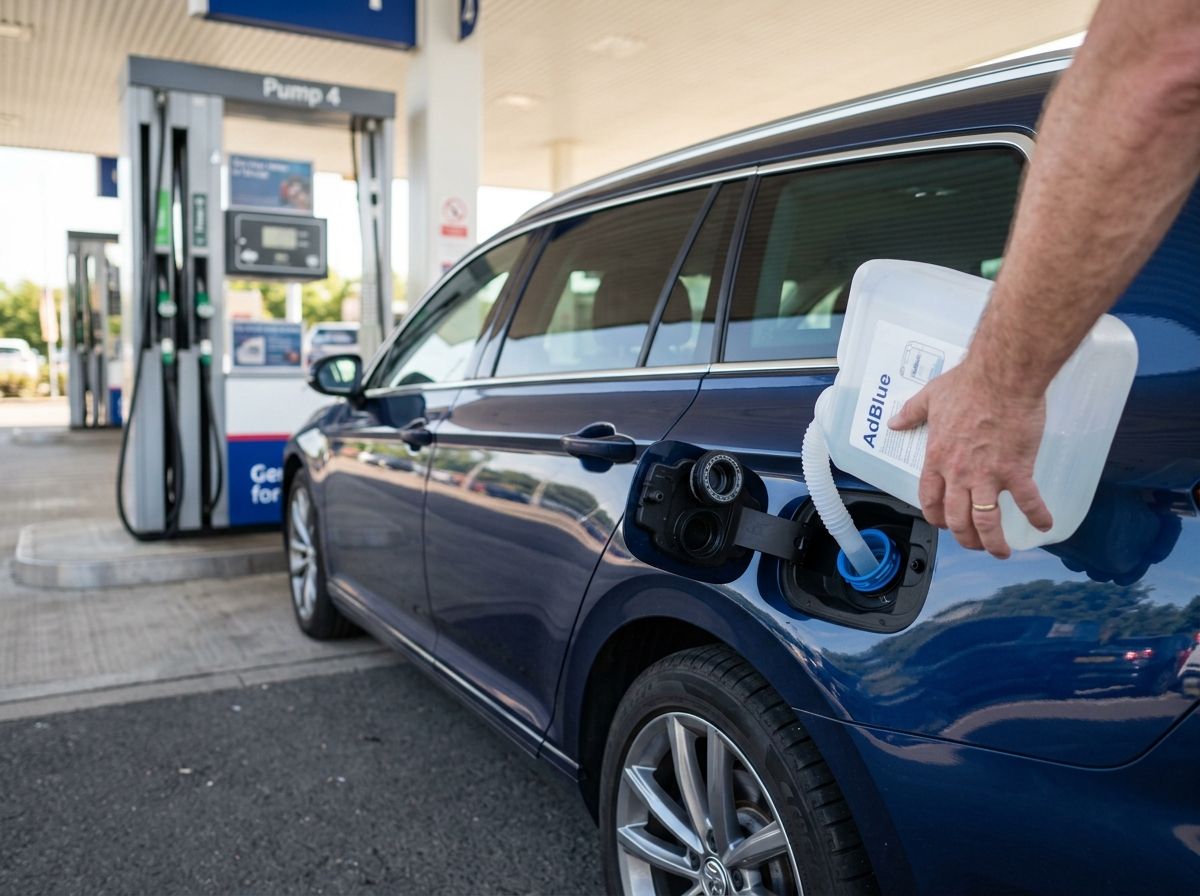
- Find the AdBlue filler cap. It’s usually blue, and sits either next to the diesel filler, under the bonnet, or in the boot near the spare wheel well, depending on the make and model.
- Screw the bottle’s pouring spout on securely before you start.
- Insert the spout into the AdBlue filler, never the diesel tank.
- Pour steadily, topping up a litre at a time until the tank is full or the bottle is empty.
- Replace and tighten the cap fully, then wipe away any spillage straight away.
If AdBlue touches your paintwork, rinse it off with water. Left to dry, it crystallises into a white crust that’s a hassle to remove. Store any leftover fluid in its original sealed bottle, out of direct sunlight, and use it within around 12 months for the best results.
How Long Does a Tank of AdBlue Last?
Most diesel cars use roughly one litre of AdBlue every 600 to 1,000 miles, though this depends heavily on the engine, your driving style and how much of your mileage is motorway versus town driving. On that basis, a full 10 to 15 litre tank should comfortably see most drivers through several thousand miles between top-ups.
Vans and larger diesel engines tend to use more, sometimes needing a refill every 5,000 to 10,000 miles depending on load and usage, so it’s worth checking your own vehicle’s consumption after the first tank rather than assuming a fixed figure.
What Happens If You Run Out of AdBlue
If the tank runs dry while you’re driving, the car’s engine management system will reduce power to limit emissions, sometimes called limp mode. You’ll usually still make it to a safe stop, but performance will feel noticeably worse.
Once you switch the engine off with an empty AdBlue tank, most cars simply won’t restart. According to the AA, you’ll typically need to add somewhere between 3 and 5 litres before the engine will fire up again, and it can take a short drive before the warning light on the dashboard catches up and turns off. It’s not a safety fault as such, but it will leave you stranded until you’ve topped up, so it pays not to let it get that far.
AdBlue Warning Light Explained
Cars give plenty of notice before the tank actually runs dry. According to the RAC, a text warning typically appears on the dashboard when there’s around 1,500 miles of AdBlue left, giving an amber light at first.
As the level drops further, the warning becomes more urgent, often turning red with more frequent alerts, before the car eventually refuses to restart once switched off. There’s no way to manually reset the light yourself. Topping up the tank is the only fix, and the warning should clear on its own once the system detects enough fluid.
Because AdBlue warning symbols vary slightly by manufacturer (wavy lines, the word “AdBlue” or “urea”, sometimes a cloud icon), check your owner’s manual if you’re not sure what you’re looking at, particularly if you’re about to book an MOT and want to rule out a nasty surprise on the day.
Can AdBlue Freeze? Storage and Shelf Life
Yes. AdBlue freezes at around minus 11°C, starting to thicken from around minus 5°C. This isn’t something to worry about: modern SCR systems have heaters built into the tank and lines that thaw the fluid automatically once you start the engine, and freezing doesn’t damage the fluid itself or your car.
For storage at home, keep AdBlue in its original sealed container, somewhere cool and out of direct sunlight, and try to use it within about 12 months of purchase. Don’t bulk-buy more than you’ll realistically get through in that time, since old, degraded fluid can affect how well the SCR system works.
Is an AdBlue Delete Legal in the UK?
No. Removing or disabling the AdBlue and SCR system on a vehicle you intend to drive on UK public roads breaches the Road Vehicles (Construction and Use) Regulations, which require vehicles to keep working to the emissions standard they were type-approved for. This applies whether the change is physical (removing parts) or done through software.
A standard MOT doesn’t run a deep check of your car’s ECU, so a delete won’t always show up in the test itself. That doesn’t make it legal, though, and a tester who spots obvious signs of tampering, missing components, or unresolved warning lights can fail the vehicle on the day. If your AdBlue system keeps throwing faults, it’s worth getting the actual fault diagnosed and repaired rather than removing it, since a repair keeps you compliant and avoids problems down the line with insurance or resale. Rules and enforcement can change, so check GOV.UK or speak to a DVSA-approved garage if you’re unsure where you stand.
FAQS
What is AdBlue used for?
AdBlue reduces harmful nitrogen oxide emissions from diesel engines by around 80 to 90%. It’s injected into the exhaust system, where it breaks down and reacts with NOx gases, turning them into harmless nitrogen and water vapour.
How much does AdBlue cost in the UK?
Prices vary by retailer and container size. A 5 litre bottle from Tesco costs around £12.51 to £14.40, while a 10 litre container from Halfords is currently £14.99. Buying online in bulk is usually cheaper per litre if your car needs regular top-ups.
Where can I buy AdBlue near me?
AdBlue is sold at most large supermarket petrol stations, Halfords, Euro Car Parts and other motor factors, and online through retailers like Amazon. A small number of filling stations also have dedicated AdBlue pumps for cars and vans.
What happens if my car runs out of AdBlue?
The engine will lose power while you’re still driving, then refuse to restart once you switch it off with the tank empty. You’ll typically need to add 3 to 5 litres before it will start again, according to the AA.
Can I put AdBlue in the wrong tank?
Don’t. AdBlue and diesel must never mix, since it will contaminate the fuel system and can cause expensive damage. Always check you’re using the correctly marked filler, usually with a blue cap, before pouring.
Does AdBlue freeze in winter?
Yes, at around minus 11°C, but this doesn’t cause any damage. Most vehicles have built-in heaters that thaw the fluid automatically once the engine starts, and it works normally again once melted.
Is it legal to remove or delete the AdBlue system?
No. Disabling AdBlue on a vehicle used on UK public roads breaches the Road Vehicles (Construction and Use) Regulations, and can lead to an MOT failure if a tester spots signs of tampering. Getting a faulty system repaired is the safer, compliant route.
How long does AdBlue last once opened?
An opened or unopened bottle should be used within around 12 months if stored correctly, in its sealed container, out of direct sunlight and away from extreme heat. Fluid past its shelf life can lose effectiveness in the SCR system.