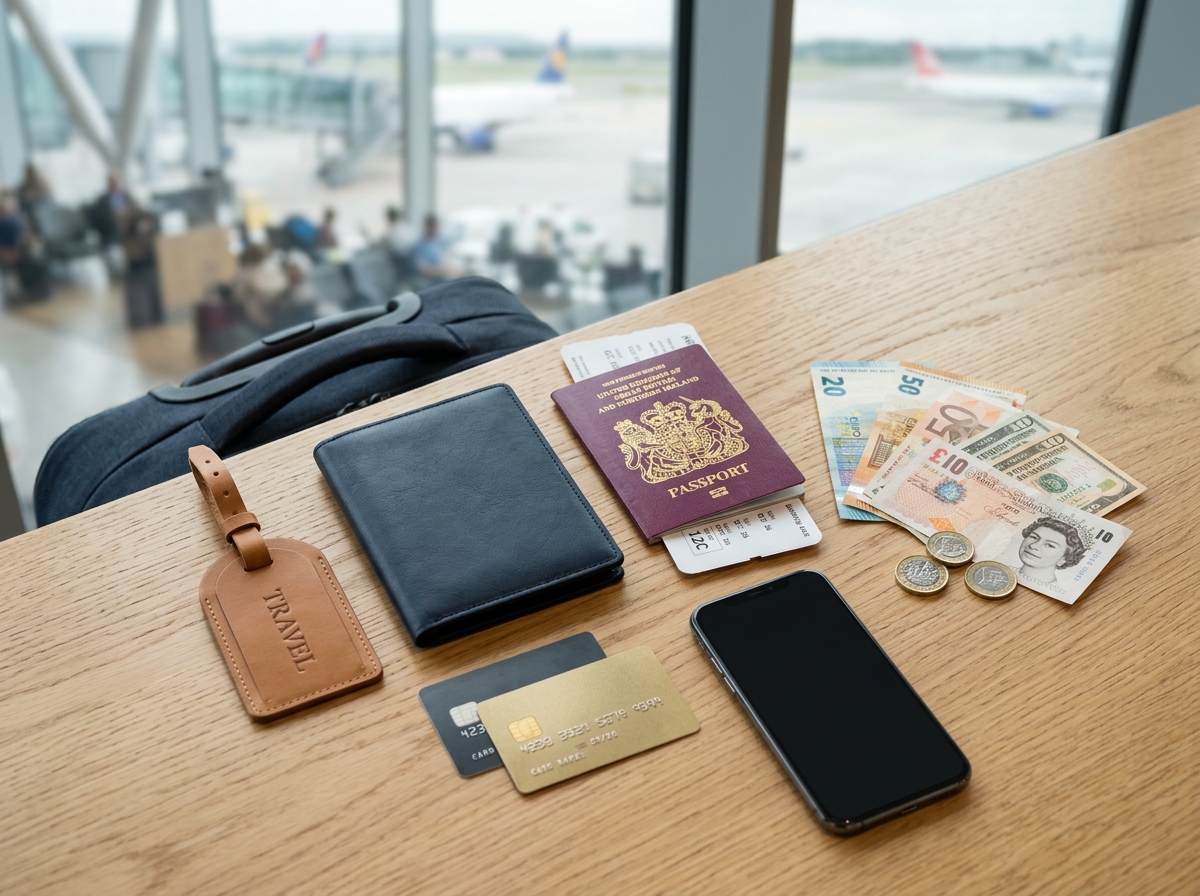
The best travel wallets for UK travellers hold your passport, cards, and boarding passes in one slim case, without the bulk of a full document folder. Prices range from under £5 for a basic zipped pouch to £190 for a leather passport case with an AirTag pocket, and the right one depends far more on how you travel than on how much you spend.
This guide covers what UK travellers actually look for in a travel wallet, the different types available, whether RFID blocking is worth paying extra for, typical costs at every price point, and the mistakes that cause an otherwise good wallet to let you down at the worst moment.
What People Actually Want From a Travel Wallet
Most buyers are looking for one of three things: somewhere to keep a passport safe, a way to carry multiple currencies and cards without a bulging pocket, or general peace of mind against pickpockets. Very few people need all three solved by a single product, which is why so many travel wallets on the market are overbuilt for what most trips actually require.best travel walletsbest travel wallets
A family heading to a Spanish resort for a week has different needs to a solo backpacker moving through several countries. The first probably just wants passports and boarding passes kept together and dry. The second is more likely to want something slim enough for a money belt or an inside jacket pocket that won’t print through the fabric.
Types of Travel Wallets
Slim card and passport wallets
These hold a passport plus five to ten cards in a single fold, and they’re the most popular style for UK buyers according to several 2026 buying guides. Bellroy’s travel wallet, at £129, is a well-reviewed example that adds a small pocket for a spare SIM card alongside the usual passport and card slots.
Passport holders
A simpler option that just protects the passport cover and adds one or two card slots. Pom Pom London’s passport holder, at £29.95, sits at the budget end of this style, while Ettinger’s leather version with a dedicated AirTag pocket runs to £190.
Zip wallets and pouches
Fully enclosed cases with a zip round three sides, useful for keeping loose currency, receipts, and multiple passports together on a family trip. These start from around £3 for a basic polyester version and rarely go much above £30, since there’s less premium material involved than in a folded leather design.
Neck wallets and money belts
Worn under clothing rather than carried in a bag or pocket, these trade convenience for a genuine layer of physical security. They’re bulkier to access at a check-in desk, so most people reserve them for higher-risk destinations or overnight train and coach trips rather than everyday use.
Do You Actually Need RFID Blocking?
RFID blocking is one of the most heavily marketed features on travel wallets, and it’s worth being honest about how much it actually matters. According to UK Finance’s Annual Fraud Report, contactless fraud using RFID made up only around 7% of face-to-face card fraud losses in UK retail in 2024, and the bulk of contactless fraud actually comes from cards that were physically lost or stolen and used before they could be blocked, not from wireless skimming at a distance.
That doesn’t make RFID blocking pointless. It’s a low-cost addition on most wallets now, so there’s rarely a reason to pay extra to avoid it, and it does remove one small category of risk entirely. Just don’t let RFID protection alone justify a big jump in price, since it’s solving a smaller problem than the marketing usually suggests.
Typical Costs at Every Price Point
- Under £10: Basic zipped polyester pouches, often with RFID blocking included and space for a passport plus two or three cards.
- £10 to £30: Better stitching and more card slots, sometimes in coated canvas or budget leather, with brands like Pom Pom London sitting in this range.
- £30 to £100: The main mid-range, where you’ll find sturdier leather or vegan leather construction, extra pockets for SIM cards or pens, and generally better zips and clasps that hold up over repeated trips.
- £100 to £150: Recognised travel-specific brands like Bellroy and Wingback, offering slim profiles, higher-quality leather, and thoughtful small details rather than dramatically more storage.
- £150 and up: Premium leather goods from names like Strathberry and Ettinger, where you’re paying largely for material quality, craftsmanship, and brand rather than any extra function you couldn’t get for less.
Prices shift often with sales and seasonal stock, so treat these as a guide rather than a guarantee, and check the current price on the retailer’s own site before buying.
How the Buying Process Works
1. Work out what you’re actually carrying
Count your typical cards, currencies, and documents for a trip before you shop. Buying a wallet built for six passports when you only ever travel with one is a common way to end up with something bulkier than you need.
2. Decide where it needs to fit
A wallet destined for a jacket pocket or money belt needs to be genuinely slim, not just described as slim in the listing. If you’re not sure, check the exact dimensions against your bag or coat pocket rather than trusting a product photo.
3. Check what it’s made from
Genuine leather wears in and lasts years but costs more and needs occasional conditioning. Polyester and coated canvas are lighter, cheaper, and more weather-resistant, which matters if you’re likely to get caught in the rain at a bus stop or ferry terminal.
4. Buy before you need it, not the night before
Ordering a wallet the week of a trip risks a delivery delay leaving you without one. Order at least two weeks ahead if you’re buying online, and check the retailer’s delivery estimate rather than assuming next-day as standard.
Mistakes to Avoid
- Buying the biggest wallet you can find “to be safe”, then finding it too bulky to actually carry day to day
- Assuming RFID blocking alone makes a wallet secure, when a lost or stolen wallet is the far bigger risk in practice
- Choosing a bright, obviously branded design that draws attention in crowded tourist areas
- Ignoring the stitching and zip quality in reviews, since these are what fail first on a cheap wallet after a few trips
- Forgetting to test whether cards actually stay put, since loose-fitting slots can let cards slip out when the wallet’s opened quickly
FAQS
What is the best travel wallet for UK travellers?
There’s no single best option, since it depends on how many documents you carry and how you like to travel. Bellroy’s travel wallet at £129 is a well-reviewed all-rounder for card and passport storage, while budget zipped pouches under £10 suit anyone who just wants documents kept together and dry.
Do I need an RFID-blocking travel wallet?
Not strictly, since UK Finance reports that RFID skimming accounts for only around 7% of face-to-face contactless card fraud, with most contactless fraud coming from physically lost or stolen cards instead. It’s a reasonable extra to have since it’s usually included at no real cost, but it shouldn’t be the main reason you pick a more expensive wallet.
How much should I spend on a travel wallet?
Most UK buyers are well served by something in the £20 to £80 range, which covers solid stitching, a proper zip or clasp, and enough card slots for everyday travel. Anything above £100 tends to buy better materials and branding rather than significantly more function.
What’s the difference between a travel wallet and a passport holder?
A travel wallet is usually larger, built to hold a passport alongside several cards, boarding passes, and sometimes currency. A passport holder is a simpler, slimmer case focused mainly on protecting the passport itself, with only one or two card slots if any.
Are neck wallets or money belts worth using?
They’re worth considering for higher-risk destinations, overnight stays on trains or coaches, or anywhere you’re carrying more cash than usual, since wearing valuables under clothing removes the easiest pickpocket target. For everyday city breaks and short holidays, most people find a normal wallet or bag pocket sufficient.
Can a travel wallet fit a UK passport comfortably?
Yes, standard UK passports measure roughly 125mm by 88mm, and almost every travel wallet on the market is sized to fit this comfortably along with a few cards. Always check the product’s stated dimensions if you’re also carrying a second passport or a larger visa document insert.
How long should a travel wallet last?
A well-made leather wallet used a few times a year should easily last five years or more, while cheaper polyester versions tend to show wear on zips and seams after two or three years of regular use. Stitching quality and zip brand are the two biggest factors in how long any wallet actually lasts.
Is it better to buy a travel wallet online or in a shop?
Both work, but buying online gives you access to a far wider range of prices and styles, along with reviews from other UK buyers on sites like Amazon and John Lewis. Buying in person lets you check the size and material in hand before committing, which matters more for a slim wallet than for most other travel accessories.