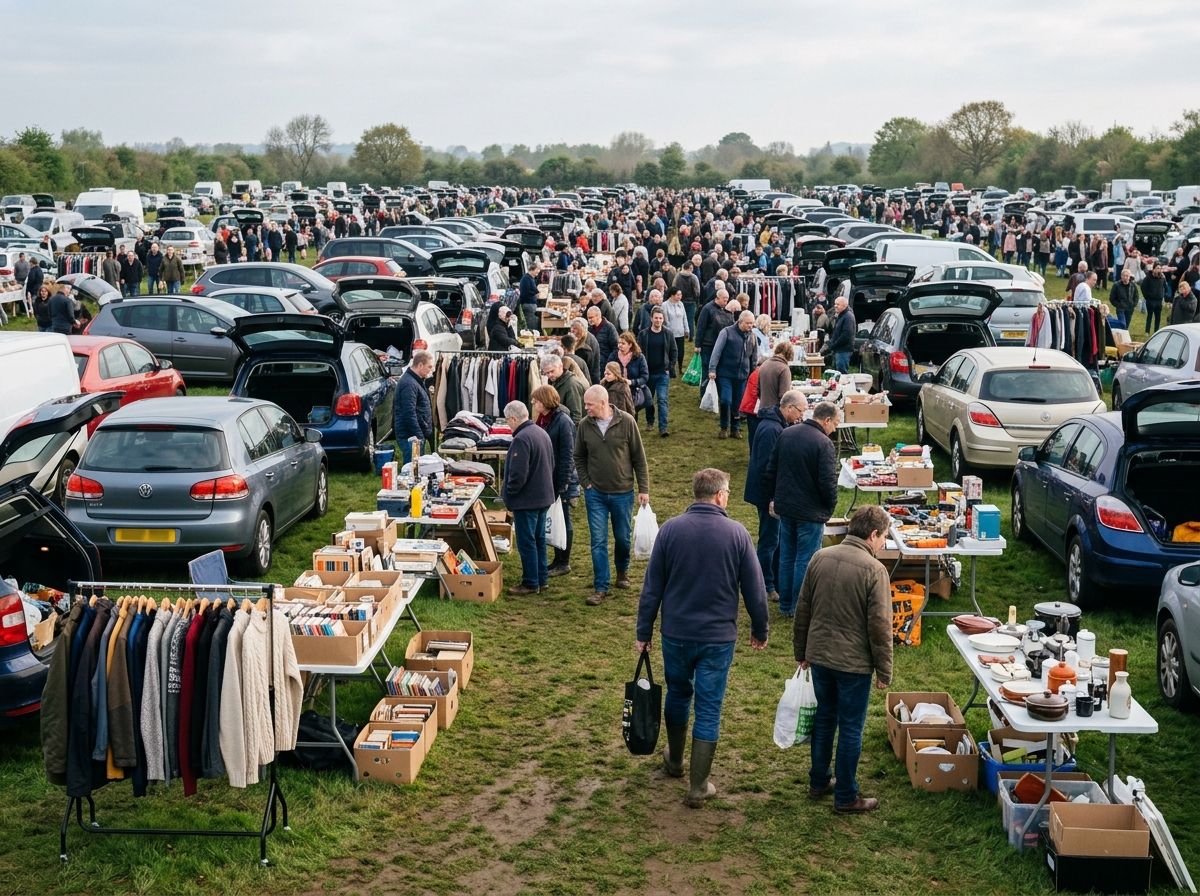
Searching “car boot sale near me” usually means you want one of two things fast: a sale running today or this weekend within driving distance, or a clear idea of what it’ll cost and how the whole thing works before you turn up. The quickest way to find one is a postcode search on a dedicated directory site, since these list opening times, entry fees and pitch prices sorted by distance rather than making you scroll through generic search results. Buyer entry is usually free or up to £2, while sellers typically pay £6 to £15 for a pitch depending on vehicle size, according to The Carboot Directory.
This guide covers how to actually find a sale near you today, what buyers and sellers should expect to pay, how the process works on the day, the tax rules sellers often get wrong, and the mistakes that catch out first-timers.
How to Find a Car Boot Sale Near You
Use a postcode-based directory
The fastest method is a dedicated car boot sale directory where you enter your postcode and get results sorted by distance, complete with opening times, entry fees and a map. Several UK directories now list over 200 to 1,500 sales nationwide, updated regularly, which beats searching “car boot sale near me” on a general search engine and hoping the results are current.
Check social media and local listings
Many smaller or one-off sales are only advertised on the organiser’s Facebook page or a local community group, so it’s worth searching your town’s name plus “car boot” on Facebook if a directory search comes up thin. Local newspapers and parish noticeboards sometimes carry listings too, particularly for church hall or school-run sales.
Confirm it’s actually running before you travel
Outdoor sales are often cancelled at short notice after heavy rain, since the field can become waterlogged and unsafe for cars. Check the organiser’s phone number or social media page on the morning of the sale if the weather’s been bad, rather than assuming it’s definitely on.
What Day and Time Do Car Boot Sales Run?
Sunday is by far the busiest day for UK car boot sales, accounting for roughly 70% of listed sales, with Saturday making up most of the rest and a smaller number running midweek or on Bank Holiday Mondays. Most outdoor sales open to buyers somewhere between 6am and 8am, though early-bird entry before the standard opening time is sometimes available for an extra fee.
Indoor venues, such as sports halls or permanent market buildings, tend to run year-round regardless of weather, while most outdoor sales close for the winter between November and March. If you want a car boot fix in January, search specifically for indoor sales rather than assuming your usual outdoor field will be open.
What Does a Car Boot Sale Actually Cost?
For buyers
Entry is usually free or costs up to £2 per person, and children generally get in free everywhere. Around a third of listed UK sales charge no entry fee at all, and car parking is typically included in that per-person entry price rather than charged separately per vehicle.
For sellers
Pitch fees for sellers generally range from about £6 to £15 for a standard car-sized pitch, rising to £20, £30 or more for vans, side-on pitches, or premium early-access spots at busier venues. Larger London sales can charge considerably more for premium or early pitches, sometimes £25 to £60 depending on vehicle size and arrival time, so always check the specific venue’s current pricing rather than assuming a flat national rate.
Most sellers pay in cash at the gate, though a growing number of venues now accept card payment or offer advance online booking, which is worth using if available since popular Sunday sales can have queues forming before 5am.
How a Car Boot Sale Works
For sellers
Arrive at the seller opening time, which is often an hour or two before buyers are let in, and pay your pitch fee at the gate. Bring your own table (a basic folding table costs roughly £20 to £40 from a hardware shop), price labels, carrier bags and a float of about £20 in coins and small notes for giving change. Lay your items out clearly, price them to move rather than to match a shop, and expect haggling since it’s a normal and expected part of car boot culture.
For buyers
Pay your entry fee if one applies, then browse at your own pace, since most sales spread across a large field or car park with stalls in no particular order. Bring cash, since most sellers only take coins and notes even if a handful now carry card readers, and examine items closely before buying since secondhand goods bought this way don’t carry the same consumer protections as a shop purchase.
Money and Tax Rules for Sellers
If you’re simply clearing out your own unwanted belongings, such as old clothes, toys or furniture you no longer want, this generally isn’t taxable and you don’t need to tell HMRC. The one exception is selling a single personal item or collection worth £6,000 or more, which can bring Capital Gains Tax into play, though this is rare at a typical car boot sale.
If you’re buying items specifically to resell for a profit, that counts as trading rather than clearing out possessions, and HMRC’s trading allowance lets you earn up to £1,000 of gross trading income per tax year before you need to register for Self Assessment, according to GOV.UK guidance. Selling regularly or as a business may also require a street trading licence or registration with your local council, though rules vary by area, so check with the organiser and your council if you plan to sell often.
Common Mistakes to Avoid
Turning up without cash. Most sellers only accept coins and notes, so relying on your phone or a card is a quick way to miss out on a good find.
Assuming the sale is definitely on after bad weather. Outdoor sales get cancelled at short notice when fields flood, so check the organiser’s page before setting off on a wet morning rather than arriving to a locked gate.
Not bringing a float if you’re selling. Nothing kills momentum faster than losing an early sale because you can’t break a £20 note, so start with roughly £20 in mixed change and small notes.
Skipping the early arrival if you want the best pitches. Sellers who arrive right at opening time generally get the better, more visible spots, while latecomers often end up tucked away at the edges.
Not checking what you can and can’t sell. Certain items, like counterfeit goods, unsafe electricals, or anything requiring age verification such as knives, are restricted or banned at most organised sales, so check the venue’s rules if you’re planning to sell anything unusual.
FAQs
How do I find a car boot sale near me today?
The quickest way is a postcode search on a dedicated car boot sale directory, which sorts sales by distance and shows current opening times and fees. If nothing comes up nearby, search your town’s name plus “car boot” on Facebook, since smaller sales are often only advertised locally.
How much does it cost to get into a car boot sale?
Buyer entry is usually free or up to about £2 per person, with children typically entering free everywhere. Around a third of UK car boot sales charge no entry fee at all, according to The Carboot Directory.
How much does a seller’s pitch cost at a car boot sale?
A standard car-sized pitch typically costs between £6 and £15, with vans and premium early-access pitches costing more, sometimes £20 to £60 at larger or London venues. Prices vary by venue and vehicle size, so check the specific sale’s current pricing before you go.
What day do most UK car boot sales run?
Sunday is the most common day, accounting for roughly 70% of listed UK car boot sales, with Saturday making up most of the remainder. A smaller number run midweek or on Bank Holiday Mondays.
Do I need to pay tax on money made at a car boot sale?
Selling your own unwanted personal belongings generally isn’t taxable and doesn’t need to be reported to HMRC. If you’re buying items specifically to resell for profit, that counts as trading, and HMRC’s trading allowance covers up to £1,000 of gross income per tax year before registration is required.
Are car boot sales open in winter?
Most outdoor car boot sales close from November to March since wet ground makes fields unsuitable for cars and stalls. Indoor venues, such as sports halls and permanent market buildings, generally run year-round regardless of the weather.
What’s the difference between a car boot sale and a car boot fair?
The two terms describe exactly the same event in UK usage, with “boot fair” more common in the Midlands and “car boot sale” more common in the South. You can use either term interchangeably when searching.
Can I negotiate prices at a car boot sale?
Yes, haggling is completely normal and expected at car boot sales, on both sides. Sellers usually price items to leave a little room for negotiation, so don’t be afraid to make a lower offer, particularly later in the day when sellers want to avoid packing items back into the car.