If your car’s vents smell musty or the airflow feels weaker than it used to, the answer to how to change a cabin air filter is usually this: find it behind the glovebox or under the dashboard, unclip the cover, slide the old filter out, and slot the new one in facing the same way, following any airflow arrows printed on it. Most drivers can do the whole job themselves in about 15 minutes with nothing more than a screwdriver, and a replacement filter typically costs between £15 and £30 for the part alone in the UK, according to Autodoc.
This guide walks through the full process for your cabin filter, covers the separate engine air filter too since people often confuse the two, and answers the most common questions about cost, frequency and warning signs.
What Is a Cabin Air Filter and Why It Matters
A cabin air filter, also called a pollen filter, cleans the air that comes through your car’s vents before it reaches you and your passengers. It traps dust, pollen, exhaust particles and other debris, so a clogged one won’t stop your car running, but it will make the air inside feel stale and can noticeably reduce airflow from the vents.
Cabin filters aren’t checked as part of an MOT test, so a failing one won’t cause you to fail your MOT, but a blocked filter does put extra strain on your blower motor and can leave windows misting up more than they should. That’s reason enough to check it even if nothing feels obviously wrong yet.
Signs You Need to Change Your Cabin Air Filter
A few warning signs are worth watching for before you even open the glovebox. A musty or damp smell when the fans come on is the most common sign, since trapped moisture in a clogged filter can lead to mould or mildew building up inside it. Weaker airflow from the vents, even on the highest fan setting, is another clue, and so is a whistling or whining noise from the vents that wasn’t there before.
If you’re not sure when yours was last changed, it’s worth doing anyway for peace of mind, since a new filter costs less than £10 for basic versions, so you won’t lose much if it turns out the old one was fine.
How Often to Change a Cabin Air Filter
Most manufacturers recommend changing the cabin filter once a year or roughly every 12,000 to 15,000 miles, though your owner’s manual may give a different figure specific to your car. If you drive mostly in polluted city traffic or down dusty rural roads, it’s worth changing it more often than the manual suggests, since the filter will clog up faster in those conditions.
Tools and Parts You’ll Need
You don’t need any specialist tools for this job. A flathead or Phillips screwdriver covers most cars, and it’s handy to have a cloth for wiping out the filter housing and a bag for the old filter, since it’s usually full of trapped dust and debris. The only real cost is the replacement filter itself, so check your registration number against an online parts retailer or your owner’s manual to make sure you order the correct size and type, including whether your car uses a basic paper filter or an activated carbon one.
How to Change a Cabin Air Filter: Step by Step
Step 1: Find your filter’s location
Check your owner’s manual first, since it will usually tell you exactly where the filter sits and how to access it. Most cars keep it behind the glovebox, though some have it under the dashboard in the footwell, and others place it under the bonnet near the windscreen wipers. If your manual doesn’t help, searching your car’s exact make, model and year plus “cabin filter location” online usually turns up a clear answer.
Step 2: Open up access to the housing
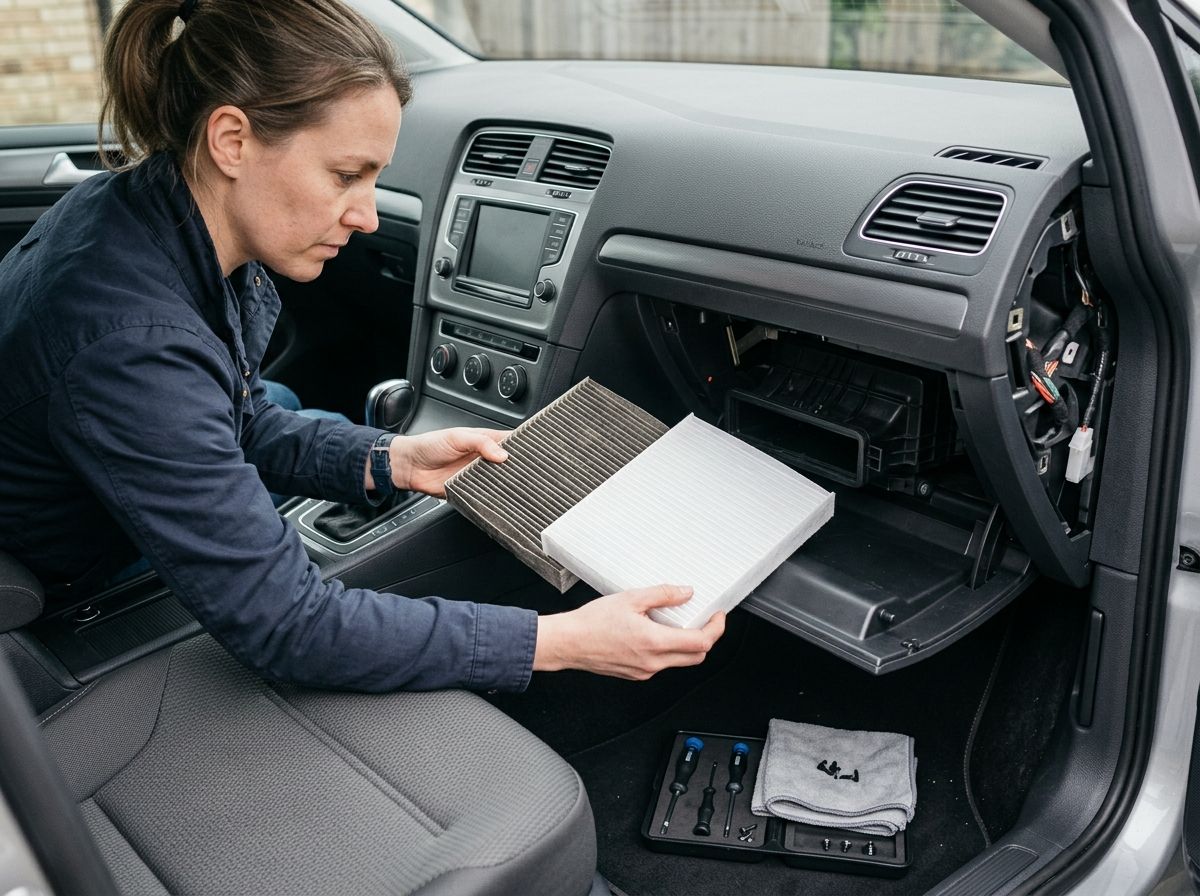
If the filter sits behind the glovebox, open the glovebox fully and release the side clips or hinge pins so it can drop down or come away completely. If it’s under the dashboard or in the engine bay instead, you’ll need to remove whichever cover or trim panel sits over the housing, which is usually held with clips or a couple of screws.
Step 3: Remove the old filter
Slide the old filter out of its housing, taking a photo first if you’re not confident about the original orientation. Look for a printed arrow on the filter’s frame showing the direction of airflow, since the new filter needs to go in facing the same way.
Step 4: Clean the housing
Before fitting the new filter, take a minute to clean out the housing with a vacuum, a soft brush or a slightly damp microfibre cloth. This stops loose debris from the old filter contaminating the new one and helps the replacement last as long as it should.
Step 5: Fit the new filter
Slide the new filter in following the same airflow direction as the old one, and check it sits flush and properly seated in the housing rather than sitting at an angle. A filter that isn’t seated correctly can let unfiltered air leak around the edges, which defeats the point of changing it.
Step 6: Reassemble and test
Clip the glovebox or access panel back into place, making sure nothing is left loose or forced. Start the engine, turn on the fan, and cycle through the speed settings to check airflow feels stronger and the musty smell, if you had one, has gone.
[Table suggestion: common cabin filter locations by car type, columns for location, typical access method, difficulty rating]
How Much Does It Cost in the UK?
If you do it yourself, the part alone typically costs between £15 and £30, according to Autodoc, though basic paper filters for older or simpler cars can come in under £10 while premium activated carbon filters cost more. If you’d rather have a garage do it, or it’s bundled into a routine service, expect a total of roughly £40 to £70 including labour, though this varies by vehicle and local labour rates, so it’s worth getting a quote from your usual garage before booking.
How to Change a Car Air Filter (Engine Air Filter)
It’s easy to confuse the cabin air filter with your car’s engine air filter, but they’re two separate parts doing two different jobs. The engine air filter protects your engine by cleaning the air that gets drawn in for combustion, while the cabin filter only cleans the air you and your passengers breathe inside the car.
Where to find the engine air filter
Unlike the cabin filter, the engine air filter sits under the bonnet, usually inside a plastic housing near the top of the engine. Open the bonnet with the engine off and cool, and look for a black plastic box with spring clips or screws holding the lid down.
Steps to change your car’s engine air filter
Unclip or unscrew the housing lid and lift it away to reveal the filter inside. Note how the old filter sits before removing it, then lift it out and check it against the new one for a matching size and shape. Wipe out any dust or debris from inside the housing, place the new filter in facing the same way as the old one, then close and re-secure the lid.
How often to change your engine air filter
Most cars need an engine air filter change roughly once a year or every 12,000 miles, similar to the cabin filter, though your service schedule may specify a different interval. If you do a lot of driving on dusty or unsurfaced roads, checking it more often is sensible since it will clog up faster than in normal conditions.
Common Mistakes to Avoid
Buying the wrong size filter. Always check your registration number or owner’s manual before ordering, since filters aren’t universal across makes and models.
Fitting the filter backwards. Ignoring the airflow direction arrows means the filter won’t work properly and you’ll likely need to redo the job. Take a photo of the old filter’s orientation before removing it if you’re at all unsure.
Forcing the glovebox or panel. Glovebox hinges and clips are usually plastic and can snap if you push too hard, so if something isn’t moving, check for a hidden clip or screw rather than forcing it.
Skipping the housing clean. Leaving old debris in the housing means your brand new filter starts life dirty, shortening how long it lasts before it needs changing again.
FAQs
How long does it take to change a cabin air filter?
Most drivers can change a cabin air filter in around 15 minutes, since it’s a simple task that usually only needs a screwdriver. Cars with harder-to-reach filters, such as some luxury or performance models, can take a little longer.
Is it easy to change a cabin air filter yourself?
Yes, for most cars it’s a straightforward DIY job that doesn’t need specialist tools or mechanical experience, just your owner’s manual or a model-specific video if you’re unsure of the location. A small number of vehicles have unusually awkward access, which is worth checking before you commit to doing it yourself.
How much does a cabin air filter replacement cost in the UK?
The part alone typically costs between £15 and £30, according to Autodoc, with basic filters sometimes under £10 and premium activated carbon versions costing more. Having it done by a garage or as part of a service typically totals around £40 to £70 including labour.
Will a dirty cabin air filter fail an MOT?
No, the cabin air filter isn’t part of the official MOT inspection, so it won’t cause an MOT failure on its own. It’s still worth changing regularly, since a blocked filter reduces airflow and can leave windows misting up more than usual.
How often should I change my cabin air filter?
Most manufacturers recommend changing it once a year or every 12,000 to 15,000 miles, though your owner’s manual may give a specific figure for your car. Drivers in polluted cities or on dusty roads should generally change it more often than that baseline.
What’s the difference between a cabin air filter and an engine air filter?
The cabin air filter cleans the air inside the car for passengers to breathe, usually located behind the glovebox or under the dashboard. The engine air filter cleans air going into the engine for combustion and sits under the bonnet, and the two need to be replaced separately.
What happens if I don’t change my cabin air filter?
A clogged filter reduces airflow from your vents, can cause musty smells from trapped moisture and mould, and puts extra strain on your blower motor over time. It won’t stop the car running or cause an MOT failure, but comfort and demisting performance will gradually get worse.
Can I clean and reuse a cabin air filter instead of replacing it?
Basic paper cabin filters generally aren’t designed to be cleaned and reused, since the paper media traps particles permanently rather than releasing them. Replacing with a new filter is the standard approach, and given how cheap basic filters are, it’s rarely worth the risk of trying to clean one instead.