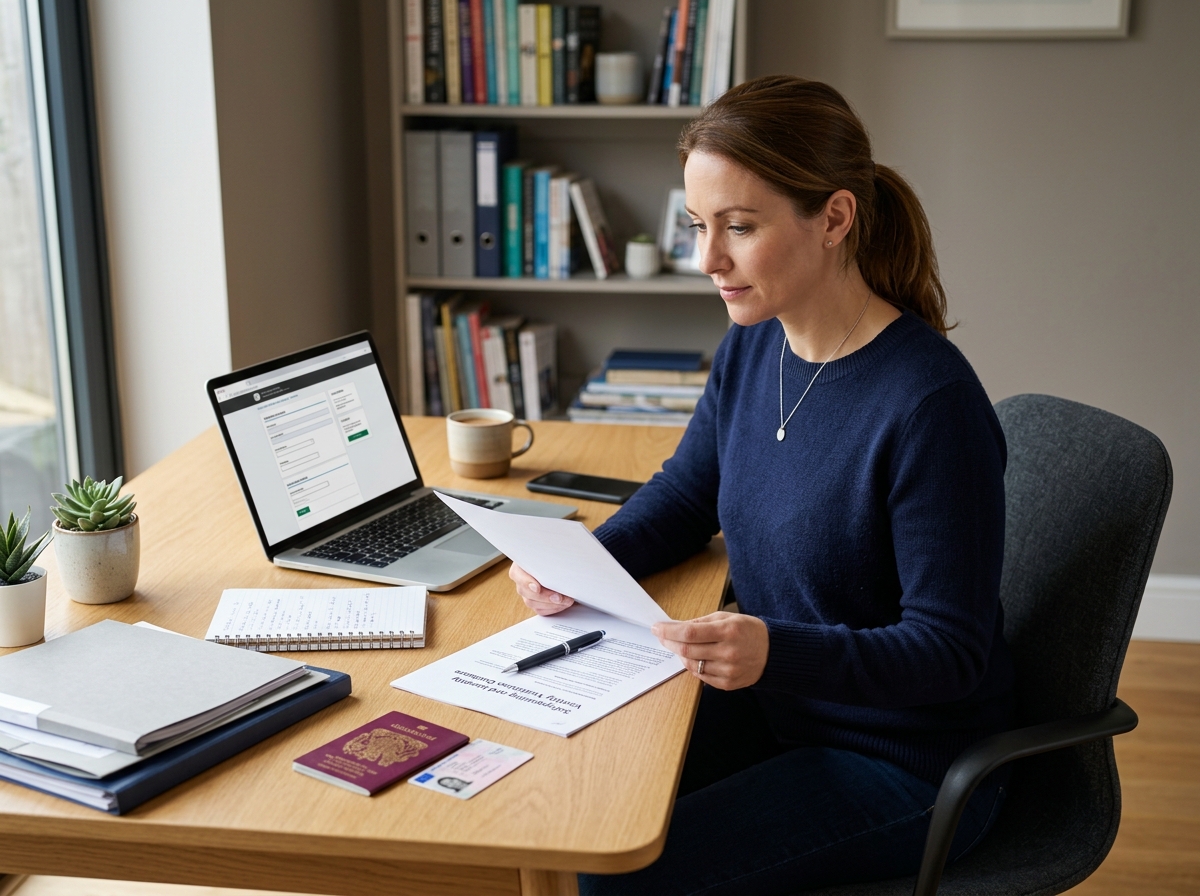
If you’re ready to set up a limited company, you can do it entirely online through Companies House for £100, and most incorporations are approved within 24 hours. That’s the short version. The longer version involves choosing a name that passes the rules, picking a SIC code, setting a registered office and email address, deciding on shares, and, since this is genuinely new, verifying your identity as a director. This guide covers every step with current figures, including the fee rise that came in on 1 February 2026 and won’t appear in most guides still online.
Before you start: what you’ll need
Have these ready before you sit down to register, since the online form doesn’t save well if you have to stop halfway through to go looking for information:
- A company name that’s available and follows the naming rules (covered below)
- A UK registered office address
- An appropriate email address the company will actually monitor
- The names, addresses and dates of birth of all directors and shareholders
- Details of anyone with significant control over the company
- A Standard Industrial Classification (SIC) code describing what the business does
- Your government-issued ID, since directors now need to verify their identity
Most people incorporate through the Companies House website directly, gov.uk/set-up-limited-company, though formation agents and accountants can also handle the process for you, usually for an extra fee on top of the Companies House charge.
How to set up a limited company UK: step-by-step
Step 1: Choose and check your company name
Your company name has to be genuinely available on the Companies House register, and it can’t be identical or too similar to an existing name. Search the register directly before you get attached to an idea.
There are a few rules to know beyond simple availability:
- The name must end in “Limited” or “Ltd” (or the Welsh equivalents, if your registered office is in Wales)
- It can’t contain offensive language
- Certain words need permission to use, including “Royal,” “British,” “Chartered,” and anything implying a government connection
- It can’t suggest a connection to the UK government or a local authority without approval
- Sensitive words linked to regulated professions, such as “bank” or “insurance,” need supporting evidence before Companies House will accept them
If your chosen name is taken but you still want to trade under it, you can register a different legal name at Companies House and trade publicly under a separate business name instead, provided that name doesn’t infringe someone else’s trademark.
Step 2: Choose a SIC code
Every company needs at least one SIC code, a standard number that tells Companies House and other users of the register what your business actually does. You can select up to four codes if your business covers more than one activity.
Common examples include 62012 for business and domestic software development, 96020 for hairdressing and beauty treatment, and 47910 for retail sale via mail order or the internet. The full list is searchable on the Companies House website during the registration process, and picking the closest match is fine; there’s no requirement for a perfect fit, and you can update it later if your business changes direction.
Step 3: Set your registered office address
Your registered office is the official address Companies House and HMRC will use to contact your company, and it’s published on the public register. It must be a physical UK address, and a PO Box on its own is no longer accepted as a standalone registered office address.
Many home-based business owners use their accountant’s address, a registered office service, or a formation agent’s address instead of their home, mainly for privacy, since anyone can look up the registered office on the public register for free.
Step 4: Provide an appropriate email address
Since 4 March 2024, every company has had to give Companies House a registered email address, sometimes called an appropriate email address, as part of the ECCTA reforms. This isn’t published publicly; Companies House uses it purely to send official communications, such as reminders and filing notices.
An address counts as appropriate if emails sent to it would reasonably be expected to reach someone acting on behalf of the company, according to the Companies Act 2006 as amended. In practice, a monitored business inbox works fine, and it doesn’t need to be a separate address for each director. Failing to maintain a working registered email address without a reasonable excuse is an offence for both the company and its officers.
Step 5: Appoint directors and decide on shareholders
You need at least one director, who must be at least 16 years old, and the company can have as many shareholders as you like, including just one if you’re the sole owner and director.
Decide on your share structure at this stage: how many shares the company will issue, their nominal value, and who holds them. Most small companies keep this simple, issuing a small number of £1 shares split according to ownership. This isn’t set in stone forever, but changing share structure later involves more paperwork than getting it broadly right from the start.
Step 6: Identify anyone with significant control
You’ll need to declare anyone who counts as a PSC (Person with Significant Control) during registration. This is covered in detail in its own section below, since it’s a requirement that trips a lot of new directors up.
Step 7: Complete identity verification
This is the step that genuinely didn’t exist before late 2025, and it’s covered in full in the Companies House identity verification section further down. In short, every director and PSC now needs to verify who they are, either at the point of incorporation for new companies or, for existing companies, within a transition window closing 18 November 2026.
Step 8: Submit and pay
Once everything’s in order, submit your application and pay the registration fee. Digital incorporation currently costs £100, up from £50 before 1 February 2026, according to Companies House’s published fee schedule. Same-day incorporation through software costs £156, and paper applications cost £124, though almost everyone files digitally given the speed and cost difference.
Most digital applications are processed within 24 hours, and you’ll receive a certificate of incorporation confirming your company number and the date your company legally came into existence.
Cost to register a company at Companies House: full breakdown
The one-off cost of incorporating isn’t the only fee you’ll encounter, so it’s worth seeing the full picture before you commit.
| Filing | Digital fee (from 1 February 2026) | Paper fee |
| Standard incorporation | £100 | £124 |
| Same-day incorporation (software only) | £156 | not available |
| Confirmation statement | £50 | £110 |
| Change of company name (same day) | £85 | varies |
| Voluntary strike-off | £13 | £18 |
These figures come directly from Companies House’s updated fee schedule, published ahead of the change. The confirmation statement fee, which you’ll pay every year regardless of whether the company is trading, rose from £34 to £50 at the same time, and Companies House has said the extra income funds its expanded powers under the Economic Crime and Corporate Transparency Act, including identity verification and stronger checks on the accuracy of the register.
Beyond the Companies House fees themselves, budget for an accountant if you plan to use one (costs vary widely depending on your business), and a registered office service if you don’t want to use your home address, which typically runs somewhere between £30 and £100 a year depending on the provider.
Companies House identity verification: what’s changed
This is the biggest procedural change to company formation in years, and it’s genuinely new enough that a lot of older guides don’t mention it at all.
Under the Economic Crime and Corporate Transparency Act, identity verification became compulsory for all new directors and new company incorporations from 18 November 2025. If you’re forming a company now, you’ll complete this as part of the registration process, and Companies House won’t accept the incorporation without it.
If your company already existed before that date, your directors and PSCs have a 12-month transition window to verify, closing on 18 November 2026. Verification happens one of two ways: directly through GOV.UK One Login, or via an Authorised Corporate Service Provider (ACSP), such as an accountant or solicitor registered to carry out the checks on your behalf.
Skipping verification isn’t a minor paperwork gap. It’s treated as a criminal offence, and both the individual and the company can face financial penalties, alongside the risk of the company being struck off the register if the situation isn’t resolved. Given the size of the fine reported in Companies House guidance, up to £5,000, and the disruption a strike-off would cause, it’s worth completing verification well before any deadline rather than leaving it until the last month.
What is a PSC?
A PSC, or Person with Significant Control, is anyone who has meaningful influence or ownership over your company, even if they’re not a director. Companies House requires every company to identify and record its PSCs as part of registration and to keep that record current.
You generally count as a PSC if you meet one or more of these conditions:
- You own more than 25% of the company’s shares
- You hold more than 25% of its voting rights
- You have the right to appoint or remove the majority of the board of directors
- You otherwise exercise significant influence or control over the company or its management
For most small, single-owner companies, the sole director and shareholder is also the sole PSC, and this is usually the simplest case to record. Larger or more complex ownership structures, involving trusts, multiple shareholders close to the 25% threshold, or corporate shareholders, can require more careful analysis, and it’s worth getting professional advice if your structure isn’t straightforward.
PSC details, including name and nature of control, are published on the public register, though residential addresses and dates of birth are protected from public view.
First filing dates: what happens after incorporation
Incorporating the company is the start of an ongoing set of obligations, not a one-off task, and the first-year deadlines catch a lot of new directors out because they don’t follow the standard annual pattern.
Your first accounts are due 21 months after the date of incorporation, not from your accounting year end, which is different from every year after the first. Companies House automatically sets your accounting reference date as the last day of the month in which your first incorporation anniversary falls, so your first accounting period usually runs longer than 12 months. After that first filing, accounts are due 9 months after your accounting reference date every year.
Your first confirmation statement is due 12 months after incorporation, and you then have a further 14 days to actually file it. This annual statement confirms details including your registered office, directors, shareholders and PSC register are still accurate; it’s not a financial document, so don’t confuse it with your accounts.
Your Company Tax Return goes to HMRC separately, within 12 months of the end of your accounting period, and any Corporation Tax owed is due 9 months and one day after that period ends, which lands before the tax return itself. It’s a common mistake to assume the tax payment and the return share a deadline.
Missing any of these carries real consequences. Late accounts trigger an automatic Companies House penalty starting at £150, rising the longer the delay continues, and persistent non-filing can eventually lead to the company being struck off the register.
FAQs
How much does it cost to set up a limited company?
Digital incorporation through Companies House costs £100 as of 1 February 2026, up from £50 previously. Paper applications cost £124, and same-day digital incorporation through compatible software costs £156. Beyond that one-off fee, you’ll pay an annual £50 confirmation statement and likely an accountant’s fee if you use one.
How long does it take to set up a limited company?
Most digital incorporations are approved within 24 hours, sometimes faster. Paper applications take considerably longer, often several weeks, which is one of the main reasons almost everyone registers online now.
Do I need an accountant to set up a limited company?
No, you can register directly through Companies House yourself without one. Many people do use an accountant or formation agent for guidance on structure, tax efficiency and ongoing compliance, but it’s not a legal requirement to incorporate.
What is Companies House identity verification and who needs to do it?
It’s a mandatory check confirming that directors and Persons with Significant Control are who they claim to be, introduced under the Economic Crime and Corporate Transparency Act. It’s required for all new directors from 18 November 2025, and existing directors must complete it by 18 November 2026.
Can I use my home address to set up a limited company?
Yes, your home can be your registered office address, but it will then appear on the public Companies House register, which anyone can search for free. Many directors use an accountant’s address or a registered office service instead to keep their home address private.
What is a SIC code and do I need one?
A SIC code is a standard number describing your company’s business activity, and yes, every company needs at least one when it registers. You can choose up to four codes, and picking the closest available match is fine even if it isn’t a perfect description.
What happens if I don’t verify my identity as a director?
Failing to complete identity verification is treated as a criminal offence under the Economic Crime and Corporate Transparency Act. Both the individual director and the company can face financial penalties, and the company risks being struck off the register if verification isn’t completed within the required timeframe.
Can one person set up a limited company on their own?
Yes, a single person can be the sole director, sole shareholder and sole PSC of a UK limited company. This is the most common structure for freelancers, contractors and small business owners who choose to incorporate.