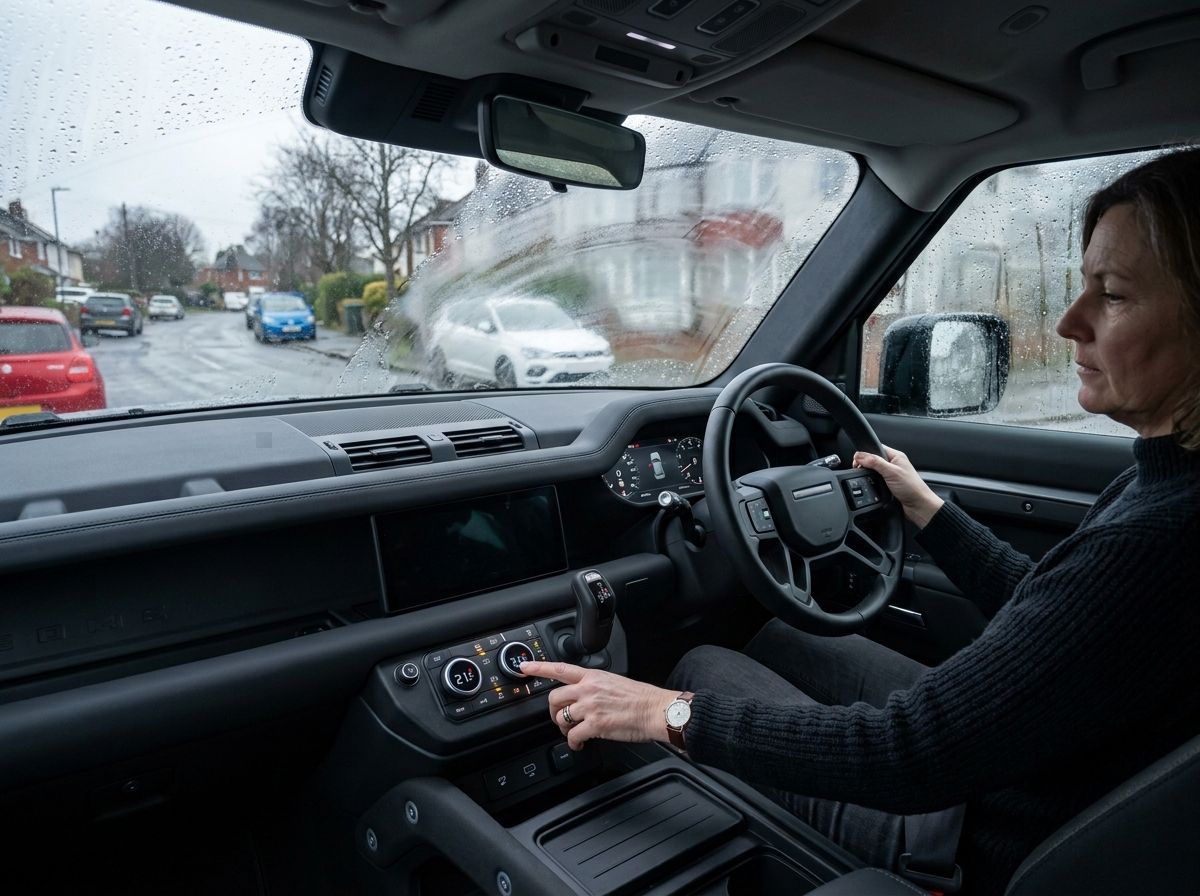
The quickest way to stop a car from fogging up is to turn the air conditioning on with the heater, switch off recirculate so the system pulls in drier air from outside, and point the vents at the windscreen. This clears existing fog in under a minute and stops it building back up while you drive. The cause is condensation, moist air inside the cabin meeting the cooler glass, and once you deal with the moisture, the fog stops.
This guide covers what actually causes windscreens and windows to fog up, the fastest way to clear it, how to stop it happening again, and a Highway Code rule that catches out thousands of UK drivers a year without them realising.
Why Do Car Windows Fog Up?
Fogging happens when warm, moist air inside your car touches a colder surface, usually the glass, and the water vapour condenses into tiny droplets. In winter, that’s cold glass meeting warm, humid air from your breath, wet clothes, or a damp footwell. In summer, it can happen in reverse: cold air conditioning meets warm, humid air from outside, so the condensation forms on the outer surface of the glass instead.
Wet weather makes it worse in both directions. Rain-soaked coats, umbrellas, and shoes all add moisture to the cabin air, and a car with four passengers generates far more humidity than one with a single driver. Dirty glass also fogs up faster, since dirt and grime give water vapour more surface to cling to.
How to Stop Your Car From Fogging Up: Step by Step
1. Turn on the air conditioning
Air conditioning dehumidifies the air as it cools it, which is exactly what clears condensation. Run it even in winter alongside the heater, since most UK cars let you combine air con with warm air rather than forcing you to choose one or the other.
2. Switch off recirculate
Recirculate mode keeps reusing the moist air already inside your car, which is the opposite of what you want when the windows are fogged. Switch to fresh air mode so the system pulls in drier air from outside instead.
3. Point the vents at the windscreen
Most cars have a dedicated demist setting, usually a windscreen-shaped icon, that directs airflow straight at the glass. Use this first if your fog is on the windscreen rather than the side windows.
4. Use the heated rear window and heated seats
The heated rear window warms the glass directly, which clears fog faster than airflow alone on the back window. Some newer UK models also fit heated windscreens, worth checking if you’re shopping for a car that regularly sits in damp conditions.
5. Crack a window
Opening a window a couple of centimetres lets humid air escape and drier air in, which helps balance the temperature difference causing the fog. It’s not always practical in heavy rain, but even a small gap for a minute or two makes a difference.
6. Wipe the glass with a dry, clean cloth
If you need to see immediately, a dry microfibre cloth clears fog faster than anything else. Keep one in the glovebox specifically for this, since a damp or dirty cloth can smear the glass and make things worse.
7. Clean your windows regularly
Grease and dirt on the glass, much of it transferred from your hands or breath, gives condensation more to stick to. A proper clean with glass cleaner, inside and out, reduces how quickly fog forms in the first place.
8. Deal with damp sources inside the car
Wet umbrellas, soaked coats, muddy football boots, and open drinks all add moisture to the cabin. Store wet items in the boot rather than the passenger compartment where possible, and empty out standing water from footwells after a wet school run or dog walk.
9. Check your air conditioning is actually working
If your air con isn’t cooling properly, it’s not dehumidifying properly either, which makes fogging worse. A regas in the UK typically costs £60 to £130 depending on whether your car uses older R134a gas or the newer R1234yf gas, with R1234yf systems (standard on all new cars sold from 2017) costing more due to the higher price of the refrigerant itself. Air con isn’t included in a standard MOT test, so a system that’s slowly losing gas can go unnoticed for months unless you’re checking for it yourself.
Preventing Fog Before It Starts
- Use a moisture absorber, such as silica gel packs or a car-specific dehumidifier bag, left in the footwell overnight in damp weather
- Fit a windscreen sunshade in summer to reduce the temperature gap between the glass and the cabin air
- Keep a dry cloth and spare silica sachets in the glovebox for wet mornings
- Park undercover where you can, since a garage or car port reduces overnight condensation build-up
- Check door and window seals aren’t letting rain in, since damp carpets are a common hidden cause of persistent fogging
An anti-fog spray or wipe, widely available from UK motor factors and supermarkets for roughly £4 to £8 a bottle, can also help on the inside of the glass. Results vary by product and by how humid your usual trips are, so treat this as a supplement to the steps above rather than a replacement for them.
The Highway Code Rule Most Drivers Don’t Know About
Driving with a fogged-up windscreen isn’t just annoying, it can be a driving offence. Annex 6 of the Highway Code states that windscreens and windows must be kept clean and free from obstructions to vision, and the Road Vehicles (Construction and Use) Regulations 1986 require a full view of the road at all times. Officers can treat a heavily fogged windscreen as an obstructed view, and reports this year suggest drivers who set off without clearing it fully could face a fine of up to £1,000 and three penalty points.
In practice, most drivers who get pulled up are simply told to clear the screen, but the legal exposure is real if you’re involved in a collision while your view was obstructed. Wait until the glass is properly clear before you pull away, not just a porthole big enough to peer through.
FAQS
Why does my car fog up so quickly in winter?
Cold glass meeting warm, moist air from your breath, wet clothing, or a damp cabin causes rapid condensation in winter. The bigger the temperature gap between the inside and outside of the car, the faster it forms, which is why mornings after a cold, damp night are usually the worst.
Does air conditioning stop windows fogging up?
Yes, air conditioning dehumidifies the air as it cools, which removes the moisture causing the fog. Run it alongside the heater rather than on its own in winter, since most UK cars let you combine both at once.
Should I use recirculate or fresh air to demist my car?
Use fresh air mode, not recirculate, when your windows are fogged. Recirculate keeps reusing the same moist cabin air, while fresh air mode pulls in drier air from outside to clear the condensation.
Is it illegal to drive with a fogged-up windscreen in the UK?
Yes, driving with a windscreen that obstructs your view can be treated as an offence under the Highway Code and the Road Vehicles (Construction and Use) Regulations 1986. Reports this year note that drivers risk a fine of up to £1,000 and three penalty points if their view is judged to be obstructed.
How do I stop my windows fogging up on the outside?
Outside fogging happens in warm, humid weather when cold air conditioning chills the glass below the outside dew point. Reduce the AC’s intensity slightly, or use your wipers to clear it, since the fog will keep reforming as long as that temperature gap exists.
Does cracking a window help stop fogging?
Yes, opening a window a couple of centimetres lets humid cabin air escape and drier outside air in. It’s a useful quick fix when you don’t want to run the air con, though it’s less practical in heavy rain.
What household items help stop car windows fogging up?
Silica gel packets, a shaving foam wipe left to dry on the inside of the glass, or a diluted white vinegar spray are common DIY options mentioned by drivers and dealerships alike. Results are inconsistent, so treat these as a cheap backup rather than your main solution.
How often should I regas my car’s air conditioning?
Most manufacturers recommend a regas roughly every two years, since refrigerant slowly leaks out even from a healthy system. If your air con is blowing warm or you’re seeing condensation build up inside the cabin even with it running, it’s worth booking a check sooner.
Why do my windows fog up more with passengers in the car?
Every passenger adds moisture to the cabin air through breathing, which raises humidity levels significantly compared to driving alone. A car with four occupants on a cold morning will fog up far faster than the same car with just the driver.