If you’ve heard “chateaubriand” on a restaurant menu and wondered what you’d actually be ordering, here’s the answer: it’s a thick, tapered cut from the head of the beef fillet, prized as one of the most tender pieces of meat on the animal, and traditionally served as a sharing steak for two. Chateaubriand isn’t a different animal or a fancy sauce, it’s a specific piece of tenderloin, usually roasted whole and carved at the table. This guide covers where the name comes from, what it costs at UK butchers, how to cook it properly at home, and the food safety questions people usually have about serving beef this way.
What Is Chateaubriand?
Chateaubriand comes from the thickest end of the fillet (tenderloin), the part that sits furthest from the ribs and closest to the rump. Because each animal only yields two of these cuts, and they make up roughly 2 to 3% of the whole carcass according to several UK butchers, it’s one of the more expensive cuts you can buy.
The texture is what sets it apart. Fillet is already the most tender part of the cow, since it comes from a muscle that does very little work, and the chateaubriand section is the widest, most even part of that fillet. That’s why it roasts so well as a single joint rather than being sliced into individual steaks before cooking.
Where Does The Name Come From?
The cut is named after François-René de Chateaubriand, a French writer and diplomat. According to several British butchers who sell the cut, his personal chef created the dish while Chateaubriand was serving as French Ambassador in London in 1822, originally pairing the fillet with a butter, shallot, white wine and tarragon sauce that later took his name too.
That original Chateaubriand sauce still turns up on menus today, usually served alongside the beef with sautéed mushrooms. It’s closely related to a bearnaise, sharing the tarragon and shallot base, though it traditionally includes a meat glaze that bearnaise doesn’t.
How Much Does Chateaubriand Cost In The UK?
Prices vary by butcher, ageing period and size, but expect to pay somewhere between £70 and £95 per kilogram for a proper dry-aged chateaubriand from a specialist butcher. A few examples from UK suppliers show the range clearly:
| Butcher | Size | Price |
| Dorset Meat Company | 750g | £42.95 |
| Perrys of Eccleshall | 500g | £36.40 |
| Perrys of Eccleshall | 1kg | £72.60 |
A 500g to 800g joint typically serves two to four people, depending on portion size and what else you’re serving alongside it. Supermarkets rarely stock true chateaubriand, since cutting it properly needs a skilled butcher to trim the fillet head, so a specialist or independent butcher is usually your best source.
How To Cook Chateaubriand At Home
Take the joint out of the fridge around 30 to 45 minutes before cooking so it comes closer to room temperature, which helps it cook evenly. Pat it dry with kitchen paper and season generously with salt just before it hits the pan.
Searing And Roasting Method
Heat a heavy frying pan or griddle until it’s properly hot, then sear the joint on all sides in a little oil until it’s deeply browned, which usually takes 6 to 8 minutes in total across all sides. Transfer it to a preheated oven at 230°C (210°C fan, gas mark 8) and roast for a further 8 to 10 minutes for medium-rare, turning once halfway through, based on the timings several UK butchers give for a joint of this size.
Thicker joints, closer to 800g to 1kg, will need a few extra minutes in the oven, so a meat thermometer is worth using if you want consistent results rather than guessing. Once cooked, rest the joint for a minimum of 10 minutes under loose foil before carving, since this lets the juices redistribute rather than spilling out the moment you cut into it.
What Temperature Should It Reach?
For medium-rare, aim for an internal temperature of around 52 to 55°C before resting, since the temperature will climb a further few degrees as the meat rests. If you prefer it more done, pull it at 60°C for medium, though many chefs would argue that overcooking a cut this tender rather defeats the point of buying it.
Is It Safe To Cook Chateaubriand Rare Or Medium-Rare?
Yes, whole cuts of beef like chateaubriand are safe to eat rare or medium-rare, unlike minced beef. According to the Food Standards Agency, harmful bacteria on whole cuts of meat live only on the outer surface, and searing that surface thoroughly kills them off, leaving the interior safe to eat pink. This is different from mince, where bacteria from the surface gets distributed throughout the meat during grinding, which is why burgers need cooking all the way through to at least 74°C.
Serving Suggestions
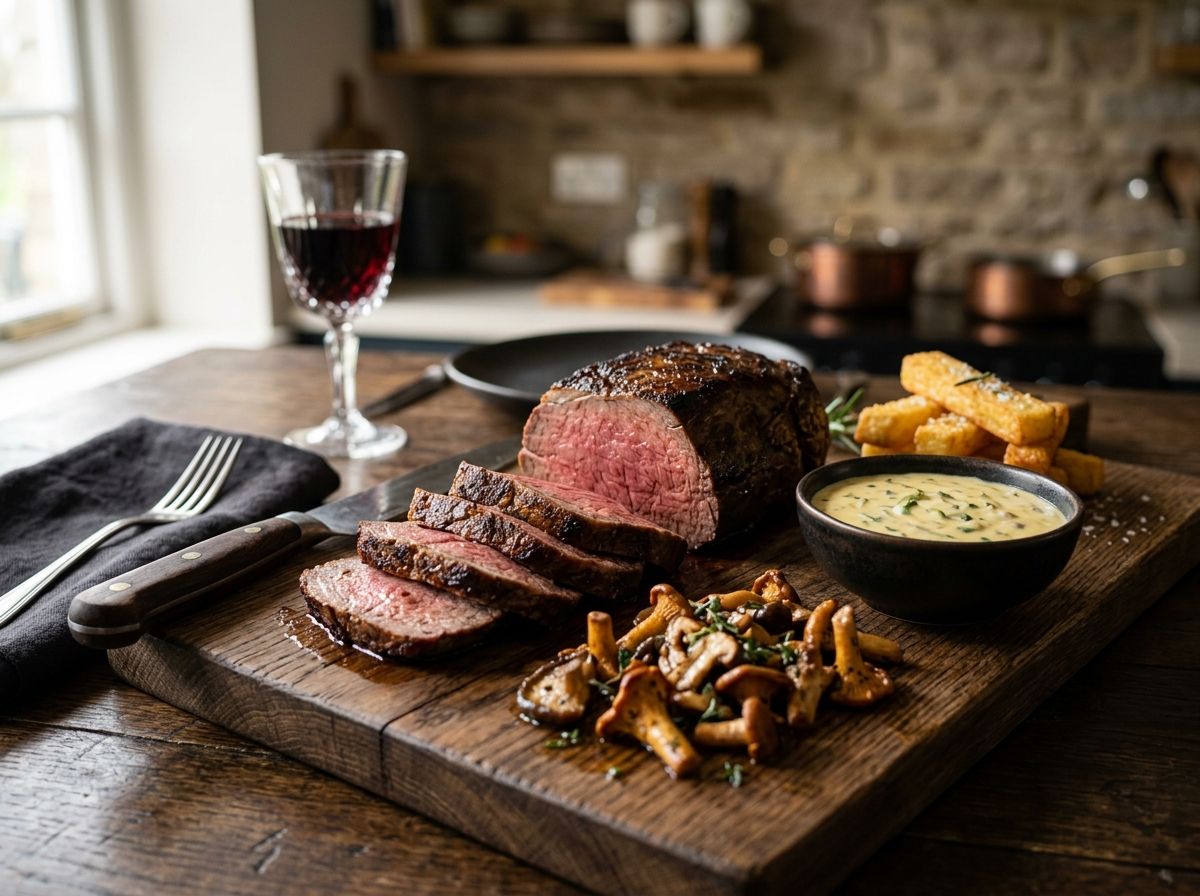
Classic pairings include a Chateaubriand or bearnaise sauce, sautéed wild mushrooms, and something simple on the side like triple-cooked chips or a green salad. Since the meat itself carries so much flavour, resist the urge to overload the plate with competing rich sauces or heavy sides.
A decent Bordeaux or a good Malbec both work well here, since the tannins cut through the richness of the fillet without overwhelming its delicate flavour.
FAQs
What part of the cow is chateaubriand from?
It’s cut from the thickest, head end of the beef fillet (tenderloin), the same muscle that produces filet mignon steaks further along its length. Because only a small section of the fillet qualifies, each animal yields just two chateaubriand cuts.
Is chateaubriand the same as fillet steak?
Not exactly. Chateaubriand is a specific, thicker section taken from the head of the fillet and usually roasted whole for two or more people, while fillet steak refers to individual portions sliced from anywhere along the same muscle.
How long does chateaubriand take to cook?
For a 500g to 800g joint, expect around 6 to 8 minutes of searing followed by 8 to 10 minutes roasting at 230°C for medium-rare. Always check with a meat thermometer if you want a precise result, since oven performance and joint thickness both affect timing.
Why is chateaubriand so expensive?
It only makes up around 2 to 3% of the whole carcass, and each animal produces just two of them, which keeps supply tight. Cutting it properly also requires a skilled butcher to trim the fillet head, adding labour cost that supermarkets rarely bother with.
Can you cook chateaubriand medium-rare safely?
Yes, this is completely safe according to UK food safety guidance, since whole cuts of beef only carry bacteria on their surface, which gets killed during searing. This differs from minced beef, which must be cooked all the way through.
What sauce goes with chateaubriand?
The traditional pairing is Chateaubriand sauce, made from white wine, shallots, butter, tarragon and lemon juice, often served with sautéed mushrooms. A classic bearnaise also works well, since the two sauces share a similar flavour base.
How many people does a chateaubriand joint serve?
A 500g joint typically serves two people generously, while a 750g to 1kg joint stretches to three or four, depending on portion sizes and side dishes. Check the specific weight when ordering from your butcher, since cuts vary naturally in size.
Can I buy chateaubriand at a supermarket?
It’s uncommon, since cutting a true chateaubriand needs a skilled butcher to trim the fillet head precisely. Independent and specialist online butchers are usually a more reliable source than mainstream supermarkets.