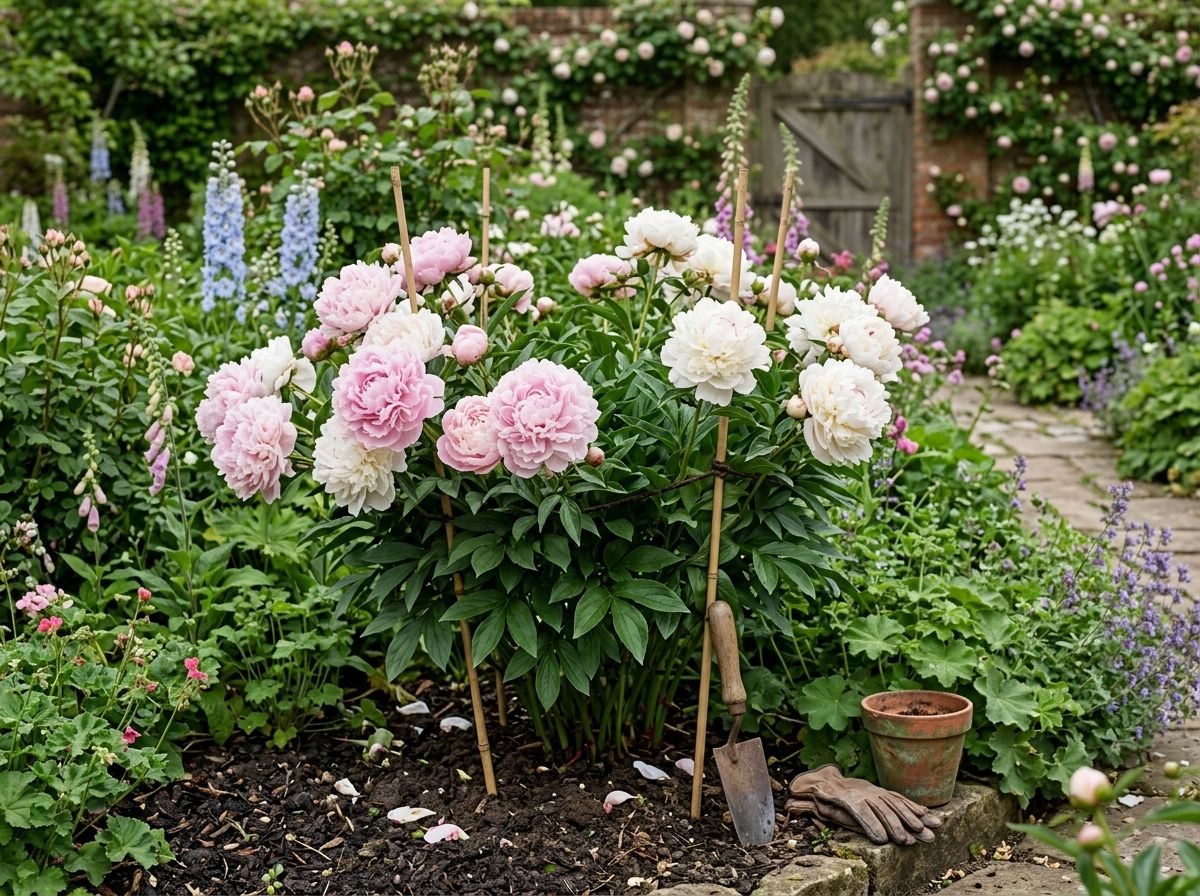
If you’ve ever wondered why your peony grows lush leaves but never a single bloom, the answer is almost always planting depth. A peony is a long-lived perennial from the genus Paeonia, and it will only flower well if its buds (called eyes) sit no more than 2.5 to 5cm below the soil surface. Get that right, along with a sunny, well-drained spot, and a peony can reward you with fragrant blooms for 50 years or more.
This guide covers everything a UK gardener needs: when to plant, how deep, why peonies sometimes refuse to flower, whether they’re safe around pets, and where to buy healthy roots this season.
What Is a Peony?
A peony is a flowering perennial in the family Paeoniaceae, the only plant family in that genus. Peonies are native to Asia, Europe and western North America, with deeply lobed leaves and large, often fragrant flowers in shades of purple, pink, red, white and yellow.
They fall into three broad groups grown in British gardens: herbaceous peonies, tree peonies, and intersectional (Itoh) hybrids. Each behaves slightly differently, which matters when you’re choosing one for a small courtyard versus a large border.
When Do Peonies Flower in the UK?
Herbaceous peonies typically bloom from May to July across the UK, though some cultivars start flowering as early as mid-April and finish by early July according to RHS growing notes. Tree peonies tend to open slightly earlier in the season.
Each flower only lasts around a week to ten days on the plant, so a mix of early, mid and late varieties will stretch your display across two months rather than two weeks.
How to Plant Peonies
Timing
Bare-root peonies go in during fall dormancy, from October through to March, so long as the ground isn’t frozen or waterlogged. Container-grown plants from a garden centre can technically go in at any time, but avoid the height of summer when the soil dries out fast and a newly potted plant is under stress.
Depth and Soil
This is the step most people get wrong. According to RHS guidance, the crown should be planted no more than 2.5 to 5cm below the surface. Plant deeper than that and you’ll get plenty of foliage but few, if any, flowers.
Dig a hole roughly the same depth as the root ball and twice as wide, mix in garden compost or well-rotted manure, and space plants about a metre apart. Peonies want full sun or light shade, shelter from strong wind, and free-draining soil. Heavy clay benefits from a bucketful of grit worked into the planting hole.
Caring for Peonies Through the Year
Watering and Feeding
Water weekly through the first summer while roots establish. After that, an established peony is deep-rooted and rarely needs watering except in prolonged drought. Apply a general-purpose fertiliser, such as Growmore, in spring, and mulch with 5cm of organic matter between November and February to protect the crown from frost.
Staking
Big double blooms get heavy, especially after rain, and floppy stems are one of the most common peony complaints. A simple grow-through hoop, put in place early in spring before growth gets going, saves a lot of frustration later.
Cutting Back
Deadhead spent flowers with secateurs once they fade. Herbaceous peonies die back completely each winter, so cut the whole plant to ground level once the foliage has yellowed in autumn. This also helps guard against peony wilt, a grey mould disease that overwinters in old stem debris.
Why Won’t My Peony Flower?
Deep planting is the single most common cause, but it isn’t the only one. Here’s a quick checklist:
- Planted too deep: eyes should sit no lower than 5cm below soil level
- Too much shade: peonies want at least six hours of direct sun
- Still too young: herbaceous peonies often don’t flower reliably until they’re about five years old, and tree peonies can take a couple of years longer still
- Recently moved or divided: expect a year or two of sulking before flowers return
- Overcrowded or exhausted soil: a top-dressing of compost and fertiliser in spring usually helps
If none of these apply and a mature, sunny, correctly planted peony still won’t bloom, check for peony wilt on the stems, a fungal problem that needs affected growth cut out and binned rather than composted.
Peonies and Ants: Should You Worry?
Ants cluster on peony buds most years, and it unsettles a lot of gardeners the first time they see it. The buds release a sugary nectar that ants find irresistible, and in return the ants tend to deter other pests from the developing flower.
They don’t damage the plant, and once a bloom opens fully the ants generally move on by themselves. If you’re cutting peonies for a vase, just give the stems a gentle shake or a quick rinse outside before bringing them indoors.
Are Peonies Safe Around Pets and Children?
Peonies contain a compound called paeonol, concentrated mainly in the roots and bark but also present in petals and stems. Eaten in any quantity, it can cause vomiting, diarrhoea or lethargy in dogs, cats and even horses, according to the Pet Poison Helpline.
Serious poisoning is rare because most pets aren’t drawn to eating large amounts, but if a dog or cat has chewed through a peony root or a good number of petals, contact your vet or the Animal PoisonLine for advice rather than waiting to see what happens. As with most garden plants, keep an eye on small children too, since eating any quantity of plant material can upset a young stomach.
Types of Peony for UK Gardens
Herbaceous peonies are the most widely grown type. They die back to ground level every winter and re-emerge each spring. Classic varieties for British borders include Sarah Bernhardt (soft pink, sugary scent), Duchesse de Nemours (fragrant double white) and Karl Rosenfield (deep red).
Tree peonies keep a permanent woody framework and don’t die back. Most sold in the UK are grafted onto herbaceous rootstock, so look for the slightly swollen graft union near the base when buying, and plant it a little deeper than a herbaceous variety to encourage the tree peony’s own roots to form.
Intersectional or Itoh peonies are a cross between the two. They tend to flower earlier, hold up more blooms without staking thanks to sturdier stems, and often don’t attract ants at all. Bartzella and Scrumdidlyumptious are popular UK choices, though they carry a higher price tag than straight herbaceous varieties.
Peonies as Cut Flowers
A peony bloom lasts roughly a week whether it’s left on the plant or brought indoors, so timing the cut matters. Pick stems when buds feel soft, like a marshmallow, rather than hard, and they’ll open indoors and last longer in the vase.
Change the water every couple of days, re-cut the stems at an angle each time, and keep arrangements away from direct heat or sunlight to get the most from a short but spectacular display.
Where to Buy Peonies in the UK
Bare-root peonies and potted plants are widely available from garden centres, the RHS shop, specialist nurseries and online retailers such as Farmer Gracy and DutchGrown, as well as marketplaces like Amazon and eBay. Prices for a single bare root or small potted plant typically run from around £10 to £35 depending on the variety, with rarer Itoh hybrids at the top end of that range.
Prices and stock change often, particularly for popular cultivars in autumn planting season, so it’s worth checking the retailer’s own site before you buy rather than relying on last year’s figures.
What Does the Peony Symbolise?
The peony has long stood for honour, wealth, romance and happiness, and it remains one of the most requested flowers for wedding bouquets in the UK. It’s also the traditional flower associated with June birthdays and with twelfth wedding anniversaries, which is why you’ll often see them given as gifts around both occasions.
FAQs
What is a peony?
A peony is a flowering perennial plant in the genus Paeonia, native to Asia, Europe and parts of North America. It’s grown for its large, often fragrant flowers, which appear in late spring and early summer in shades from white through pink to deep red.
When do peonies flower in the UK?
Most herbaceous peonies bloom from May to July, with some early cultivars starting in mid-April. Each individual flower lasts about a week to ten days, so growing a mix of varieties extends the overall display.
How deep should I plant peony roots?
Plant the eyes, or buds, no more than 2.5 to 5cm below the soil surface. Planting deeper than this is the most common reason peonies grow healthy leaves but fail to flower.
Why won’t my peony flower?
The usual culprits are planting too deep, too little sun, or simply a young plant that hasn’t matured yet, since herbaceous peonies often don’t flower reliably until around five years old. Overcrowding and peony wilt disease are less common causes worth ruling out.
Are peonies toxic to dogs and cats?
Yes, peonies contain paeonol, a compound concentrated in the roots and bark that can cause vomiting or diarrhoea if a pet eats a significant amount. Mild nibbling rarely causes serious harm, but contact your vet if you’re worried about how much has been eaten.
Why are there ants on my peonies?
Peony buds produce a sugary nectar that attracts ants, and the ants don’t harm the plant in return. They typically leave on their own once the flower has fully opened, so there’s no need to treat them.
What’s the difference between a tree peony and a herbaceous peony?
A herbaceous peony dies back to ground level each winter and regrows from the crown in spring, while a tree peony keeps a woody, permanent framework year-round. Tree peonies are usually grafted onto herbaceous rootstock and need slightly deeper planting to help their own roots form.
What does the peony flower symbolise?
Peonies traditionally represent honour, romance and happiness, making them a popular choice for wedding bouquets. They’re also the recognised flower for June birthdays and twelfth wedding anniversaries.